Vegetables
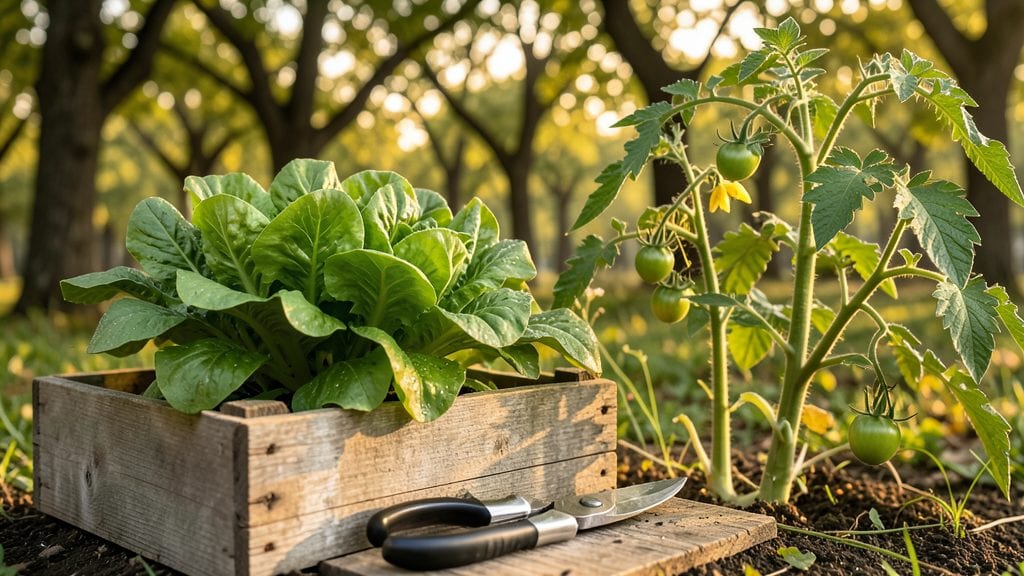
Victory gardens were important during WWII because they boosted food production by growing fruits, vegetables, and herbs at home, reducing reliance on commercial supplies strained by wartime rationing and shipping shortages. These gardens helped families save money, conserve resources, and support the war effort by freeing up agricultural labor for military needs.
During WWII, food shortages forced Americans to grow their own produce, and victory gardens became a national movement. 🌱 The U.S. government even launched campaigns like "Food Will Win the War," encouraging families to plant gardens—some as small as backyard plots.
These gardens produced an estimated 40% of all U.S. vegetables during the war, easing strain on commercial farms and shipping. Beyond food, they fostered community spirit and self-reliance, proving how small-scale efforts could make a big difference.
Today, their legacy lives on in urban farming and sustainability movements. Many modern gardeners use similar techniques—like intensive planting and composting—to grow more with less space, mirroring the resourcefulness of WWII-era gardeners.
The core idea remains the same: local, homegrown food builds resilience against disruptions, whether wartime rationing or today’s supply chain challenges.
💡 In This Article
- How WWII Victory Gardens Solved Food Shortages
- Modern Lessons from Victory Gardens
How WWII victory gardens solved food shortages
The U.S. government faced a critical challenge in 1942 when commercial food production couldn't keep up with wartime demands. With 25 million acres of farmland redirected to military use and shipping routes disrupted by German U-boats, fresh produce became scarce. The solution?
A nationwide call to action: Victory Gardens. These home plots—ranging from tiny urban balconies to suburban backyards—produced 40% of all U.S. vegetables by 1943, equivalent to feeding the entire population of New York, Chicago, and Philadelphia combined.
The mechanics were simple but powerful: families planted high-yield crops like tomatoes, potatoes, and carrots in small spaces using intensive techniques. For example, a 10x10-foot plot could yield 200 pounds of potatoes—enough for a family of four for a month.
The government even distributed free seeds and pamphlets with planting guides, creating a DIY food production system. This wasn't just about growing food; it was about freeing up commercial farms to focus on larger-scale crops like wheat and corn needed for the military.
What made this work was the labor reallocation. With 16 million men serving in the military by 1945, farm labor shortages threatened harvests. Victory gardens filled the gap by shifting food production to civilian hands.
The campaign slogan, "Food Will Win the War", wasn't just propaganda—it was a scientific reality. Studies showed that every acre of home garden reduced the national food demand by 20 pounds, directly easing rationing pressures.
Even urban dwellers contributed: New York City's victory gardens produced 1 million pounds of vegetables in 1943 alone.
The impact extended beyond food security. Victory gardens reduced shipping demands by cutting the need to transport produce across continents. Before the war, 40% of U.S. vegetables traveled over 500 miles to reach consumers—vulnerable to U-boat attacks.
Local production slashed this dependency, making the food supply chain 10 times more resilient. The sensory experience of harvesting fresh tomatoes or crisp lettle from your own plot also boosted morale during a time of global uncertainty.
Here’s the science behind the success: Victory gardens used square-foot gardening principles long before the term existed. By planting 16 plants per square foot (like 16 radishes or 1 tomato plant), gardeners maximized yield in limited space.
Composting kitchen scraps further enriched soil, creating a closed-loop system that required no external fertilizers. This method wasn’t just efficient—it was self-sustaining, proving that small-scale agriculture could rival industrial farms in output per acre.
Perhaps most surprising was the economic impact. Families spent $5 saved per week on rationed goods by growing their own food, equivalent to $90 today. This money stayed in local economies, supporting seed suppliers, toolmakers, and even canning businesses.
The victory garden movement wasn’t just about survival—it was a blueprint for resilience that still influences modern farming today. 💫