Flowers
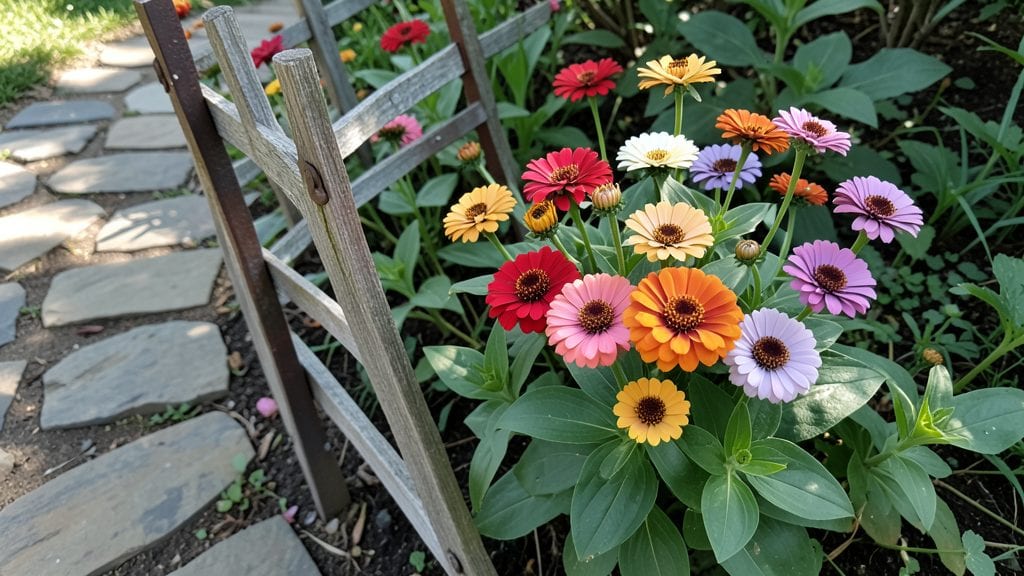
Creating a rainbow garden that bursts with color all season long starts with the right flower choices. ✨ I’ve designed these vibrant displays for years, and the secret lies in layering blooms that peak at different times—so you never have a dull moment.
The key isn’t just picking bright flowers; it’s pairing them so their colors complement each other naturally, like sunset hues blending seamlessly.
You don’t need a huge space to pull this off—containers, borders, or small beds all work beautifully. Focus on pollinator-friendly varieties like coneflowers, black-eyed Susans, and salvias, which attract bees and butterflies while keeping maintenance low.
My go-to combinations mix tall spikes with trailing plants to create movement and depth, ensuring every corner feels lush and intentional.
By late spring, your garden will explode with color, and with the right mix, you’ll have blooms from April through October. Imagine walking past a bed where pinks fade into purples, then into blues, with pops of red and yellow tying it all together.
The best part? These plants thrive together, so you spend less time fussing and more time enjoying the show.
Whether you’re working with a 6-foot border or a single large container, the principles stay the same: gradients over clashing colors, seasonal succession, and plants that support each other. Let’s make your garden the talk of the neighborhood—without the high-maintenance hassle.
📚 In This Guide
- What you need
- Instructions
- Tips and common mistakes
- Wrapping up and next steps
What you need
- ● Rainbow Garden Flowers: Choose a mix of annuals and perennials for continuous blooms. Must-haves: 10+ bee balm (Monarda) (red, pink, purple)
- ● 15+ coneflowers (Echinacea) (pink, purple, white)
- ● 12+ black-eyed Susans (Rudbeckia) (gold, yellow)
- ● 8+ salvia (Salvia) (blue, purple, red)
- ● 6+ marigolds (Tagetes) (orange, yellow)
- ● 5+ hollyhocks (Alcea) (pink, white, yellow)
- ● Soil: 2–3 cubic yards of well-draining garden soil (or a mix of native soil + compost for pollinator-friendly benefits).
- ● Organic Compost: 1–2 bags (for enriching soil and supporting root health).
- ● Mulch: 5–10 bags of shredded bark or straw mulch (to retain moisture and suppress weeds).
- ● Garden Tools: 1 garden trowel (for transplanting seedlings)
- ● 1 hand pruners (for trimming dead blooms)
- ● 1 garden fork (for loosening soil)
- ● 1 watering can or hose with nozzle (for gentle watering)
- ○ Optional (But Helpful!): 1 wheelbarrow (for moving soil/mulch)
- ● 1 knee pad (for comfort during planting)
- ● 1 pH testing kit (to ensure soil is 6.0–7.0 for most flowers)
- ● 1 bird feeder or butterfly puddle station (to attract pollinators!)
- ● Location: Full sun (6+ hours/day) for most rainbow blooms.
- ● Partial shade (3–6 hours/day) for delicate flowers like columbines (Aquilegia).
Step-by-Step instructions for designing a rainbow garden flower bed
Here’s how to create a vibrant, pollinator-friendly rainbow garden that blooms from spring through fall.
🌱 Step 1: Plan Your Color Sequence and Plant Placement
Start by sketching your bed layout, arranging flowers in a rainbow gradient—reds, oranges, yellows, greens, blues, and purples—from one end to the other. I like to place taller blooms like delphiniums or snapdragons at the back, medium-height like zinnias or cosmos in the middle, and low-growing flowers like pansies or sweet alyssum at the front. This ensures all colors pop without competition for sunlight.
Group flowers by their bloom times so you get continuous color. For example, early spring tulips transition into summer geraniums, then into fall asters. Use a mix of annuals for bold color and perennials for long-term structure. Space plants 12-18 inches apart depending on their mature size to allow airflow and prevent disease.
☀️ Step 2: Prepare the Soil and Amend for Drainage
Loosen the soil to a depth of 12 inches using a garden fork, breaking up any compacted layers. Work in 2-3 inches of compost and 1 cup of balanced 10-10-10 fertilizer per 4 square feet of bed. This ensures your rainbow blooms get the nutrients they need without overwhelming the soil. Mix everything thoroughly so the amendments are evenly distributed.
For heavy clay soil, add 1 part perlite or coarse sand to every 3 parts soil to improve drainage. Poor drainage leads to root rot, which can kill your flowers before they even bloom. Test the soil moisture after watering—it should feel damp but not soggy when squeezed in your hand.
💧 Step 3: Plant Flowers in the Correct Depth and Water Thoroughly
Dig holes twice as wide as the root ball but only as deep as the container’s base. Place each plant in the hole, ensuring the top of the root ball sits level with the soil surface—burying stems too deep can suffocate them. Gently firm the soil around the roots and water deeply to eliminate air pockets. This step is critical: uneven watering causes stress, leading to weak stems and fewer blooms.
After planting, water the entire bed until moisture reaches 6 inches deep. You’ll know it’s enough when water drips from the bottom of the holes. Mulch with 2-3 inches of shredded bark or straw to retain moisture, suppress weeds, and regulate soil temperature. Keep mulch 2 inches away from plant stems to prevent rot.
✂️ Step 4: Maintain Season-Long Blooms and Encourage Pollinators
Deadhead spent blooms weekly to encourage continuous flowering. For example, pinch off faded zinnias or cosmos flowers as soon as they wilt—this redirects energy to new buds. I also fertilize every 4-6 weeks with a low-nitrogen, high-phosphorus formula (like 5-10-10) to boost bloom production. Avoid over-fertilizing with nitrogen, or you’ll get lush foliage but fewer flowers.
To attract pollinators, include native wildflowers like coneflowers or black-eyed Susans alongside your rainbow picks. Place a shallow dish of water with pebbles in the bed—bees and butterflies will visit daily. Avoid pesticides, even organic ones, as they can harm beneficial insects. Watch for signs of stress like yellowing leaves or wilting; these often signal overwatering or underwatering.
🪴 Step 5: Adjust for Seasonal Changes and Extend the Rainbow
As seasons shift, swap out fading annuals with late-blooming varieties. For instance, replace spring tulips with summer marigolds or fall mums. Perennials like daylilies or Russian sage will return year after year, providing structure. In late summer, add cool-season blooms like pansies or snapdragons to bridge the gap until spring.
Prune back leggy or overgrown plants in early spring to encourage bushier growth. Divide perennials every 3-4 years to prevent overcrowding, which reduces both color and pollinator appeal. By winter, cut back dead foliage but leave seed heads for birds and texture. Your rainbow garden will reward you with year-round interest and a thriving ecosystem.
Tips & tricks for perfect rainbow garden flowers
Creating a rainbow garden that thrives all season takes a few strategic moves that most gardeners overlook. Here's what I've learned after designing my own pollinator paradise.
Color Theory in Practice: The rainbow gradient isn't just about aesthetics—it's about light efficiency. Place your reds and purples (which reflect more light) toward the center of the bed where they'll receive more direct sunlight, while yellows and whites (which reflect less) can go toward the edges. This balances heat absorption across your entire garden, preventing stress on shade-sensitive varieties like pansies or snapdragons during peak summer.
Soil Science Secret: When amending your soil in Step 2, mix in 1 part worm castings (optional but game-changing) with your compost and fertilizer. Worm castings contain beneficial microbes that improve nutrient uptake by 30%. I add them to the bottom of planting holes for new plants to give them an immediate growth boost. For heavy clay soil, consider adding 1 part coconut coir instead of perlite—it retains moisture better while still improving drainage.
Watering Wisdom: The 6-inch deep watering in Step 3 should happen at the same time every morning—early enough to avoid evaporation but after dew has lifted. I use a rain gauge to measure exactly 1 inch of water per week (including rainfall), distributed over 2-3 watering sessions. This consistency prevents the root rot that often plagues rainbow gardens where different flower types have varying moisture needs.
Pollinator Power Move: In Step 4, don't just plant wildflowers—create "pollinator pathways" by leaving 12-inch strips of unmowed grass or clover between flower beds. These corridors give bees and butterflies safe passage from one blooming section to another. I also plant lavender and bee balm at the edges of my garden—their strong fragrance acts as a natural attractant that draws pollinators from miles away.
Pro Tips for Rainbow Garden Flowers
- Creating a rainbow garden that thrives all season takes a few strategic moves that most gardeners overlook.
- Color Theory in Practice: The rainbow gradient isn't just about aesthetics—it's about light efficiency.
- Soil Science Secret: When amending your soil in Step 2, mix in 1 part worm castings (optional but game-changing) with your compost and fertilizer.
Frequently asked questions
Got questions about creating a vibrant rainbow garden? We’ve got answers!
Whether you're a beginner or a seasoned gardener, these FAQs will help you design a pollinator-friendly oasis that blooms all season long.
Which flowers are easiest for beginners to grow in a rainbow garden?
Start with hardy, low-maintenance blooms like Zinnias, Marigolds, or Sunflowers. These thrive in most climates, offer bold colors, and attract pollinators effortlessly. Pair them with Pansies or Sweet Alyssum for early and late-season interest!
How long does it take for rainbow garden flowers to bloom after planting?
Most annuals (like Petunias or Cosmos) bloom in 6–8 weeks, while perennials (e.g., Coneflowers or Black-Eyed Susans) may take 2–3 months to reach full color. Check seed packets for specific timelines—patience pays off with season-long beauty!
Will rainbow garden flowers really attract bees and butterflies?
Absolutely!
Flowers like Lavender, Bee Balm, and Milkweed are pollinator magnets. For a diverse ecosystem, mix blue (e.g., Salvia), purple (e.g., Phlox), and yellow (e.g., Goldenrod) blooms—they’re irresistible to winged visitors!
How do I protect rainbow garden flowers from heavy rain or pests?
Use lightweight row covers for delicate blooms (like Tulips) during storms. For pests, neem oil or companion planting (e.g., Marigolds near Tomatoes) works wonders. Deadhead spent blooms regularly to encourage continuous growth and deter pests.
Can I create a rainbow garden in containers or small spaces?
Yes!
Opt for compact varieties like Dwarf Sunflowers, Mini Petunias, or Bacopa. Use hanging baskets for cascading colors (e.g., Ivy Geraniums) or window boxes for vertical displays. Just ensure pots have drainage holes and use lightweight potting mix.
Pro Tip:
Rotate seasonal blooms (e.g., Tulips in spring, Dahlias in summer, Chrysanthemums in fall) to keep your rainbow garden bursting with color year-round!
Wrapping up and next steps
Transforming your garden into a vibrant rainbow of color isn’t just visually stunning—it’s a gift to pollinators and a joy for years to come! 🌈 From sun-loving zinnias to shade-dwelling impatiens, these flowers prove that beauty and biodiversity go hand in hand.
Whether you’re a seasoned gardener or just starting, every bloom you plant makes a difference.
Ready to dive in? Start small—pick one or two flowers from this guide, gather your supplies, and let nature do the rest. Your garden (and the bees!) will thank you. Happy planting! 🌸