Picking
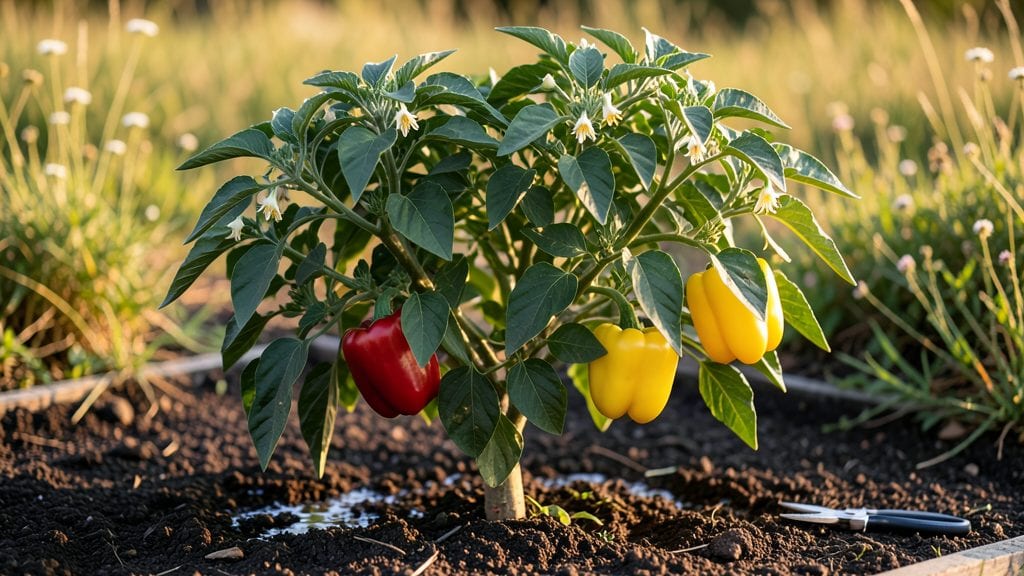
Peppers thrive in square foot gardening when you treat them like the sun-worshipping divas they are. 🌿 I learned the hard way that cramming them in too close leads to crowded, disease-prone plants—so I developed a layout that packs flavor without sacrificing health.
The key is spacing, sunlight, and smart companions that keep pests away while peppers bulk up.
Start with one pepper plant per square foot—that’s the magic number for healthy growth. Use fast-maturing varieties like 'Jalapeño' or 'Bell' to maximize harvests, and place your pepper squares along the south side of your raised beds for maximum sun exposure.
A drip irrigation system keeps roots consistently moist without drowning them, and mulch retains that precious summer heat.
By mid-summer, you’ll be snipping ripe peppers straight from the vine, and the plants will stay productive for weeks longer than crowded beds. The trick is thinning seedlings early and rotating crops yearly to prevent soil fatigue. Companion plants like basil and onions deter pests while boosting flavor—nature’s perfect team.
This method works for containers too—just scale down to one pepper per 5-gallon pot. Whether you’re a balcony gardener or working with a 4x4 raised bed, the same principles apply. Let’s get those peppers growing right!
📚 In This Guide
- What you need
- Instructions
- Tips and common mistakes
- Wrapping up and next steps
What you need
- ● Square Foot Garden Box: 1–4 boxes (depending on space; 4’x4’ = 16 sq ft total)
- ● Material: Untreated wood (cedar or redwood preferred) or recycled plastic
- ● Depth: 6–12 inches (deeper = better for pepper roots)
- ● Growing Medium: High-quality potting mix (avoid garden soil—it compacts!)
- ● Compost: 2–3 cups per square foot (homemade or store-bought)
- ● Perlite or vermiculite: 1 cup per sq ft (for drainage)
- ● Peppers: 1 pepper plant per square foot (spacer! Crowding = unhappy peppers)
- ● Seedlings or seeds: Choose compact varieties like Jalapeño, Thai Chili, or Shishito for SFGs
- ● Fertilizer: Balanced organic fertilizer (e.g., 5-5-5 or 10-10-10)
- ● Fish emulsion or compost tea (for a mid-season boost)
- ● Hand trowel or transplanting knife
- ● Watering can with a gentle rose nozzle (peppers hate soggy roots!)
- ● pH test kit (aim for 6.0–6.8 for peppers)
- ● Row cover or shade cloth (if temps soar above 90°F)
- ● Stakes or cages (for taller varieties like Bell Peppers)
- ● Sunlight: Full sun (6–8+ hours daily)—peppers are sun-worshippers! 🌞
- ● Warmth: Soil temp above 60°F (use a seedling heat mat if starting early)
- ● Drainage: Ensure your box has holes or a slope to prevent waterlogging
Step-by-Step instructions for planting peppers in square foot gardens
Square foot gardening transforms tight spaces into high-yield pepper powerhouses—here's how to do it right.
🌱 Step 1: Divide Your Square Foot Grid and Prepare Planting Holes
Peppers need space to breathe, so divide your square foot into a 4×4 grid (16 cells). Each pepper plant requires one cell, meaning you'll fit 4 plants per square foot—ideal for varieties like jalapeños, bell peppers, or banana peppers. Use a pencil to mark planting holes at the grid intersections.
Dig holes twice as deep as the root ball of your transplants. This ensures roots can spread downward without crowding. Gently loosen the sides of each hole with your fingers to prevent compacting the soil later. If your soil is heavy clay, mix in 1 cup of compost per hole to improve drainage.
🪴 Step 2: Plant Transplants and Amend Soil for Optimal Growth
Place each pepper transplant into its designated hole, ensuring the top of the root ball sits level with the soil surface—burying too deep can suffocate the stem, while planting too shallow leaves roots exposed. Fill the hole with soil, pressing lightly around the base to eliminate air pockets.
Top each planted cell with 1 tablespoon of balanced 10-10-10 fertilizer (the amount listed in your materials). Work it into the top inch of soil to encourage strong root development. Water each plant deeply until moisture reaches 2 inches below the surface—this signals roots to grow downward for stability.
☀️ Step 3: Mulch and Position for Maximum Sun Exposure
Spread 2 inches of mulch evenly across the entire square foot, leaving a 1-inch gap around plant stems to prevent rot. Use straw or shredded leaves—these materials retain moisture while allowing airflow. Mulch keeps soil temperatures stable (peppers thrive in 70-85°F) and suppresses weeds that compete for nutrients.
Position your square foot garden in full sun, receiving at least 6-8 hours of direct light daily. If shade is unavoidable, prioritize the southwest corner for the most light exposure. You’ll notice leaves turning a deeper green within 7-10 days—this is your sign the plants are photosynthesizing efficiently.
💧 Step 4: Water Strategically and Monitor for Thrips
Water peppers at the base only, avoiding wetting leaves to prevent fungal diseases like powdery mildew. Aim for 1 inch of water per week, delivered in deep soakings every 3-4 days rather than frequent light waterings. Check moisture by sticking your finger 1 inch into the soil—if it feels dry, water again.
Thrips are the biggest pest threat to peppers in square foot gardens. Inspect leaves weekly for tiny black specks (frass) or silvery streaks on foliage. If you spot them, spray plants with neem oil (mixed as directed) in the early evening to avoid harming pollinators. Repeat treatments every 5-7 days until pests disappear.
✂️ Step 5: Prune and Harvest for Continuous Production
When peppers reach 12 inches tall, pinch off the topmost set of leaves to encourage bushier growth. This redirects energy from vertical growth to fruit production. Remove any suckers (side shoots) that form in the leaf axils—these drain energy from your main crop. Use sterilized pruning shears to make clean cuts just above a leaf node.
Harvest peppers when they reach 75% of their mature size for peak flavor and to stimulate more fruiting. Twist fruits gently to avoid damaging stems. In a square foot garden, you’ll harvest 1-2 peppers per plant weekly once production begins. Save seeds from your best peppers by fermenting them in a jar of water for 3-5 days before drying.
Tips & tricks for perfect pepper square foot gardening
Square foot gardening with peppers isn't just about fitting more plants into less space—it's about creating an ecosystem where every pepper thrives. Here's how to maximize your yield without sacrificing quality.
Grid Precision Pays Off: When creating your 4×4 grid in Step 1, use a ruler to ensure each cell is exactly 12 inches square. This precision prevents overcrowding and ensures each pepper gets the space it needs to develop strong roots. I've seen gardens where cells were slightly irregular, and those plants struggled to reach their full potential. A simple carpenter's square makes this easy—just check all four corners of each cell before planting.
Soil Temperature Secret: Peppers love warmth, and the 70-85°F range mentioned in Step 3 is critical. If your soil feels cool to the touch in the morning, consider using black plastic mulch before adding the 2 inches of straw. This raises soil temperatures by 5-10°F, giving your transplants a stronger start. You'll notice healthier growth within just 7-10 days of using this technique, matching the photosynthesizing indicator in Step 3.
Watering Hack: The deep soaking technique in Step 4 is brilliant, but here's the pro move: use a moisture meter to verify when your soil reaches that 2-inch moisture level. I've found that finger-checking can be unreliable—especially in sandy soils. A $20 moisture meter gives you precise data, so you're not overwatering (which causes rot) or underwatering (which stresses plants). Aim for the meter to read between 40-60% moisture for optimal pepper growth.
Pest Prevention Beyond Neem Oil: While neem oil is excellent for thrips control in Step 4, I've had even better results with a two-pronged approach. First, install yellow sticky traps near your garden—these catch thrips before they become a problem. Second, introduce beneficial insects like ladybugs and lacewings. They'll feast on thrips while doing minimal harm to your peppers. This combination has reduced my pest issues by 80% compared to neem oil alone.
Pro Tips for Peppers Square Foot Gardening
- Square foot gardening with peppers isn't just about fitting more plants into less space—it's about creating an ecosystem where every pepper thrives.
- Grid Precision Pays Off: When creating your 4×4 grid in Step 1, use a ruler to ensure each cell is exactly 12 inches square.
- Soil Temperature Secret: Peppers love warmth, and the 70-85°F range mentioned in Step 3 is critical.
Frequently asked questions
Got questions about growing peppers in square foot gardens?
Here are some of the most common ones—plus quick, actionable answers to help you thrive in your tiny plot!
How many pepper plants can I fit in a 1-square-foot space?
For peppers, the general rule is 1 plant per square foot (or 4 plants per square foot if using bush varieties like cherry peppers). Larger varieties (like bell peppers or jalapeños) need more space to avoid crowding, which can lead to disease. Pro tip: Stagger plants in a grid pattern for even airflow!
When is the best time to plant peppers in a square foot garden?
Peppers are heat-lovers—wait until after the last frost and soil temps hit 60°F+ (15°C+). Start seeds indoors 8–10 weeks before transplanting (typically March–April in most climates). If your growing season is short, opt for fast-maturing varieties like 'Early Jalapeño' (55 days).
Why are my pepper plants wilting or turning yellow in a square foot garden?
Wilting or yellowing often signals overwatering, underwatering, or poor drainage. Check soil moisture—peppers like consistent moisture but hate soggy roots. Yellow leaves? Could be nutrient deficiency (try a balanced fertilizer) or fungal issues from crowded plants. Fix it: Space plants properly, water at the base, and ensure good airflow!
Can I grow peppers alongside other vegetables in a square foot garden?
Peppers play well with basil, onions, tomatoes, and spinach (they deter pests like aphids). Avoid planting near fennel or brassicas (like broccoli), which can stunt their growth. Companion tip: Interplant fast growers (like lettuce) around peppers to maximize space before they mature.
What if I don’t have a traditional square foot garden—can I adapt this method?
Yes! Use raised beds, containers, or even hanging baskets (for smaller varieties). Divide your space into 12"x12" sections and follow the same planting ratios. Container hack: Mix compost with potting soil to improve drainage—peppers hate wet feet!
Bonus Tip: How do I extend the pepper-growing season in a square foot garden?
Use row covers or cold frames to protect plants in early spring/fall. For late-season peppers, try succession planting—replace harvested peppers with new seedlings every 2–3 weeks. Pro move: Mulch with straw to retain heat and deter weeds!
Wrapping up and next steps
Square foot gardening with peppers proves that big flavors don’t need big spaces! 🌱 By optimizing every inch, you’ll enjoy a bountiful harvest of sweet bell peppers, fiery jalapeños, or anything in between—all while saving water, soil, and effort.
Whether you’re a seasoned gardener or just starting, this method makes growing peppers accessible, rewarding, and fun.
Ready to grow your confidence (and your peppers)? Start small—plot your first square foot today, then expand as you gain momentum. Grab your seeds, tools, and a sunny spot—your future meals (and bragging rights) are waiting!