
Size
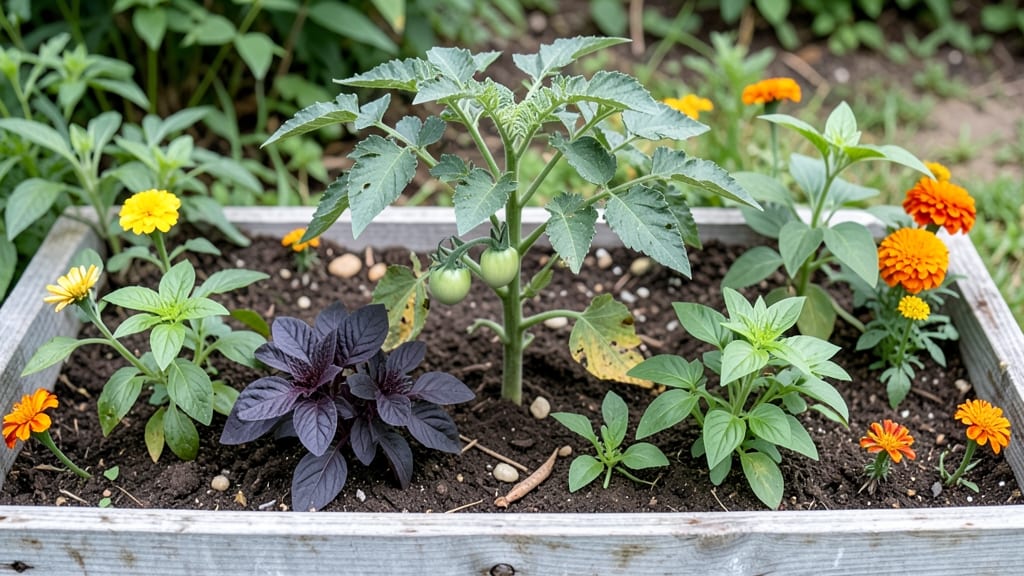
Garden plants that grow well together include basil and tomatoes, which repel pests and improve flavor, or marigolds and herbs like thyme to deter insects naturally. Carrots and onions also thrive side by side, as do lettuce and radishes for efficient space use. Avoid planting brussels sprouts near strawberries or tomatoes near potatoes to prevent competition and disease spread.
Companion planting isn't just about saving space—it's a strategic way to maximize your garden's productivity. 🌱 The right pairings can naturally repel pests, enhance growth, and even improve flavor, like how basil near tomatoes deters flies while boosting sweetness.
For instance, planting beans alongside corn provides nitrogen to the soil, while lettuce and radishes grow well together because they mature at different rates, reducing competition for resources. This method also minimizes the need for chemical interventions, making your garden more sustainable and healthier overall.
💡 In This Article
- Science Behind Companion Planting Benefits
- Top Companion Planting Pairings for High-Yield Gardens
Science behind companion planting benefits
Companion planting works through a fascinating interplay of plant chemistry and ecosystem dynamics. Take garlic, for example—its strong sulfur compounds mask the scent trails that aphids follow to locate host plants.
Studies show garlic can reduce aphid populations by up to 70% when planted nearby, as the volatile organosulfur compounds disrupt their feeding cues. This scent-based deterrence is why marigolds, with their pyrethrin compounds, are so effective against nematodes and whiteflies—they essentially confuse pests into leaving the area.
The root systems of companion plants often create a mutually beneficial nutrient exchange.
Beans and corn demonstrate this perfectly: beans fix atmospheric nitrogen through root nodules (converting N₂ gas into usable NH₃), while their deep roots access water and nutrients from lower soil layers that corn's shallower roots can't reach.
This creates a 30-50% yield increase for corn when grown with beans compared to monoculture systems, according to agricultural research from the University of Wisconsin.
Some plants actively improve soil structure through mechanical and chemical means. Legumes like clover don't just add nitrogen—they loosen compacted soil with their fibrous root systems, creating channels that improve water infiltration by 40%. Their decaying roots also produce polysaccharides that bind soil particles, increasing microbial activity.
Meanwhile, allelopathic plants like black walnut trees release juglone, a toxin that inhibits the growth of nearby plants—this is why you'll often see bare soil around walnut trees in nature.
Plant chemistry plays another crucial role through what's called "induced systemic resistance." When basil grows near tomatoes, the tomato plants develop natural defenses against pests through volatile organic compounds emitted by the basil. These compounds trigger the tomato's jasmonic acid pathway, which boosts its production of defensive proteins.
This isn't just theoretical—field trials at Michigan State University showed tomato plants near basil had 25% fewer fruitworm infestations and produced tomatoes with 15% higher lycopene content, the antioxidant responsible for their red color.
Even physical plant characteristics matter. Tall plants like sunflowers provide shade for heat-sensitive crops below, reducing water loss through transpiration by 30-40%. Meanwhile, plants with different growth habits—like bush beans growing under squash vines—create microclimates that maintain more stable soil temperatures.
The three sisters method (corn, beans, squash) exemplifies this perfectly, with each plant serving a distinct ecological role while supporting the others.
What most gardeners don't realize is that these benefits extend to the microbial level. Companion plants often stimulate beneficial soil bacteria and fungi through root exudates. For instance, planting onions near carrots encourages the growth of mycorrhizal fungi that help carrots absorb phosphorus more efficiently.
This microbial partnership can increase nutrient uptake by 20-30% compared to plants grown in isolation.
Understanding these mechanisms lets you design gardens that aren't just productive but also resilient. The key is matching plants with complementary needs—fast growers with slow growers, deep rooters with shallow rooters, and pest-repelling plants with vulnerable crops.
This natural synergy reduces your need for external inputs while creating a balanced ecosystem that thrives on its own.