Plants
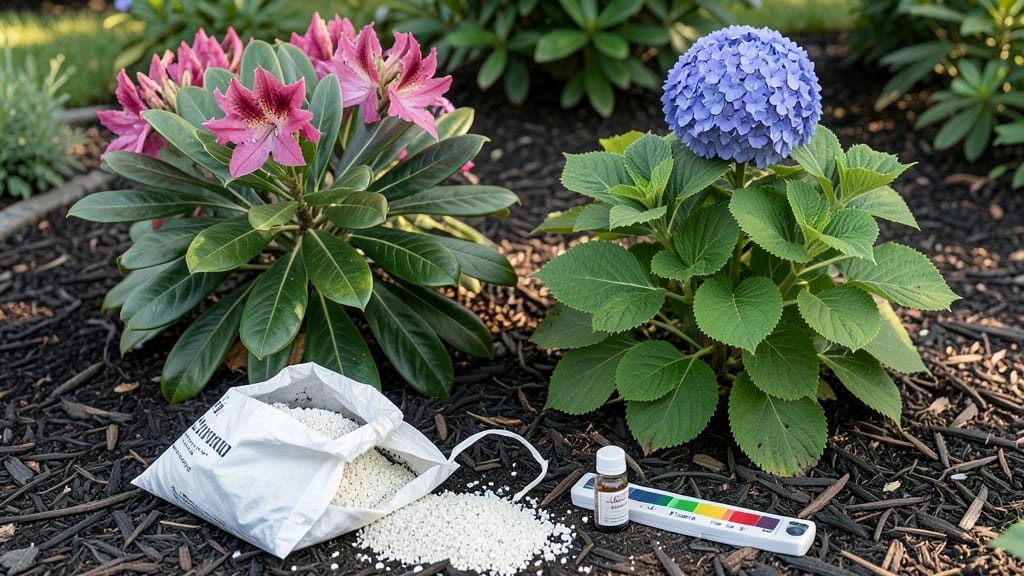
Garden plants that need lime to thrive include azaleas, hydrangeas, blueberries, and rhododendrons, as they prefer slightly alkaline soil (pH 6.5-7.5). Lime helps neutralize acidity, preventing problems like iron chlorosis. Apply dolomitic or agricultural lime in early spring or fall, following soil test results.
Lime works by adding calcium or magnesium to acidic soil, which helps break down harmful aluminum compounds that block nutrient uptake. 🌱 For example, blueberries need consistent pH monitoring because they’re sensitive to even slight changes.
I’ve seen firsthand how over-liming can backfire—it’s all about balance. Always test your soil before applying lime to avoid overdoing it.
When choosing lime, dolomitic lime provides both calcium and magnesium, while calcitic lime focuses on calcium. Spread it evenly over the soil surface, then water it in thoroughly. Re-test your soil after a few months to check the pH adjustment—this ensures your plants get the right growing conditions without harm.
💡 In This Article
- How Lime Adjusts Soil pH for Acid-Loving Plants
- Best Lime Types and Application Tips for Garden Plants
How lime adjusts soil pH for acid-loving plants
When you add lime to acidic soil, you're essentially starting a chemical reaction that neutralizes excess hydrogen ions. Lime—whether dolomitic (calcium-magnesium carbonate) or calcitic (calcium carbonate)—reacts with soil acids like aluminum and hydrogen to form water and salts.
This process raises the pH by reducing acidity, which is crucial because many garden plants can't access nutrients like phosphorus and nitrogen when soil pH drops below 6.0. For example, blueberries need a precise pH range of 4.5-5.5 to absorb iron, but even slight pH shifts can trigger deficiencies.
The key factor here is aluminum toxicity. In acidic soils (pH < 5.5), aluminum becomes soluble and toxic to plant roots, blocking water and nutrient uptake.
Lime counteracts this by precipitating aluminum out of solution, making it inert. 🌱 This is why plants like azaleas and rhododendrons (which naturally grow in acidic forest floors) still require lime in garden settings—they're adapted to specific pH ranges where nutrients are optimally available, not necessarily to high acidity.
The magnesium in dolomitic lime also helps prevent calcium deficiencies, which can cause blossom-end rot in tomatoes or weak stems in peppers.
Organic lime sources, like crushed oyster shells or wood ash, work more slowly but improve soil structure over time. Inorganic lime (pelletized or powdered) provides faster pH adjustments but lacks organic matter benefits. The choice depends on your goals: quick correction versus long-term soil health.
For instance, I've seen gardeners use wood ash for immediate pH boosts in container gardens, while dolomitic lime is better for established garden beds where magnesium is lacking.
What most people don't realize is that over-liming can create its own problems. While you're aiming for 6.5-7.5 pH for lime-loving plants, pushing beyond 7.5 can make micronutrients like iron and manganese unavailable, causing yellowing leaves despite sufficient nitrogen.
This is why soil testing every 2-3 years is essential—especially for sensitive plants like hydrangeas, whose flower colors actually change with pH levels (blue in acidic soil, pink in alkaline).
Consider these key factors when adjusting pH: soil type (sandy soils need more lime than clay), existing organic matter levels, and plant sensitivity. For example, blueberries require precise monitoring because their root systems are shallow and can't buffer sudden pH changes.
The Evergreen Seeds Team recommends splitting lime applications into two doses—half in early spring and half in fall—to avoid shocking the soil ecosystem. 💫
Here's what's actually happening at the microscopic level: Lime particles dissolve in soil moisture, releasing calcium (Ca²⁺) and magnesium (Mg²⁺) ions. These cations exchange with hydrogen ions (H⁺) on soil particles, reducing acidity.
The reaction continues until equilibrium is reached, which is why you'll need to re-test and possibly re-apply lime after 3-6 months, depending on your soil's buffering capacity. Think of it like adjusting the pH of a swimming pool—you can't just add one chemical and expect perfect balance forever.