
Tools
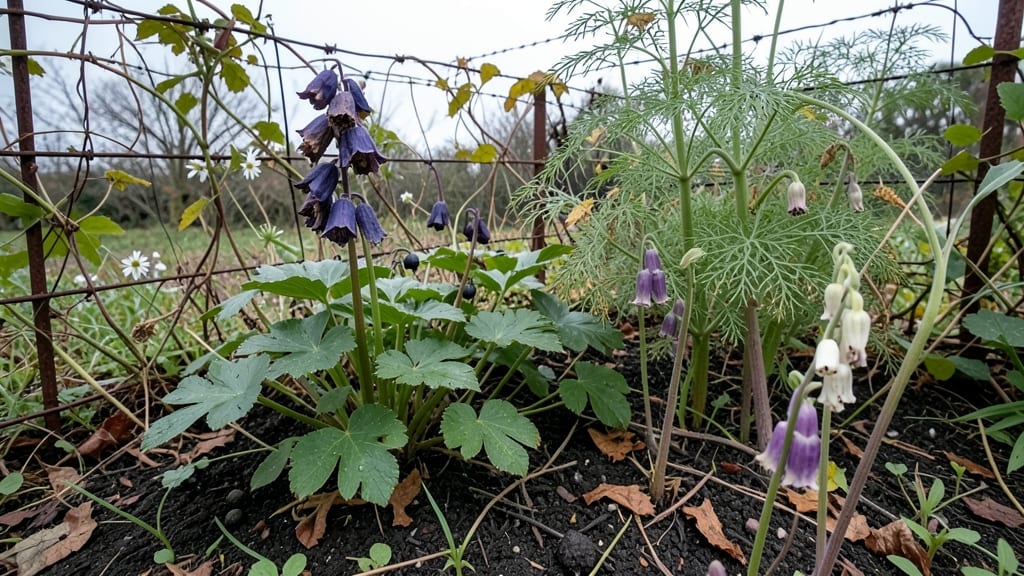
The world's deadliest garden contains plants like castor beans, oleander, and foxglove, which produce toxins such as ricin, cardiac glycosides, and digitalis. These deadly species flourish in warm climates and can prove fatal with even minimal contact, posing extreme risks to gardeners.
The world's deadliest garden isn't just a theoretical concept—it's a real danger in regions with warm climates where these plants thrive naturally. 🔥 For example, oleander's toxins can cause fatal heart arrhythmias within hours, while ricin from castor beans attacks ribosomes, shutting down protein synthesis.
Even experienced botanists must handle these plants with heavy-duty gloves and masks, as skin contact or inhalation can be deadly. The irony? Many of these plants are prized for their beauty or medicinal properties, which makes their dangers even more insidious.
What makes these plants particularly hazardous is their widespread cultivation—some are grown as ornamental shrubs, while others appear in traditional medicines. The key to avoiding disaster lies in proper identification and strict safety protocols.
For instance, foxglove's purple flowers might look harmless, but they contain digitalis, which can stop a heart in minutes. Always verify plant species before handling, and when in doubt, consult local agricultural extensions for verification.
💡 In This Article
- Deadly Plant Toxins and Their Lethal Mechanisms
- Safely Growing (and Avoiding) High-Risk Garden Plants
Deadly plant toxins and their letal mechanisms
Here's what's actually happening inside your body when you come into contact with these garden killers. Ricin, found in castor beans, works by binding irreversibly to ribosomes - the protein factories in your cells.
A single seed contains enough ricin to kill an adult, as it shuts down protein synthesis within 36-72 hours, causing organ failure.
The toxin's molecular structure allows it to penetrate cell membranes through endocytosis, where it then cleaves a specific adenine residue in ribosomal RNA, permanently disabling the cell's ability to produce proteins.
The symptoms start subtly with nausea and vomiting about 24 hours after exposure, but progress to seizures, coma, and death within days. What makes ricin particularly insidious is its stability - it remains potent even when dried and can survive digestion if ingested.
In comparison, oleander's cardiac glycosides like oleandrin work differently by inhibiting sodium-potassium ATPases in heart cells, causing fatal arrhythmias within hours. Just 0.5 milligrams of oleandrin can be lethal to an adult, and the plant's toxins are absorbed through skin contact or inhalation of smoke from burning branches.
Foxglove's digitalis compounds attack the heart through a similar mechanism but with a delayed onset. These glycosides increase intracellular calcium levels in cardiac muscle cells, leading to irregular contractions. The lethal dose is surprisingly small - about 2-5 milligrams of pure digitalis can stop a heart.
What's alarming is how quickly symptoms appear: within 30 minutes to 2 hours after ingestion, victims experience nausea, dizziness, and blurred vision before progressing to cardiac arrest. The plant's toxins are water-soluble, meaning they can be absorbed through skin contact with damp foliage or even through contaminated water sources.
What most people don't realize is how these toxins interact with each other in the body. For example, ricin's cellular damage makes the heart more vulnerable to the arrhythmic effects of cardiac glycosides.
This synergistic effect means that exposure to multiple toxic plants can be exponentially more dangerous than exposure to a single species.
The body's detoxification systems become overwhelmed when faced with these potent compounds, particularly in warm climates where metabolic rates are naturally higher and toxins are absorbed more quickly through the skin.
Consider these key factors when understanding the lethality: ricin's LD50 (lethal dose for 50% of test subjects) is about 5-10 micrograms per kilogram of body weight, while oleandrin's LD50 is approximately 0.5 milligrams.
For a 70-kilogram adult, that means just 0.35 milligrams of oleandrin could be fatal - about the amount found in a single leaf.
The toxins' potency is why these plants have been historically used in assassinations: they leave no immediate trace in the body and can be administered through various routes including ingestion, inhalation, or even injection.
The scientific understanding of these mechanisms has led to medical applications as well. Digitalis compounds, while deadly in pure form, are used in carefully controlled doses to treat heart conditions like congestive heart failure.
This demonstrates the fine line between therapeutic and toxic doses - a principle that's crucial when working with these plants. The body's response to these toxins varies dramatically based on individual physiology, making each case uniquely dangerous despite the general mechanisms at play.