
Size
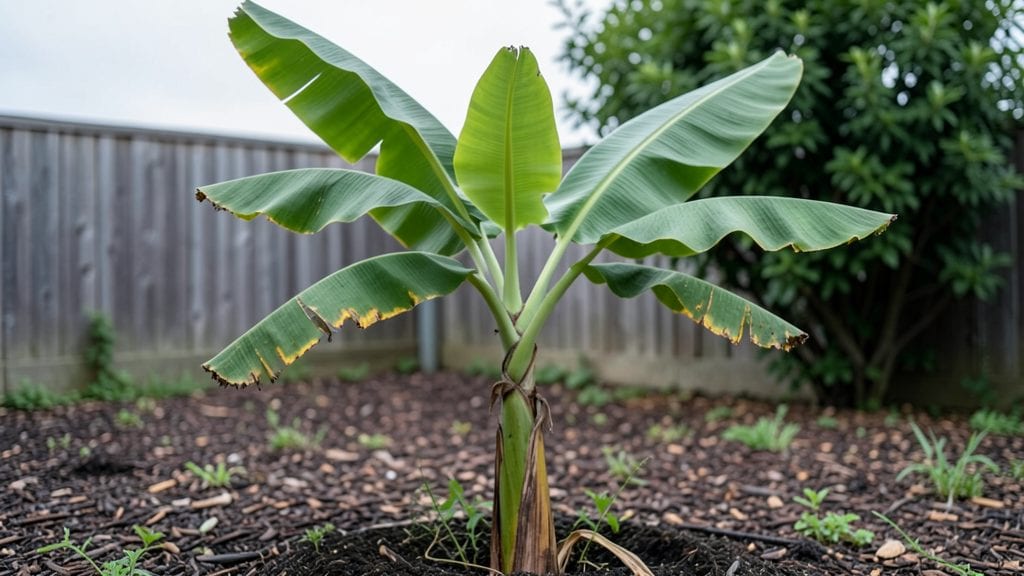
Growing a banana tree in your garden delivers tropical drama without needing a greenhouse. 🌿 I’ve grown these striking plants in containers for years, even in zone 6, and they reward you with bold foliage and—if you’re lucky—small edible fruit.
The key is choosing the right dwarf variety and mimicking their native conditions as closely as possible.
You’ll need a 5-gallon container (or larger) with drainage holes, a well-draining potting mix rich in organic matter, and a spot that gets at least 6 hours of sunlight daily.
Banana trees love heat and humidity, so if your climate cools below 50°F, you’ll need to bring them indoors or protect them with frost cloth. The right variety makes all the difference—look for Musa acuminata ‘Dwarf Cavendish’ or Musa velutina for cold-hardier options.
With proper care, your banana tree will shoot up 6-10 feet tall in a single season, its massive leaves unfurling like a tropical dream. Even if you never get fruit, the sheer presence of this plant transforms any space into a lush oasis.
The secret to keeping it thriving? Consistent watering (but never soggy soil) and monthly feedings of balanced fertilizer during the growing season.
Container-growing works beautifully for urban gardens or patios, and you can even overwinter your plant indoors near a sunny window. Just be patient—it takes 1-2 years to reach maturity, but the payoff is worth every bit of effort. Let’s get you started on your own tropical statement piece!
📚 In This Guide
- What you need
- Instructions
- Tips and common mistakes
- Wrapping up and next steps
What you need
- ● Banana plant (Musa spp.) – Choose a dwarf variety (e.g., 'Dwarf Cavendish' or 'Red Dwarf') for containers. Buy a 1-2 year old plant from a nursery or online.
- ● Large container (15–20 gallons) – At least 18–24 inches deep with drainage holes. Terra-cotta or fabric pots work best for cold climates.
- ● High-quality potting mix – A blend of 60% peat moss/coco coir, 30% perlite/vermiculite, and 10% compost. Avoid garden soil—it compacts.
- ○ Slow-release fertilizer (10-10-10 or 14-14-14) – 1–2 cups mixed into the soil at planting. Optional: Organic options like worm castings or banana peel compost.
- ● Drainage layer – 2–3 inches of gravel, perlite, or broken pottery at the bottom of the pot.
- ● Watering can or hose with gentle spray – Bananas hate soggy roots! Use lukewarm water to avoid shocking the plant.
- ○ Mulch (optional but helpful) – 2–3 inches of straw, pine needles, or wood chips to retain moisture and regulate temperature.
- ● Sunlight – 6+ hours of direct sun daily. Use a south-facing window or grow lights (12–14 hrs/day) in cold climates.
- ● Temperature – Bananas thrive in 75–85°F (24–29°C). In cold zones (below 50°F/10°C), move pots indoors or use a greenhouse or cold frame.
- ● Humidity – Aim for 60–80%. Use a humidifier, pebble tray, or misting bottle if your air is dry.
- ● Wind protection – Place containers where they’re sheltered from strong winds (they’re top-heavy!).
- ● 🔥 Cold hardiness hack: If temps drop below 50°F (10°C), wrap the pot in bubble wrap or a frost blanket.
- ● 🌡️ Heatwave prep: Move pots to partial shade if temps exceed 90°F (32°C).
- ● ✨ Container upgrade: For faster growth, use a fabric grow bag—it breathes better than plastic!
Step-by-step instructions for growing a container banana tree
Here’s how to cultivate a thriving banana tree in pots—even in cooler climates.
🪴 Step 1: Select the Right Container and Soil Mix
Choose a 5-gallon or larger container with at least two drainage holes to prevent root rot. Banana trees need room to grow, so a 24-inch diameter pot is ideal for mature plants. Avoid plastic—terracotta or fiberglass pots help regulate moisture better.
Use a well-draining potting mix with 30% perlite or pumice added to improve aeration. I blend 2 parts potting soil with 1 part coconut coir and 1 part perlite for the perfect balance of moisture retention and drainage. Fill the container 2/3 full, leaving space for the root ball.
🌱 Step 2: Plant the Banana Pup and Position for Light
Select a healthy banana pup (a small offshoot from the mother plant) with at least 3-4 inches of roots. Gently remove it from the nursery pot and place it in the center of your container. Spread the roots evenly and backfill with the prepared soil mix, pressing lightly to eliminate air pockets.
Banana trees thrive in full sun (6+ hours daily). Place your container in the sunniest spot—a south-facing patio, balcony, or greenhouse works best. If outdoors, move it indoors before temperatures drop below 50°F to protect the roots. Watch for yellowing leaves, a sign of insufficient light or cold stress.
💧 Step 3: Water Deeply and Maintain Moisture
Water the banana tree deeply once a week, ensuring the entire root ball is saturated. Let the top 2 inches of soil dry out between waterings—banana trees hate soggy roots but need consistent moisture. I use a hose with a gentle spray nozzle to avoid displacing the soil.
During hot summer months, increase watering to every 4-5 days, checking soil moisture with your finger. Overwatering is the fastest way to kill a banana tree, so always ensure excess water drains freely. A moisture meter helps track soil conditions accurately.
☀️ Step 4: Fertilize and Encourage Growth
Feed your banana tree with a balanced, water-soluble fertilizer (10-10-10) every 4-6 weeks during the growing season (spring and summer). Dilute the fertilizer to half-strength to avoid burning the roots. I also mix in 1 tablespoon of Epsom salt monthly to boost magnesium levels, which prevents yellowing leaves.
As the plant grows, stake the pseudostem (the thick, false stem) with 3-4 bamboo stakes tied loosely to support its weight. Banana trees can reach 10+ feet tall, so proper support prevents toppling. Prune any yellow or damaged leaves at the base to redirect energy to new growth.
⏰ Step 5: Protect from Cold and Prepare for Winter
Before temperatures drop below 50°F, move your banana tree indoors to a bright, cool space (like a sunroom or garage with natural light). Reduce watering to once every 2-3 weeks and stop fertilizing entirely. Wrap the pot in bubble wrap to insulate roots from drafts.
If you can’t move it indoors, mulch the soil surface with 2-3 inches of straw to retain warmth. Banana trees are tropical and won’t survive freezing, but with proper care, they’ll bounce back in spring. Watch for brown leaf tips, a sign of cold stress, and adjust protection as needed.
Tips & tricks for perfect container-grown banana trees
Mastering container banana cultivation comes down to these key details that make all the difference between a struggling plant and a thriving tropical specimen.
Container Selection Wisdom: While a 5-gallon container works for young plants, upgrade to a 10-15 gallon pot as your banana tree matures—those extra 24 inches of diameter give roots the space they need to support a 10-foot pseudostem. I've seen banana trees topple from insufficient support because their roots were cramped. For maximum stability, choose a container that's at least 12 inches deeper than the root ball of your banana pup.
Soil Mix Secrets: The 30% perlite recommendation isn't just about drainage—it's about creating an oxygen-rich environment for those fibrous banana roots. I've found that adding 1 cup of worm castings to your soil mix gives an extra nutrient boost without overwhelming the young plant. For even better results, mix in 1/4 cup of crushed eggshells to provide calcium, which prevents blossom end rot if you ever get fruit. The key is maintaining that perfect balance between moisture retention and aeration.
Light Positioning Strategy: That 6+ hours of full sun requirement is non-negotiable, but here's what nobody tells you: banana trees actually perform better with morning sun and afternoon shade in hot climates. The intense afternoon rays can scorch leaves, especially in summer. If you're using a greenhouse, position your container where it gets direct sunlight for 4-5 hours in the morning and dappled light in the afternoon. This mimics their natural tropical environment where they often grow under partial canopy cover.
Winter Survival Hacks: The 50°F threshold isn't just about moving indoors—it's about protecting the meristem (that critical growth point at the top). I've had success using two layers of frost cloth wrapped around the pot and pseudostem when temperatures dip below 50°F, even when keeping it outdoors. For extra insulation, place the container on a thick layer of foam board to protect roots from ground cold. And here's a pro move: keep your banana tree near a south-facing window indoors where it gets maximum winter light—this prevents that dreaded leggy growth habit.
Pro Tips for Grow A Garden Banana Tree
- Mastering container banana cultivation comes down to these key details that make all the difference between a struggling plant and a thriving tropical specimen.
- I've seen banana trees topple from insufficient support because their roots were cramped.
- Soil Mix Secrets: The 30% perlite recommendation isn't just about drainage—it's about creating an oxygen-rich environment for those fibrous banana roots.
Frequently asked questions
about growing a garden banana tree in containers—especially in colder climates—can be tricky! Here are answers to the most common questions to help you succeed.Can I grow a banana tree in a container if I live in a cold climate?
Yes! With the right care, banana trees (like Musa basjoo) thrive in containers and can survive winters in zones 5–9. Use a large pot (at least 15 gallons), move it indoors or to a garage during frost, and protect it with frost cloth or mulch. Dwarf varieties are ideal for containers in cooler areas.
How do I protect my banana tree from freezing temperatures?
Banana trees are tropical but can tolerate brief cold snaps. For sub-20°F nights, wrap the pot in bubble wrap or burlap, cover the plant with frost cloth, and move it to a sheltered spot (like a garage or basement). Avoid heating pads—banana roots rot easily if overwatered in cold conditions.
How long does it take for a banana tree to produce fruit in a container?
Patience is key! Most container-grown banana trees take 2–5 years to fruit, depending on the variety and care. Musa basjoo (ornamental) rarely produces edible fruit, while Musa acuminata or Musa balbisiana hybrids may yield small, sweet bananas. Ensure full sun, rich soil, and consistent watering to speed up fruiting.
What’s the best soil mix for a container banana tree?
Use a well-draining mix: 50% potting soil, 30% perlite or orchid bark, and 20% compost. Avoid heavy garden soil—it compacts and suffocates roots. Add a handful of worm castings for nutrients, and repot every 2–3 years to refresh the mix.
Why are my banana tree leaves turning yellow or brown?
Yellow leaves often signal overwatering or nutrient deficiency. Brown edges or crispy tips usually mean underwatering or low humidity. Check the soil moisture (top 2 inches should be dry) and adjust watering. Yellowing between veins may indicate potassium deficiency—fertilize with a banana-specific feed or compost tea.
Can I grow a banana tree from a store-bought banana?
Not reliably! Store-bought bananas are sterile hybrids and won’t sprout. Instead, grow from seed (slow, may not be true to parent) or buy a potted nursery plant (faster, more predictable). For cold climates, start with a hardy variety like Musa basjoo or Dwarf Cavendish.
Wrapping up and next steps
Growing a garden banana tree in containers is a rewarding journey that brings tropical vibes to even the coldest climates! With the right care—sunlight, warmth, and a little patience—you’ll soon enjoy lush foliage and sweet, homegrown bananas. 🌱✨
Now that you’re armed with tips and tricks, take the next step: pick your favorite banana variety, gather your supplies, and start planting! Whether you’re a beginner or a seasoned gardener, your container banana tree is just a few steps away from becoming a stunning centerpiece—and a delicious harvest.
Happy growing! 🌿🍌