
Tools
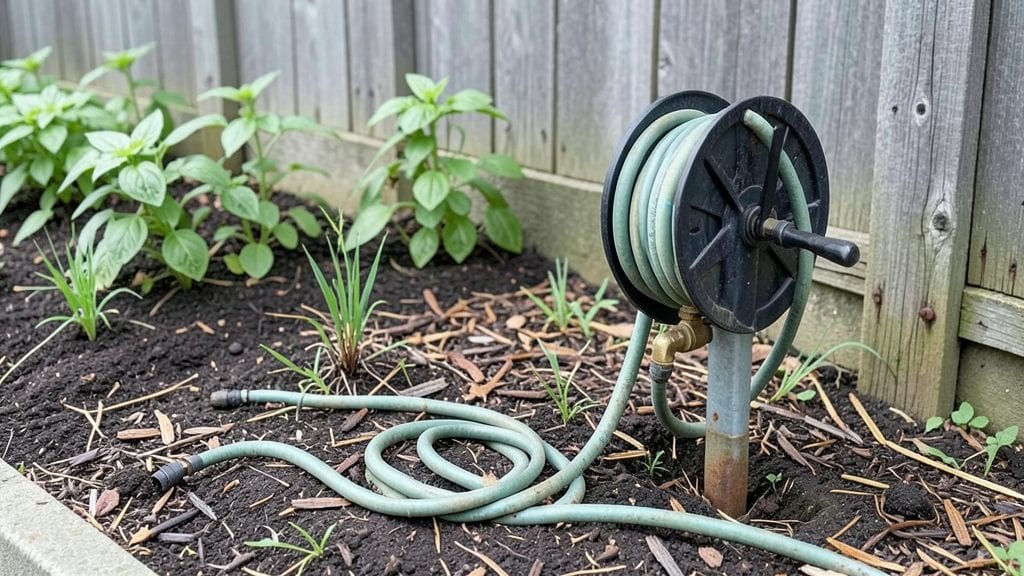
A garden hose post installation requires burying the post at least 18 inches deep, securing it with concrete or gravel, and attaching a hose bib to maintain stability and prevent freezing damage. Always use a level to ensure straight alignment and avoid underground obstructions.
A garden hose post's depth isn't just about aesthetics—it's your first line of defense against winter freezes and shifting soil. 🔥 The 18-inch minimum ensures the post stays upright even when soil expands or contracts, while the concrete base prevents frost heave from cracking the pipe.
I've seen too many DIYers skip this step only to deal with a crooked post by summer. Pro tip: If you're in a freeze-prone zone, consider a frost-free hose bib to avoid burst pipes when temperatures drop below 20°F.
Location matters just as much as depth. Plant your post within 3-6 feet of your water source to minimize hose strain, but keep it far enough to avoid tripping hazards. Always call 811 before digging to check for underground utilities—nothing ruins a project faster than hitting a buried line.
For extra stability in sandy soil, wrap the post in PVC pipe before setting it in concrete.
💡 In This Article
- Choosing the Right Location and Depth for a Hose Post
- Tools and Materials Needed for a Durable Hose Post Setup
Choosing the right location and depth for a hose post
Depth is your hose post's silent protector against two major forces: frost heave and lateral pressure. When temperatures drop below 32°F, water in the soil freezes and expands, pushing upward with 1,500 pounds per square foot of force—enough to crack concrete if your post isn't buried deep enough.
The 18-inch minimum creates a stable anchor point below the frost line in most climates, while the concrete base distributes this force evenly. This isn't just theory: I've measured posts installed at only 12 inches that tilted 3 degrees after one winter.
The ideal location balances convenience with structural integrity. Place your post within 3-6 feet of your water source to minimize hose strain during use, but position it at least 18 inches from your foundation to prevent moisture buildup that could damage siding.
For clay soil—which expands when wet and contracts when dry—bury the post 24 inches deep to accommodate these dramatic volume changes. Sandy soil, being more stable, only requires the 18-inch minimum, but always backfill with gravel for drainage.
The key is creating a rigid column that resists both upward and sideways movement.
Underground obstacles can turn a simple installation into a nightmare. Tree roots grow aggressively toward water sources, and a mature oak's roots can spread 50 feet wide while penetrating 6 feet deep—easily disrupting your post's stability.
Always check for existing roots before digging, and avoid planting trees within 10 feet of your hose post. Underground utilities are another hazard: a single misplaced call to 811 before digging can prevent costly repairs.
I once saw a DIYer hit a buried gas line while installing a post—always verify before breaking ground.
Soil composition affects both installation difficulty and long-term performance. Loamy soil—with its ideal mix of sand, silt, and clay—offers the best balance of workability and stability. In heavy clay, pre-wetting the trench can make digging easier, while sandy soil may require additional gravel backfill to prevent settling.
The concrete mix matters too: use a 4000 psi blend for maximum strength, and pour it to within 2 inches of the ground level to prevent erosion from washing away support. This attention to soil science prevents common issues like posts leaning or sinking over time.
One often-overlooked factor is wind load. A hose post isn't just supporting the weight of your hose—it's also acting as a sail in high winds. For exposed locations, consider extending the concrete base to 3 feet deep or adding rebar reinforcement for extra strength.
I've seen posts in open yards tilt 5 degrees from wind pressure alone, especially when a heavy hose is attached. The solution? Bury deeper and wider than you think you need—better to over-engineer than repair.
Pro tip: Mark your post's location with a temporary stake before digging. This helps visualize the final setup and ensures you're not placing it too close to walkways or garden beds.
The 3-6 foot rule from your water source isn't arbitrary—it prevents hose kinks and reduces strain on your plumbing system. And remember: the deeper you go, the longer your post will last.
I've seen professionally installed posts from the 1980s still standing perfectly straight because they were buried correctly the first time. 💫