Pests
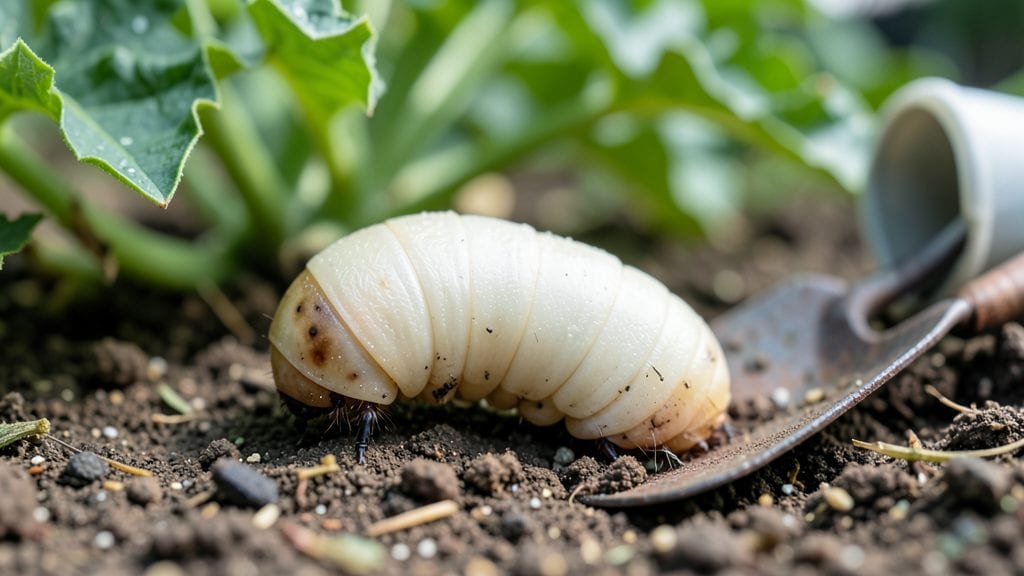
Mastering garden grubs identification is your first step to spotting these soil-dwelling troublemakers before they turn your garden into a buffet—here’s what to watch for. 🌱 I’ve spent years pulling these sneaky critters out of soil and stems, and I’ve learned the telltale signs that separate harmless bugs from garden destroyers.
The damage patterns—chewed leaves, wilting stems, or mysterious holes in roots—tell you exactly what you’re dealing with.
Most grubs hide underground or inside stems, so you’ll need to dig or inspect closely. Cutworms leave clean-cut stems at soil level, while Japanese beetle larvae create jagged holes in roots. Root grubs?
They chew through roots like tiny woodpeckers, leaving behind a mess of sawdust-like frass. A quick soil check with a trowel or your fingers can confirm what’s really going on.
Once you spot the clues, you’ll know whether you’re dealing with a one-time nuisance or a full-blown infestation. The key is acting fast—before the grubs mature into beetles or moths that spread even faster. This guide cuts through the guesswork so you can tackle the problem with confidence.
We’ll cover the most common culprits, their life cycles, and what to do next—whether it’s organic controls, soil treatments, or simply removing them by hand. No more second-guessing what’s eating your garden. Let’s get started.
Root Causes Of Grub Infestations
Grubs—those squirming, C-shaped larvae—don’t just appear out of nowhere. Their presence in your garden is usually the result of a mix of environmental, biological, and even human factors. Understanding these triggers can help you address the problem at its source.
Below, we break down the key reasons why grubs invade your lawn and garden beds, so you can take targeted action.
Grubs thrive in damp, poorly aerated soil because it mimics their natural habitat—moist, decaying organic matter. Here’s why this happens:
- Excess Moisture: Grubs need water to survive, and overwatering (or poor drainage) creates the perfect soggy conditions they love. Fun fact: Many species, like the Japanese beetle grub, can drown in overly saturated soil, but their eggs still hatch in damp environments. - Compacted Soil: Heavy foot traffic, machinery, or clay-heavy soil compresses the ground, reducing oxygen levels.
Grubs prefer low-oxygen zones because predators (like birds or beneficial nematodes) struggle to penetrate them. - Organic Debris Buildup: Leaves, grass clippings, or mulch left piled up provide both shelter and a food source (decaying plant matter).
This is especially true for Phyllophaga (May/June beetle) grubs, which feed on roots in these conditions.
Actionable Fix:
- Test your soil’s drainage by digging a 6-inch hole and filling it with water. If it drains slowly (more than 4 hours), amend with sand or organic matter.
- Aerate compacted lawns in early fall to improve oxygen flow and disrupt grub habitats.
Grubs start as eggs laid by adult beetles, and their location isn’t random. These pests target specific plants and conditions:
- Preferred Host Plants: Many grubs (e.g., white grubs from Japanese beetles) favor grassy areas, but others, like Cyclocephala (June bug) grubs, attack roots of vegetables, fruits, and ornamentals.
Adult beetles scout for lush, healthy plants to lay eggs near. - Warm, Sunny Spots: Eggs hatch best in soil temperatures between 70–85°F (21–29°C).
Southern lawns or gardens with afternoon sun are high-risk zones. - Freshly Disturbed Soil: Tilling or aerating can expose eggs to ideal hatching conditions. Some beetles even time egg-laying to coincide with these disturbances.
Actionable Fix:
- Monitor adult beetle activity in late spring/early summer (peak flight time for many species). Use traps or handpick beetles from plants.
- Avoid heavy tilling in high-risk areas (like lawn edges near gardens) during egg-laying season.
Grubs are a buffet for wildlife, but urban and suburban gardens often lack their natural enemies. Here’s why predator populations dwindle:
- Pesticide Overuse: Broad-spectrum insecticides kill grubs and their predators, like ground beetles, toads, and birds. Even "safe" chemicals can disrupt the balance. - Habitat Loss: Removing leaf litter, rocks, or woodpiles eliminates hiding spots for predators.
Birds, for example, need perches and open soil to hunt effectively. - Monoculture Lawns: Uniform grass lawns offer fewer food sources for predator diversity compared to mixed gardens or wild areas.
Actionable Fix:
- Introduce beneficial nematodes (Heterorhabditis bacteriophora) or milky spore (Bacillus popilliae) to target grubs naturally.
- Create predator-friendly zones: Leave patches of bare soil, plant native wildflowers, or install a small water feature to attract toads and birds.
Grubs and their eggs hitchhike into gardens through neglect or improper practices:
- Recycled Infested Soil: Using compost or topsoil from unknown sources can introduce grub eggs. Some nurseries sell bagged soil contaminated with beetle larvae. - Weak or Stressed Plants: Grubs prefer plants already struggling from drought, disease, or poor nutrition.
Damaged roots become an easy meal. - Unchecked Mulch Piles: Thick mulch (especially near tree bases) traps moisture and organic matter, creating a grub hotspot. Some species, like Anomala (June bug) grubs, burrow into mulch to feed on decaying plant material.
Actionable Fix:
- Solarize soil before planting: Cover bare beds with clear plastic for 4–6 weeks in summer to kill eggs/larvae.
- Space mulch 3–4 inches away from plant stems to reduce moisture buildup.
Grubs follow a predictable life cycle tied to temperature and season:
- Spring Hatching: Eggs laid in summer hatch in late spring to early summer, coinciding with warm soil.
This is why you might see sudden grub outbreaks in June. - Fall Activity: Some species, like black turfgrass ataenius grubs, become active in fall, feeding on roots before winter.
Cool nights and warm days create ideal conditions. - Mild Winters: In regions with minimal freezing, grubs survive longer, extending their damage season.
Actionable Fix:
- Time interventions: Apply nematodes or milky spore in early fall (for fall-active grubs) or late spring (for summer hatchlings).
- Use row covers in early summer to block adult beetles from laying eggs near vulnerable plants.
Fixing garden grub damage fast
Now that you’ve identified the culprits wreaking havoc in your garden—whether they’re Japanese beetles, cutworms, grubs, or other larvae—it’s time to take action. The good news? Most grub problems can be tackled with a mix of natural remedies, cultural fixes, and targeted treatments.
Below, we’ll match the most common causes to the best solutions, plus prevention tips to keep your garden thriving long-term.
Cause: These C-shaped larvae munch on roots, often leaving brown, wilted patches in lawns or garden beds.
🔪 Quick Fixes (Immediate Action)
- Handpick & Drown 👨🍳 Dig up infested soil (especially in early evening when grubs are near the surface). Drop them into soapy water to dispatch them. Best for small patches.
- Milky Spore or Beneficial Nematodes 🦠 Apply milky spore bacteria (organic) or heterorhabditis bacteriophora nematodes (microscopic worms) to the soil. These target grubs without harming plants or pets. Works best in late summer/fall.
- Neem Oil or Insecticidal Soap 🌿 Spray neem oil (1 tsp per gallon of water) on affected areas. Repeat every 7–10 days. Safe for veggies but may harm beneficial insects—use at dusk.
🌱 Prevention for Next Season
- Aerate & Overseed 🌱 Improve soil drainage and plant grub-resistant grasses like tall fescue or ryegrass.
- Reduce Grub Hotspots 🚫 Avoid over-fertilizing with high-nitrogen lawn food (grubs love it!).
Use compost or slow-release organic fertilizers instead. - Encourage Predators 🐞 Birds, toads, and ground beetles feast on grubs. Leave some leaf litter or mulch to attract them.
Cause: These stubby caterpillars slice stems at soil level, toppling seedlings overnight.
🔥 Fast Solutions
- Collar Young Plants 🛡️ Wrap the base of seedlings with cardboard or foil collars (bury 1–2 inches deep) to block cutworms. Cheap and effective!
- Diatomaceous Earth (DE) 💀 Sprinkle food-grade DE around plant bases.
It’s non-toxic but deadly to soft-bodied pests like cutworms. Reapply after rain. - Handpick at Night 🌙 Shake plants over a bucket in the evening when cutworms are active. Drop them into soapy water.
🌡️ Long-Term Prevention
- Rotate Crops 🌾 Avoid planting the same veggies (like tomatoes or beans) in the same spot yearly.
- Mulch Strategically 🍂 Use straw or grass clippings (not wood chips) to deter egg-laying moths.
- Plant Traps 🌸 Grow marigolds or dill nearby—they repel cutworm moths.
Cause: Adult beetles skeletonize leaves, while their grubs devour roots.
🎯 Treatment Plan
- Neem Oil Spray 🌿 Mix 1 tbsp neem oil + 1 tsp dish soap per gallon of water.
Spray early morning or late evening to avoid harming bees. Reapply every 3–5 days. - Kaolin Clay (Surround WP) 🏗️ Dust plants with kaolin clay to create a barrier beetles can’t cross. Safe for organic gardens. - Traps (Use with Caution!) ⚠️ Pheromone traps can lure beetles away from your garden—but place them far from plants (they may attract more beetles).
💡 Prevention Tips
- Remove Grubs from Lawn 🚜 Aerate in late summer and treat with beneficial nematodes to starve out grub populations.
- Handpick Beetles 🖐️ Drop them into soapy water (they drown instantly). Best done in the morning when they’re sluggish.
- Plant Repellents 🌼 Garlic, catnip, or geraniums deter Japanese beetles.
Interplant these near vulnerable crops.
For all larvae types, try these universal fixes:
| Method | How to Apply | Best For |
|---|---|---|
| Beer Traps | Bury a container with beer; grubs drown. | Lawn grubs (chafer larvae) |
| Chicken or Ducks | Let poultry forage in the garden. | Organic, large infestations |
| Row Covers | Use floating fabric over seedlings. | Cutworms, beetles |
| Compost Tea | Brew worm castings and spray foliage. | General pest deterrent |
- Test Your Soil 📊 – A pH of 6.0–7.0 and healthy microbes make plants less vulnerable.
- Water Deeply 💦 – Grubs hate dry soil. Deep watering encourages deeper root growth they can’t reach.
- Inspect Regularly 👀 – Check undersides of leaves and soil surfaces weekly for early signs.
- Avoid Overwatering 🚰 – Soggy soil attracts grubs and fungal diseases.
Remember: The key to grub control is consistency. Combine immediate fixes with preventive habits, and your garden will stay lush—and grub-free! 🌱💪
Frequently asked questions
What do garden grubs look like at different life stages?
Grubs start as tiny white eggs (about 1/16-inch), then hatch into C-shaped larvae with soft, segmented bodies. Adult beetles vary—some are metallic green (Japanese beetles) while others are brown or black. The key is checking soil for the telltale C-shape or inspecting leaves for adult beetles.
How can I tell if my plants have grub damage?
Look for chewed roots, wilted patches in lawns, or clean-cut stems (cutworms). Dig up plants—if roots are reduced to sawdust-like frass, grubs are likely the culprit. Root damage often appears when soil is moist, making it easier for larvae to feed.
Are all grubs harmful to gardens?
Not all! Some species, like earthworm larvae, break down organic matter. Harmful grubs include Japanese beetle larvae (white, C-shaped) and cutworms (stubby caterpillars). The damage pattern—roots vs. stems—helps identify the troublemakers. Always confirm by inspecting soil or plants.
When is the best time to treat for grubs?
Target treatments in late spring/early summer (when eggs hatch) or early fall (for fall-active species). Use beneficial nematodes or milky spore during these windows. Avoid chemical sprays in peak pollination periods to protect bees.
Can grubs survive winter in my garden?
Most grubs die in freezing temperatures, but some species (like black turfgrass ataenius) overwinter in soil. In mild climates, they may remain active. Aerate soil in late winter to expose and kill overwintering larvae before they feed.