
Fertilization
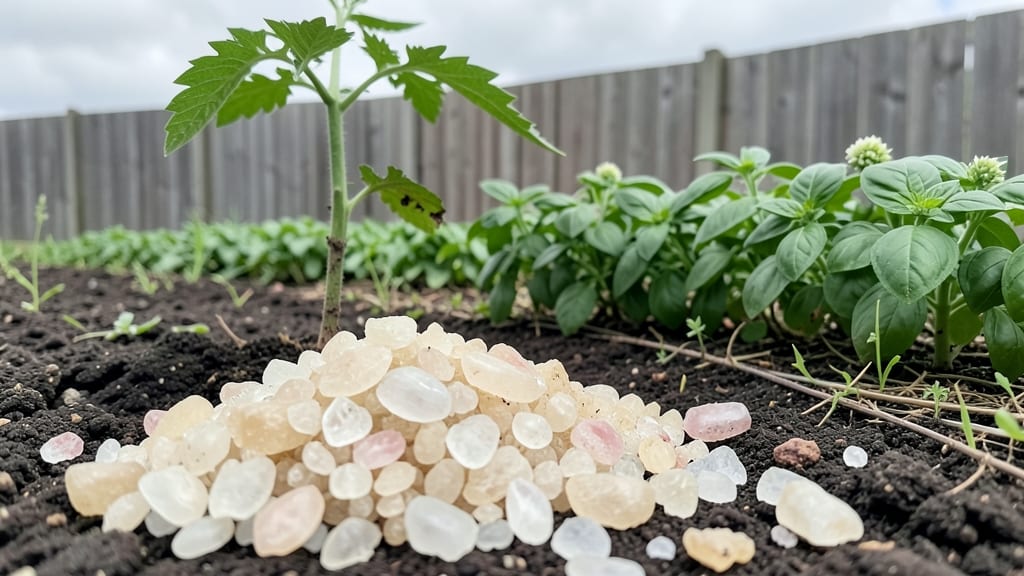
Epsom salt for vegetable gardens acts as a magnesium and sulfur booster, helping prevent yellowing leaves, enhancing chlorophyll production, and fortifying roots—particularly for heavy-feeding plants like tomatoes and peppers. Use 1 tablespoon per foot of plant height monthly during the growing season, dissolved in water.
Epsom salt works wonders because magnesium is a core component of chlorophyll—the green pigment that drives photosynthesis. 🌱 When your plants show yellowing between leaf veins (a classic deficiency sign), it's often a cry for more magnesium.
Unlike synthetic fertilizers, Epsom salt delivers magnesium in a form plants absorb quickly, especially through foliar sprays or soil drenches. I've seen dramatic turnarounds in struggling peppers and squash within weeks of consistent use, though it's not a cure-all for poor soil structure or extreme pH issues.
For best results, apply it during active growth—not flowering—when plants can best utilize the nutrients. A little goes a long way: overuse can actually harm plants by disrupting soil chemistry.
Think of it as a vitamin boost rather than a primary nutrient source, and always pair it with organic matter to maintain long-term soil health.
💡 In This Article
- How Epsom Salt Fixes Magnesium Deficiency in Vegetables
- Best Practices for Applying Epsom Salt in Gardens
How Epsom salt fixes magnesium deficiency in vegetables
Magnesium deficiency in vegetables starts with chlorophyll breakdown—the green pigment in leaves that captures sunlight for photosynthesis. When magnesium levels drop, plants can't produce enough chlorophyll, causing that telltale yellowing between leaf veins (interveinal chlorosis) while veins stay green.
This happens because magnesium sits at the center of the chlorophyll molecule, acting like a hub that keeps the entire structure stable. Without it, photosynthesis grinds to a halt, and plants struggle to grow. 🌿
The real magic of Epsom salt (magnesium sulfate) lies in its solubility. Unlike dolomitic lime—which releases magnesium slowly over months—Epsom salt dissolves instantly in water, allowing plants to absorb magnesium through both roots and leaves.
For foliar sprays, the fine crystals break down rapidly when mixed with water, creating a solution that's absorbed through leaf stomata within hours. Root uptake is equally efficient because magnesium sulfate doesn't bind tightly to soil particles like other forms, making it immediately available to plants.
Here's what most gardeners miss: magnesium deficiency symptoms often mimic other nutrient issues. Stunted growth, weak stems, and poor fruit development can all signal low magnesium, but these problems also appear with nitrogen or potassium deficiencies. The key difference?
With magnesium, the yellowing starts between veins and spreads outward, while nitrogen deficiency causes uniform yellowing across the entire leaf. Testing soil pH is crucial too—magnesium absorption drops dramatically in acidic soils (below 6.0 pH).
Comparing Epsom salt to other magnesium sources reveals trade-offs. Dolomitic lime adds magnesium and calcium but takes months to work and raises soil pH, which can lock out other nutrients. Compost provides magnesium organically but releases it slowly and inconsistently.
Epsom salt's strength is its speed and foliar effectiveness, but it's not a complete nutrient—it lacks calcium and other essential minerals found in lime or compost.
For heavy feeders like tomatoes, a balanced approach works best: use Epsom salt for quick fixes during growing season while building soil health with compost long-term.
What's actually happening at the cellular level? Magnesium acts as an enzyme activator, helping plants convert carbon dioxide and water into glucose during photosynthesis. It also stabilizes cell membranes and regulates phosphate uptake.
When magnesium is scarce, these processes slow down, leading to stunted growth and poor yield. The sulfur in Epsom salt plays a secondary role, aiding in protein synthesis and overall plant vitality. 💫
For visual learners, imagine a plant's leaves as tiny solar panels. When magnesium is abundant, these panels operate at full capacity, converting sunlight into energy efficiently. But with a deficiency, those panels develop "dead zones" (the yellow areas), reducing energy production by up to 30%.
That's why you'll often see deficiency symptoms first on older leaves—they've been exporting nutrients to younger growth for so long that they run out first.
Pro tip: If you notice magnesium deficiency in your garden, try this quick test. Take a healthy leaf and a deficient leaf from the same plant. Place them in separate bowls of water and observe the color change over 24 hours.
The deficient leaf will turn even more yellow, confirming the magnesium shortage. This simple experiment reveals how quickly plants respond to nutrient availability. ✨