
Picking
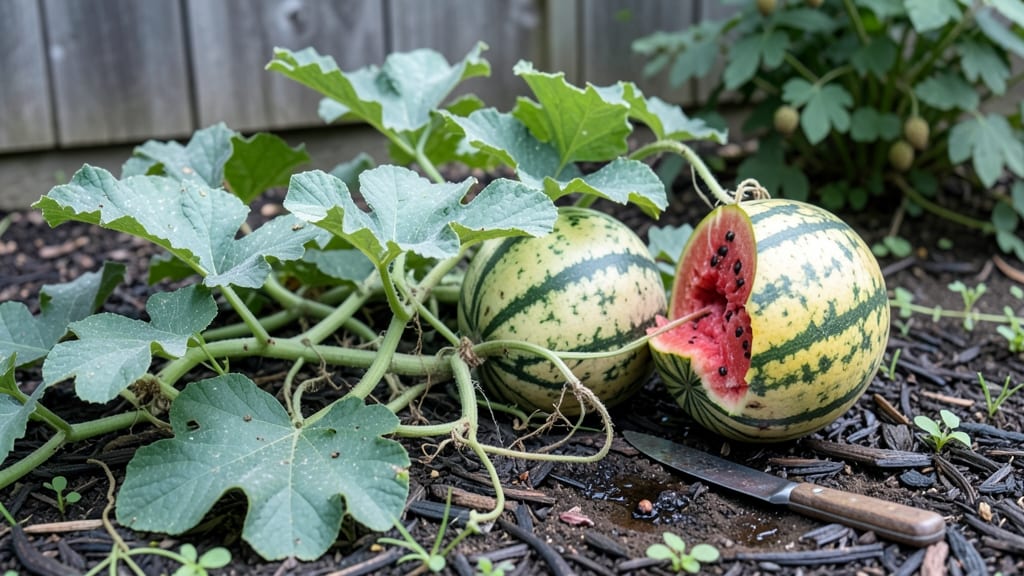
To pick watermelon from your garden at the perfect moment means catching that sweet, juicy peak—when the fruit is fully ripe but still firm and flavorful.
Nothing beats the satisfaction of biting into a vine-ripened 🍉 straight from your own patch, but timing is everything. Too early, and you’ll end up with bland, seedy disappointment; too late, and you risk mushy, overripe melons.
The secret lies in a mix of visual cues, tactile tests, and even listening for the right sound.
Most gardeners rely on the classic thump test, but did you know the vine’s behavior and the fruit’s ground spot can reveal ripeness days before the melon is ready?
I’ll walk you through every trick—from checking the tendril near the stem to spotting the telltale cream-colored patch where the melon rests on the soil.
By the end, you’ll know exactly when to grab your knife and cut into that perfect slice of summer—no guesswork, just science-backed confidence.

Watermelon ripeness signs: thump test, color, and vine crack secrets
Harvesting watermelons at the perfect moment transforms your garden labor into sweet, juicy rewards. The key lies in combining visual cues, tactile tests, and vine behavior—each revealing critical clues about ripeness.
I’ve learned that ignoring even one sign can mean the difference between a perfectly sweet melon and a disappointing one. Let’s break down these foolproof methods so you never guess again.
First, let’s tackle the most famous test: the thump test. This tactile method works because a ripe watermelon’s internal structure shifts from watery to dense. Tap the melon’s blossom end (opposite the stem) with your knuckles—if it sounds dull and hollow, it’s ready.
A high-pitched "ping" means it needs more time. Pro tip: Test in the morning when temps are cooler for more accurate results.
The rind color is your first visual clue, but don’t rely on it alone. Deep, solid colors (like dark green, yellow, or striped patterns) signal maturity, but some varieties stay pale until fully ripe.
Look for cream-colored patches where the melon rested on the ground—this "field spot" darkens as sugars develop. Overripe melons may show yellowing or soft spots, so act quickly if you see these.
Now for the vine crack secret: when the main vine (the one connecting to the fruit) turns brown and dries out near the melon, it’s a clear signal. This happens because the vine stops supplying nutrients as the fruit matures.
I’ve found that dwarf varieties show this sign earlier than standard vines, so adjust your timing accordingly. Watch for the small tendril closest to the fruit—when it browns and dies, that’s your final green light.
Here’s a quick reference to combine all these signs for foolproof harvesting:
<summary-table>Climate plays a surprising role in ripeness timing. In hot, dry regions, melons ripen faster due to accelerated sugar development, so monitor them daily after 70 days. Meanwhile, in cooler climates (like USDA Zone 6), vines may take up to 90 days to signal readiness.
I’ve seen melons in shady spots stay underripe longer—always prioritize full-sun varieties for consistent results.
One common mistake? Assuming all watermelons ripen at once. Sugar Baby varieties mature in 65-70 days, while Crimson Sweet takes 80-90 days. Keep a harvest journal to track your specific variety’s timeline.
I label my plants with planting dates and variety names to avoid confusion—trust me, it saves headaches later!
After confirming ripeness, harvest by twisting the stem gently until it snaps cleanly. Leave 1-2 inches of stem attached to preserve sweetness. Store melons in a cool, dry place (50-55°F) for up to 2 weeks, but enjoy them fresh when possible—nothing beats that vine-ripened flavor!
With these signs mastered, you’ll never second-guess your watermelon harvest again. The next time you see that cream-colored field spot and hear that dull thump, you’ll know it’s time to celebrate—your garden’s sweetest reward is ready! 🍉
Best time of day and season to harvest watermelons for maximum sweetness
Timing your watermelon harvest isn’t just about waiting for the rind to darken—it’s also about understanding how temperature and sunlight influence sweetness. Summer varieties like Sugar Baby or Crimson Sweet thrive in 80-90°F heat, while cooler-climate varieties such as Charleston Gray need 70-80°F to ripen properly.
Even the time of day you harvest can affect flavor, with morning picks often delivering juicier results.
For gardeners in USDA Zone 6a or cooler, aim to harvest watermelons between late July and early August when daytime temperatures peak. In warmer zones like Zone 9b, you might extend harvesting into September.
The key is balancing heat exposure—too much sun can make melons overripe quickly, while cool nights slow sugar development. Even the moisture levels in the soil play a role, as drought stress can concentrate sugars—but only if the melon is fully mature.
🌱 Top 5 Timing Tips for Sweetest Watermelons
- 🌞 Morning Harvest (6-9 AM): Cooler temps preserve flavor and crispness. Avoid harvesting after midday heat, which can make melons soggy.
- 🌡️ Seasonal Sweetness Peak: Summer varieties hit sweetness at 75-85°F days. Spring varieties (like Sugar Baby) ripen faster in warmer soil.
- ⏰ Evening Harvest (4-7 PM): Only if temperatures drop below 85°F. Hot afternoons can over-ripen melons before you pick.
- 🌱 Vine Crack Watch: A dry, brown vine near the stem signals peak ripeness. If the vine cracks, harvest within 24 hours.
- 🌡️ Cool-Climate Adjustments: In Zone 6a, harvest 1-2 weeks earlier than southern zones to avoid early frost damage.
Morning harvests are ideal because cooler temperatures prevent the melons from overheating during transport or storage. If you must harvest in the evening, wait until after 4 PM when temperatures dip below 85°F.
Overripe melons lose sweetness and develop a hollow core, so act quickly if you notice vine cracks or a dull thump when tested.
Regional adjustments matter too. In northern climates, prioritize early-maturing varieties like Black Diamond to avoid first frost. In southern states, you can extend harvesting into October with varieties like Jubilee, which tolerate warmer nights.
Always monitor soil moisture—drought-stressed vines produce smaller, sweeter melons, but only if the fruit is fully ripe.
Pro tip: Harvest on a dry morning to reduce rot risk. Use a sharp knife to cut the stem 1 inch above the fruit, leaving a small stem cap to prolong shelf life.
Store melons in a cool, shaded spot (not the fridge) until ready to eat—ethylene gas from the stem helps ripen any remaining melons on the vine.
Remember, patience pays off. A watermelon left one extra day on the vine can develop 30% more sugar, but waiting too long turns it mealy and seedy. Trust the vine crack, ground spot, and thump test—your garden’s sweetest rewards are just timing away.