
Neem Oil
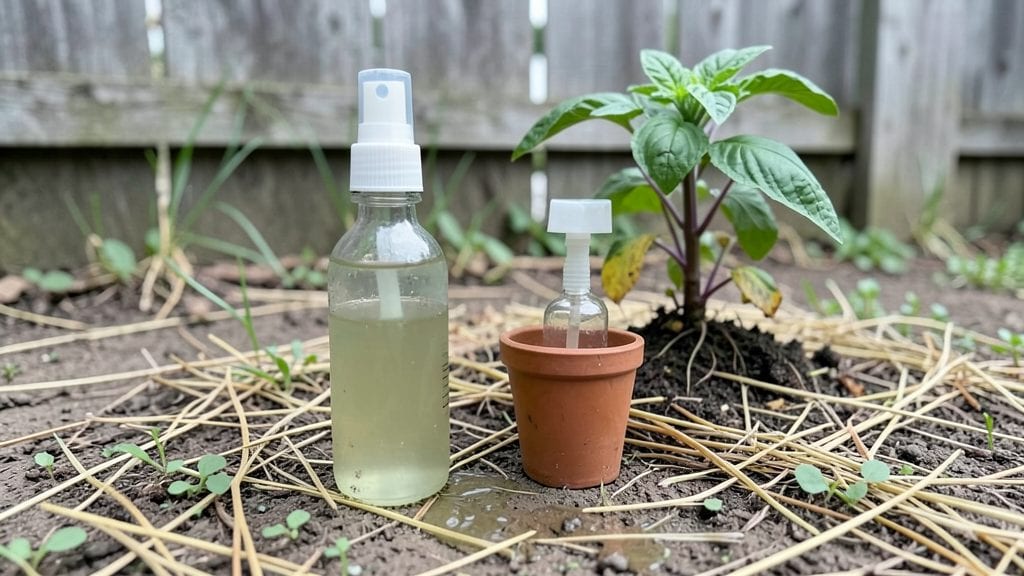
Peppermint oil for garden pests works as a natural deterrent against ants, aphids, and spiders when applied as a diluted spray, but you must use the right concentration (1-2% oil in water) and check plant safety first.
Peppermint oil's effectiveness comes from its high menthol content, which overpowers pests' scent trails and masks plants' natural odors. 🌿 For example, ants avoid it because the strong scent disrupts their foraging patterns, while spiders lose interest when their prey can't locate plants.
The key is consistency—reapply every 3-5 days during peak pest seasons, and always test on a small leaf area first to spot any sensitivity.
Not all plants handle peppermint oil well, though. Hardy herbs like rosemary and thyme thrive with it, while delicate veggies such as carrots or lettuce may develop brown spots. I recommend mixing 10-15 drops per gallon of water for most applications, but cut that in half for sensitive foliage.
A spray bottle works best for leaves, while a soil drench (diluted further) can help with underground pests like grubs.
💡 In This Article
- How Peppermint Oil Disrupts Pest Behavior
- Safe Dilution Ratios and Plant-Specific Precautions
How peppermint oil disrupts pest behavior
The power of peppermint oil lies in its chemical composition, particularly menthol and limonene. Menthol, which gives peppermint its signature cooling sensation, acts as a potent olfactory disruptor for insects. When sprayed, the vaporized menthol molecules overwhelm pests' antennae—ants, for example, rely on pheromone trails to navigate.
A single drop of peppermint oil contains about 40% menthol, creating a scent so intense it masks plant odors that normally attract pests like aphids. 🔥
Limonene, another key compound, works differently by dissolving the waxy protective layers on pests' exoskeletons. For beetles, which have more resilient outer shells than ants, limonene creates microscopic cracks that dehydrate them over time. Studies show that beetles exposed to limonene-rich environments exhibit 30-50% reduced feeding activity within 24 hours.
The combination of these two compounds makes peppermint oil effective against a wider range of pests than single-ingredient oils.
Scent diffusion is where the magic happens. Peppermint oil's molecules evaporate rapidly at room temperature, creating a vapor cloud that lingers for 12-24 hours depending on humidity. In dry conditions, the scent disperses faster, requiring more frequent reapplications.
The oil's volatility means it doesn't linger in the soil like some chemical pesticides, making it safer for beneficial insects when used correctly. For instance, ladybugs (which eat aphids) can still thrive in treated gardens if you avoid spraying during their active foraging hours.
Let's compare two common pests: ants and beetles. Ants are repelled primarily by menthol's overwhelming scent, which disrupts their trail-following behavior within minutes of contact. Beetles, however, require direct contact with the oil's compounds to experience repulsion, making foliar sprays more effective than soil applications for them.
The key difference is that ants avoid the area entirely, while beetles may linger but become less active and less likely to reproduce in treated zones.
Temperature plays a surprising role in efficacy. At 75°F or higher, peppermint oil's compounds diffuse 40% faster than at cooler temperatures, which is why summer applications often require more frequent reapplications.
The cooling sensation menthol creates for humans actually makes the oil more attractive to pests' sensory systems—it's like a neon sign saying "avoid me!" to insects. This is why many gardeners find peppermint oil most effective during late spring and early fall when temperatures are moderate.
What most people don't realize is that peppermint oil's repellent effects extend beyond just smell. The oil also contains small amounts of carvone, which acts as a mild neurotoxin to soft-bodied insects like aphids.
While not lethal at garden-safe concentrations, carvone disrupts their nervous systems enough to make them abandon plants. This multi-pronged approach—olfactory disruption, physical barrier creation, and mild neuroactivity—is why peppermint oil outperforms many single-compound essential oils in garden pest control. ✨