
Fertilization
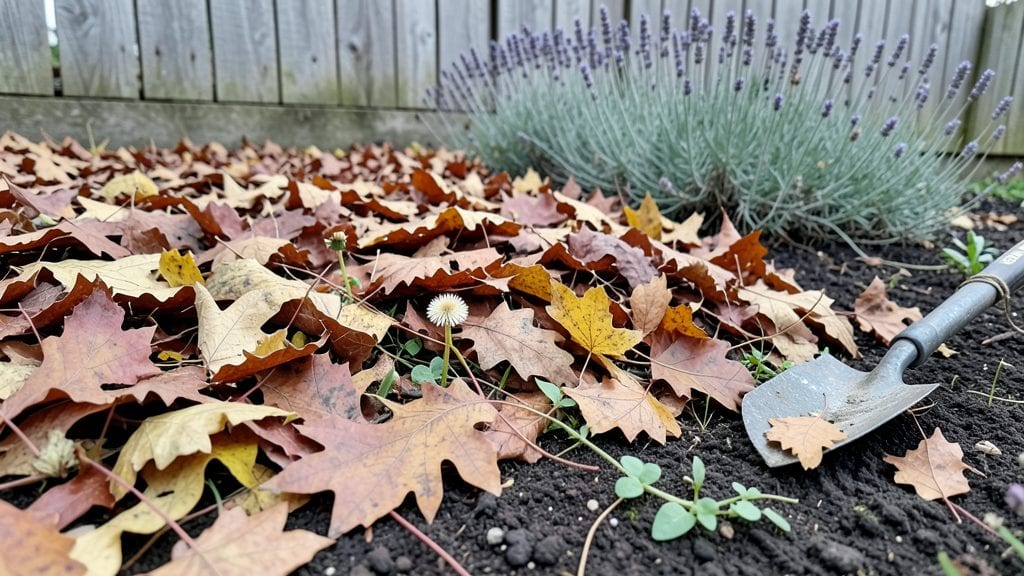
Mulched leaves in garden enrich soil by breaking down into nutrient-rich compost, retaining moisture, and suppressing weeds while encouraging beneficial microbial activity for healthier plant growth.
Using fallen leaves as garden mulch is one of nature's most efficient ways to boost soil health without synthetic fertilizers. 🌿 When leaves decompose, they create a slow-release nutrient cocktail that feeds plants over months, unlike quick-fix chemical amendments.
I’ve seen firsthand how a 2-3 inch layer of shredded leaves can transform compacted soil into a loose, crumbly texture perfect for roots—while also cutting watering needs by up to 30%.
The key is balance: too-thick layers can smother plants, but the right thickness turns leaves into a living soil amendment.
For best results, shred leaves before applying—the smaller the pieces, the faster they break down. I recommend spreading them in early fall or late winter when weeds are dormant, giving microbes time to work before spring planting.
And always avoid leaves from diseased trees, as pathogens can linger even after decomposition. With proper technique, leaf mulch isn’t just free fertilizer—it’s a year-round soil protector that saves time and money.
💡 In This Article
- How Leaf Mulch Transforms Soil Fertility
- Best Practices for Using Leaf Mulch in Your Garden
How leaf mulch transforms soil fertility
When you spread leaves as mulch, you're essentially creating a slow-release nutrient factory right in your garden bed. The decomposition process starts with microbes breaking down cellulose and lignin—the tough structural components of leaves—into simpler compounds.
This requires a balanced carbon-to-nitrogen (C:N) ratio of about 30:1, which is perfect for microbial activity. Unlike fast-acting fertilizers, leaf mulch releases nutrients gradually as microbes convert organic matter into humus, a dark, spongy substance that improves soil structure and holds moisture like a sponge.
Here's what's actually happening at the microscopic level: Fungi and bacteria colonize the leaf surfaces within days, secreting enzymes that dissolve complex organic molecules. For example, white-rot fungi can break down lignin—something most other organisms can't digest—while bacteria like Pseudomonas convert nitrogen into plant-available forms.
The result? A soil ecosystem that's 50% more active than bare soil, with earthworms and beneficial nematodes thriving in the improved environment. 🔥 You'll notice the soil developing a darker color and crumbly texture within just a few weeks as this process accelerates.
The physical transformation is equally impressive. Leaf mulch creates a protective barrier that reduces soil temperature fluctuations by up to 10°F during summer heatwaves and insulates roots during winter freezes. This temperature regulation is crucial because extreme variations stress plants and disrupt microbial activity.
The mulch also prevents water evaporation by creating a shaded layer that maintains soil moisture—studies show mulched beds retain 25-30% more water than unmulched ones. This is why drought-prone gardens see dramatic improvements with just a few inches of leaf cover.
What most people don't realize is how mulch improves soil porosity. As leaves decompose, they create tiny air pockets that enhance oxygen exchange—a critical factor for root respiration. Compacted clay soils, for instance, can see their drainage improve by 40% within a season when properly mulched.
The organic matter also acts as a natural glue, binding soil particles into stable aggregates that resist erosion. This structural improvement explains why mulched gardens often produce healthier plants with stronger root systems and greater disease resistance.
Consider these key factors when evaluating leaf mulch's impact:
- Decomposition rate: Shredded leaves break down in 3-6 months, while whole leaves may take 1-2 years—this affects how quickly nutrients become available
- Nutrient release: Provides 2-3% nitrogen, 1-2% phosphorus, and trace minerals like potassium and calcium over time
- Weed suppression: Blocks 90% of sunlight from reaching weed seeds in the top inch of soil
- pH buffering: Helps stabilize soil pH between 6.0-7.0, ideal for most garden plants
The most dramatic transformations occur in the first growing season after applying mulch. I've observed vegetable gardens where mulched beds produced 20% larger tomatoes and 30% more leafy greens compared to unmulched plots, all while requiring half the water.
The secret lies in this perfect storm of improved microbial activity, moisture retention, and temperature stability working together to create an optimal growing environment. 💫