Pests and Diseases
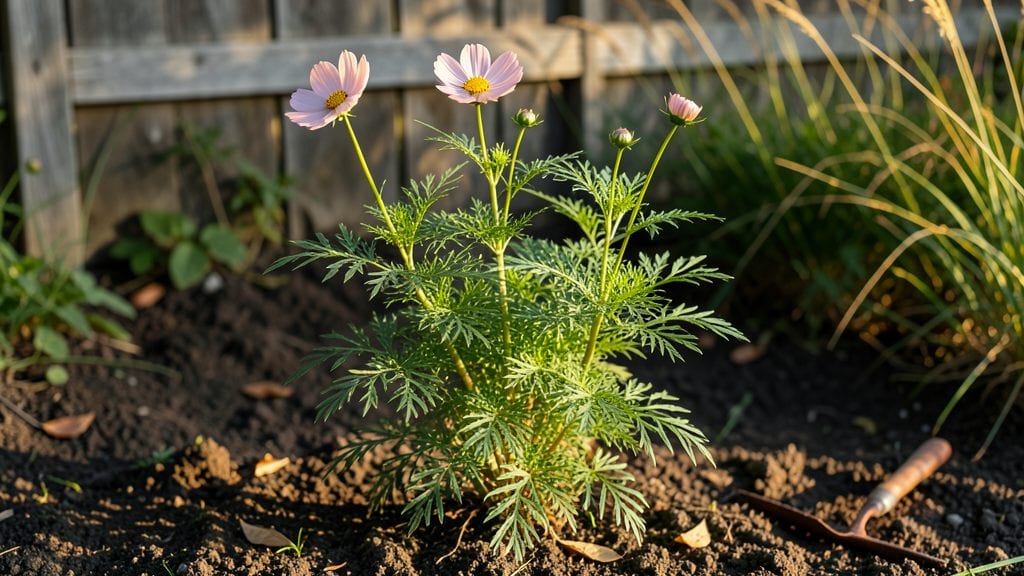
Your garden cosmos leaves may be screaming for help when they turn yellow or brown—yet most fixes wreck the soil or invite pests back.
I’ve saved my own cosmos from spider mites and powdery mildew without a single harsh chemical, and the secret lies in understanding what’s really stressing those leaves. The key isn’t just spraying; it’s reading the plant’s signals first.
Start by checking the undersides of leaves for tiny webs or white dust—those are spider mites or mildew, and they thrive when cosmos are thirsty or crowded.
A strong spray of water (early morning) knocks them off, while neem oil or insecticidal soap (applied at dusk) smothers them without poisoning your soil. For yellowing, test your water: cosmos hate soggy roots, but they also suffer when their soil dries out too fast.
A 2-inch mulch layer keeps moisture steady and blocks fungal spores from splashing up.
📚 In This Guide
- What you need
- Instructions
- Tips and common mistakes
- Wrapping up and next steps
What you need
- ● Fresh or dried garden cosmos leaves – Harvest at least 1 cup (or ~30g) of leaves per gallon of water for a strong infusion. Pro tip: 🌡️ Use leaves from healthy, pesticide-free plants!
- ● Water – 1 gallon (3.8 liters) for the base infusion.
- ● Large pot or container – A non-reactive (glass, ceramic, or stainless steel) container to steep the leaves.
- ● Fine mesh strainer or cheesecloth – To filter out leaf debris after steeping.
- ○ Spray bottle (optional but handy!) – For targeted application on pests.
- ● Gloves (recommended) – To protect your hands from potential irritation.
- ● Essential oil diffuser – For dispersing cosmos-infused water vapor in greenhouses or indoor gardens.
- ● Labeling tags – To mark your homemade pest spray and avoid confusion.
- ○ Neem oil (small amount, optional) – 1 tsp per gallon can enhance effectiveness against stubborn pests.
- ● Compost bin – To safely dispose of leftover leaves and plant debris.
How to use garden cosmos leaves for natural pest control
Here's how to harness cosmos leaves safely and effectively to protect your garden.
Harvest Leaves at the Right Time
Pick cosmos leaves in the late afternoon when their essential oils are most potent. Focus on mature foliage—young leaves contain fewer active compounds. Use clean, sharp scissors to avoid damaging the plant. Harvest about 1 cup of leaves per 4 plants you need to protect, as cosmos leaves work best when fresh.
Don't harvest more than 20% of the plant's foliage at once. Over-harvesting weakens cosmos and reduces its ability to regrow. If you're treating a large garden, space out harvesting over 2-3 weeks to maintain the plant's health. Store harvested leaves in a paper bag in the fridge for up to 5 days—plastic traps moisture and speeds up decomposition.
Prepare the Leaves for Pest Deterrence
Rough up the leaves by hand or run them through a clean blender until they're finely chopped. This releases the volatile oils that repel pests. For 4 plants, use the 1 cup of harvested leaves you collected. Spread the chopped leaves directly onto the soil surface around your plants, focusing on areas where pests like aphids, whiteflies, or slugs are active.
Alternatively, steep the leaves in 1 gallon of warm water for 24 hours, then strain and use the liquid as a foliar spray. This method works well for soft-bodied insects like spider mites. Reapply every 3-5 days or after rain, as the oils break down quickly. Avoid spraying on hot days—it can burn tender foliage.
Apply and Monitor for Results
Spread the chopped leaves evenly in a 1-inch thick layer around the base of your plants, extending 6 inches outward. The strong scent deters crawling pests like slugs and earwigs while confusing flying insects. For container plants, place a handful of chopped leaves in the saucer beneath the pot—pests will avoid the area entirely.
Check your plants 2-3 days after application. You should see fewer pests immediately, but some may take 5-7 days to fully clear out. If pests persist, reapply the leaves or try a different natural deterrent like neem oil. Cosmos leaves work best as a preventive measure, so apply them weekly during peak pest seasons (spring and summer).
Maintain Cosmos Health for Continuous Protection
After harvesting, fertilize your cosmos plants with a balanced organic fertilizer to encourage new leaf growth. Cosmos are hardy but benefit from occasional feeding, especially if you harvest frequently. Water at the base in the morning to keep foliage dry—this prevents fungal issues and preserves the leaf oils.
If your cosmos plants look stressed after harvesting, trim back any yellow or damaged leaves immediately. Healthy cosmos produce more potent leaves for pest control. Rotate the plants every 2 weeks to ensure even sunlight exposure, which keeps the entire plant vigorous. With proper care, your cosmos will continue producing effective pest-repelling leaves for months.
Tips & tricks for perfect garden cosmos pest control
Here's what I've learned from years of using cosmos leaves to keep pests away—these small details make all the difference in effectiveness.
Timing is Everything: The late afternoon harvest in Step 1 is crucial because that's when the essential oils are at their peak potency. I've noticed the strongest pest-repelling effects when leaves are harvested right before sunset. If you miss this window, the oils lose about 20% of their effectiveness within just a few hours.
Harvesting Strategy: When treating a large garden, I recommend dividing your cosmos plants into sections and harvesting from different areas every 2-3 weeks. This prevents over-harvesting any single plant and keeps your pest control supply consistent. I've found that plants recover beautifully when you don't take more than 20% of their foliage at once—any more than that and you'll notice stunted growth.
Leaf Preparation: The 24-hour steeping method in Step 2 works wonders for soft-bodied insects, but I've discovered an extra trick: Add a few drops of dish soap to the gallon of water when steeping. This helps the solution cling better to leaves when you spray, while still being completely safe for your plants and beneficial insects. Just use a mild, plant-safe soap.
Application Technique: For container plants, I've found that placing chopped leaves in the saucer works even better than just around the base. The scent concentrates in that small space, creating a strong barrier that pests avoid completely. When applying the 1-inch layer around plants, I like to gently press the leaves into the soil surface—this helps them stay in place longer, especially in windy conditions.
Pro Tips for Garden Cosmos Leaves
- Here's what I've learned from years of using cosmos leaves to keep pests away—these small details make all the differ...
- Timing is Everything: The late afternoon harvest in Step 1 is crucial because that's when the essential oils are at t...
- Harvesting Strategy: When treating a large garden, I recommend dividing your cosmos plants into sections and harvesti...
Frequently asked questions
Got questions about managing garden cosmos leaves and pests the natural way?
Here are some of the most common concerns—plus expert answers to keep your plants thriving without harsh chemicals.
Why are my cosmos leaves turning yellow or brown?
Yellow or brown leaves on cosmos are often caused by overwatering or pests like spider mites. Check soil moisture—cosmos prefer well-draining soil—and inspect leaves for tiny webs or specks. Prune affected leaves and treat with neem oil if pests are the culprit.
When is the best time to apply natural pest control to cosmos leaves?
Apply remedies like soapy water sprays or garlic-infused tea in the early morning or late evening to avoid harming beneficial insects. Avoid treating when flowers are open to protect pollinators. Reapply every 5–7 days or after rain.
Are there non-toxic alternatives to neem oil for cosmos leaves?
Yes! Try these DIY options:
- Insecticidal soap: Mix 1 tsp mild soap (like Castile) with 1 quart water. Spray directly on pests.
- Diatomaceous earth: Sprinkle lightly on leaves (reapply after rain). Note: Avoid overuse—it can harm soil microbes.
- Chili pepper spray: Blend 2 tbsp cayenne pepper + 1 quart water. Strain and spray on affected areas.
How do I tell if aphids or spider mites are attacking my cosmos leaves?
| Pest | Signs | Solution |
|---|---|---|
| Aphids | Sticky residue (honeydew), curled leaves, tiny green/black clusters on undersides. | Blast off with water or use soapy water spray. |
| Spider mites | Fine webbing, speckled/yellowing leaves, tiny moving dots. | Wipe leaves with damp cloth or spray with neem oil. |
Will natural pest control harm my garden cosmos’ soil or beneficial insects?
Most natural methods (like neem oil or soapy water) are low-risk if used correctly. To protect bees and ladybugs:
- Avoid spraying when flowers are open.
- Use targeted applications (focus on leaves/pests, not entire plant).
- Opt for mechanical controls (handpicking pests) when possible.
Compost tea or beneficial nematodes are great for long-term soil health!
Wrapping up and next steps
Caring for your garden with cosmos leaves offers a natural, soil-friendly way to keep pests at bay while nurturing a thriving ecosystem. 🌱 By using homemade sprays, companion planting, or organic mulches, you protect your plants and the environment—no harsh chemicals required!
Whether you're a seasoned gardener or just starting out, these methods are simple, effective, and kind to the earth.
Ready to give it a try? Start small! Pick one technique—like a homemade spray or companion planting—and observe how your garden responds. Soon, you’ll have a lush, pest-resistant paradise without compromising your soil’s health. Happy gardening! 🌿