Landscaping
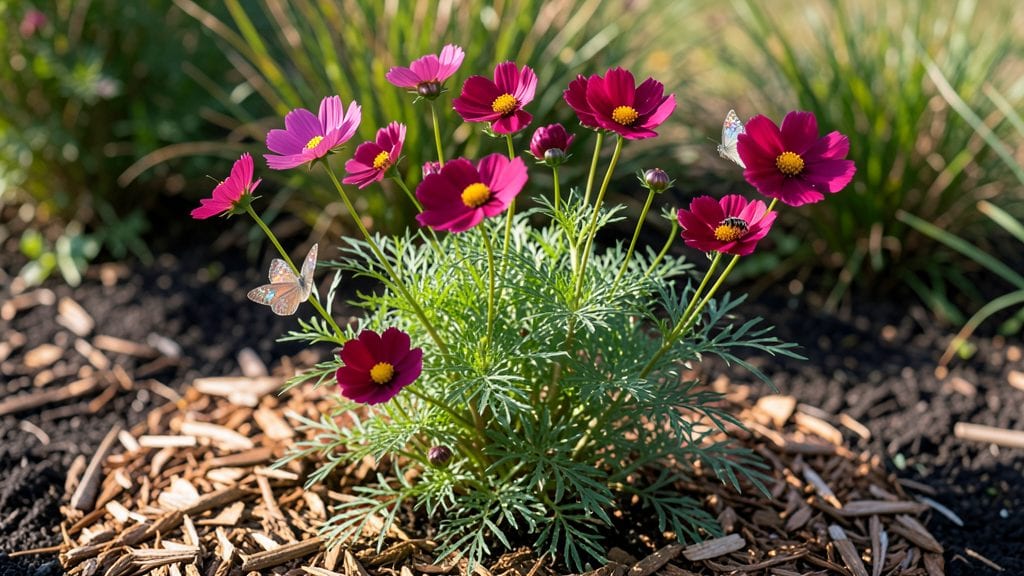
A cosmos garden design can turn your space into a dreamy, ever-changing canvas—just look at how they arch over my back patio like a living watercolor. ✨ The secret lies in their effortless height variation, from delicate 2-foot dwarfs to towering 6-foot giants. that sway in the breeze.
You can weave them into cottage-style borders, wildflower meadows, or pollinator paradises, and they’ll keep blooming from midsummer straight through frost.
Start by grouping cosmos in odd-numbered clusters—three or five plants—to create natural movement in borders. Pair shorter varieties like 'Sensation' with taller types such as 'Bright Lights' for layered drama, and let them spill over trellises or climb through shrubs.
Their airy stems and feathery foliage also make them perfect for cutting gardens, where they’ll refresh bouquets for weeks.
What you’ll end up with is a garden that feels alive and ever-changing—soft pinks fading into deep magentas, white clouds against green, and butterflies flitting between blooms all season.
The best part? Cosmos thrive in almost any soil and need almost no fuss, so you can experiment freely with color schemes and layouts without second-guessing.
Works in containers, along fences, or as a dramatic centerpiece in perennial beds. Here’s how to make them the star of your design—without the guesswork.
📚 In This Guide
- What you need
- Instructions
- Tips and common mistakes
- Wrapping up and next steps
What you need
- ● Cosmos Seeds or Plants: Choose Cosmos bipinnatus (garden cosmos) or Cosmos sulphureus (bright orange/yellow varieties). Aim for 10–20 plants per arch for full coverage.
- ● Garden Arches: Opt for 3–5 ft tall metal or wooden arches (e.g., 4–6 ft wide). Galvanized steel or cedar resists weather best.
- ○ Garden Trellis Netting: 1–2 rolls of 1.5-inch mesh netting to support climbing cosmos (optional but adds drama).
- ● Potting Soil: 5–10 bags of high-quality, well-draining potting mix (e.g., Miracle-Gro or FoxFarm Ocean Forest).
- ● Compost: 2–3 cubic feet to enrich soil and boost bloom production.
- ● Mulch: 1–2 bags of organic mulch (e.g., pine bark or straw) to retain moisture.
- ● Garden Gloves (1 pair) – Protect your hands from thorns and soil.
- ● Trowel or Hand Shovel – For planting seeds/plants.
- ● Pruners or Shears – To trim dead blooms and shape arches.
- ● Measuring Tape – Ensure arches are evenly spaced (recommended: 3–5 ft apart).
- ● Watering Can or Hose – Cosmos loves 1–1.5 inches of water weekly.
- ○ Stakes or Garden Twine (optional) – Secure netting to arches.
- ● Fairy Lights or Solar String Lights – ✨ Add enchantment for evening ambiance.
- ● Birdhouses or Bat Boxes – Attract pollinators and boost your garden’s ecosystem.
- ● Paint or Stencils – Personalize arches with galaxy patterns or cosmic designs.
- ● Seasonal Accents – Pair cosmos with marigolds, zinnias, or lavender for layered color.
How to design a whimsical cosmos garden with arches
Here's how I create a playful, low-maintenance cosmos garden that blooms all season long.
🌱 Step 1: Choose Your Cosmos Varieties and Planting Spots
Cosmos thrive in full sun with at least 6-8 hours of direct light daily. I plant 4 varieties for continuous color: 'Bright Lights' (early blooms), 'Sensation Mix' (mid-season), 'Seashells' (late summer), and 'Purity' (white for contrast). Each variety has different heights—tall ones (3-4 feet) go at the back, shorter ones (1-2 feet) in front.
Test your spots in spring. Cosmos hate soggy roots, so avoid low areas where water pools. If your soil drains poorly, mix in 2 inches of compost to improve texture. I mark my arch locations with stakes so I can plant taller varieties near them—they'll climb naturally as they grow.
🪴 Step 2: Build Simple Arches for Vertical Drama
For each arch, bend 4-foot willow stakes into gentle arcs and tie them together at the top with jute twine. Space stakes 18 inches apart in a square pattern. The arches should be 3-4 feet wide at the base and 2 feet high at the center—just tall enough for cosmos to drape over without bending stems.
Plant cosmos seeds ¼ inch deep directly under the arches in early spring, after the last frost. I scatter 5-6 seeds per foot along the arch's base, thinning to the strongest 3 plants per foot once they're 3 inches tall. The vines will find their own way up the willow stakes as they grow.
✂️ Step 3: Train Vines and Encourage Fullness
Once cosmos reach 12 inches tall, gently weave the main stems through the willow stakes to guide them upward. I don't tie them—cosmos climb naturally when the stems brush against the arch. Pinch back the tips of side shoots to encourage bushier growth and more blooms.
Deadhead spent blooms regularly to keep the flowers coming. I use a pair of clean scissors to snip just above a set of leaves, which also prevents the plant from putting energy into seed production. This simple step extends your cosmos display from early summer until frost.
💧 Step 4: Water and Maintain for Continuous Blooms
Water deeply once a week during dry spells, aiming for 1 inch of water per week. Cosmos are drought-tolerant once established, but young plants need consistent moisture. I water at the base in the morning so the foliage stays dry—this prevents fungal issues.
Fertilize lightly with ½ cup of 5-10-5 fertilizer spread around each arch in early summer. Too much nitrogen makes cosmos grow leafy instead of flowering. I also sprinkle 1 inch of mulch around the base to retain moisture and keep weeds down. This is the only maintenance your cosmos will need all season.
☀️ Step 5: Extend the Season with Strategic Planting
For year-round color, I plant 2 sets of cosmos—one in early spring and another in late summer. The first set blooms from June to September, while the second set takes over in August and continues until frost. This creates a seamless transition when you deadhead the first batch.
In fall, cut back the arches to 6 inches tall and add fresh mulch. The willow stakes will still stand, ready for next year. I mark the spots with small flags so I know exactly where to plant in spring. With this system, my cosmos arches look magical all season with almost no effort.
Tips & tricks for whimsical cosmos garden arches
Here's what I've learned after creating these magical arches for years—tricks that make all the difference between a pretty garden and a showstopper.
Sunlight Strategy: The 6-8 hours of full sun mentioned in Step 1 is non-negotiable, but here's the secret: east-facing spots get perfect morning sun without afternoon heat stress. If your garden gets intense afternoon sun, consider partial shade varieties like 'White Queen' cosmos—they'll still thrive and add a dreamy contrast to your colorful arches.
Arch Construction Hack: For Step 2, I bend my willow stakes over a 2-foot diameter bucket to create the perfect arc shape before planting. This ensures consistent height and width every time. If you can't find 4-foot stakes, use two 2-foot stakes crossed in an "X" shape at the top—they'll create the same effect without needing to bend.
Thinning Made Easy: When thinning seedlings in Step 2 to 3 plants per foot, I use a pair of clean scissors to snip at the base rather than pulling. This prevents disturbing the roots of the plants I'm keeping. I also mark the strongest seedlings with small colored flags so I don't accidentally thin them later.
Deadheading Technique: In Step 3, I deadhead with a twist—after snipping spent blooms, I immediately rub the cut stems between my fingers to release any hidden buds. This little trick can encourage 20-30% more blooms throughout the season. Plus, I always use the same pair of clean scissors to prevent spreading disease between plants.
Pro Tips for Cosmos Garden Design
- Here's what I've learned after creating these magical arches for years—tricks that make all the difference between a pretty garden and a showstopper.
- Sunlight Strategy: The 6-8 hours of full sun mentioned in Step 1 is non-negotiable, but here's the secret: east-facing spots get perfect morning sun without afternoon heat stress.
- Arch Construction Hack: For Step 2, I bend my willow stakes over a 2-foot diameter bucket to create the perfect arc shape before planting.
Frequently asked questions
Got questions about creating your own cosmos garden paradise?
Here are some of the most common ones—plus practical answers to help you design a showstopping space that blooms all season long!
What’s the best time of year to plant cosmos seeds for continuous blooms?
For season-long color, sow cosmos seeds 2–3 weeks after your last frost date (spring) and again in late summer (for fall blooms). Cosmos thrive in warm soil, so avoid planting too early—wait until temperatures stay above 50°F (10°C) for best germination. Pro tip: Succession planting every 4–6 weeks keeps flowers coming!
Can I grow cosmos in containers, or do they need a full garden bed?
Cosmos adapt beautifully to containers—just choose pots at least 12 inches deep with good drainage. Use a lightweight potting mix and place them in sunny spots (6+ hours of light). Dwarf varieties like ‘Bright Lights’ work perfectly for balconies or small spaces. Bonus: Mix cosmos with trailing plants like sweet potatoes for a whimsical cascade!
Why aren’t my cosmos blooming—just growing tall with lots of leaves?
Over-fertilizing or too much nitrogen can stunt flowers. Cosmos prefer lean soil—skip heavy fertilizers! Instead, deadhead spent blooms regularly to encourage more flowers. Also, ensure they get full sun (6+ hours/day) and aren’t crowded; thin seedlings to 12–18 inches apart for better airflow and blooms.
How can I incorporate cosmos into a formal garden design vs. a wildflower meadow?
For formal gardens, pair cosmos with structured plants like boxwoods or lavender, and train them along arbors or trellises for height. In wildflower meadows, let them naturalize—plant in drifts with other self-seeding annuals like zinnias or sunflowers. Design tip: Use color-blocking (e.g., pink + white cosmos) for visual impact!
Are cosmos good for pollinators, and do they attract pests?
Yes! Cosmos are pollinator magnets—bees, butterflies, and hummingbirds love them. They’re pest-resistant too, but watch for aphids (spray with water to remove). Avoid chemical pesticides, as they harm beneficial insects. Eco tip: Plant cosmos near herbs like basil to deter pests naturally while boosting pollinator activity!
Wrapping up and next steps
Transforming your garden into a cosmos garden design isn’t just about beauty—it’s about creating a vibrant, low-maintenance sanctuary that blooms all season long. 🌸 With whimsical arches, bold colors, and easy-care cosmos, you’ve got everything you need to craft a space that feels magical yet effortless.
Now, grab those shears, pick your favorite cosmos varieties, and let your creativity take flight!
Ready to dive in? Start small—plant a single arch or a patch of cosmos—and watch your garden bloom into a dream. Happy gardening! 🌱✨