Picking
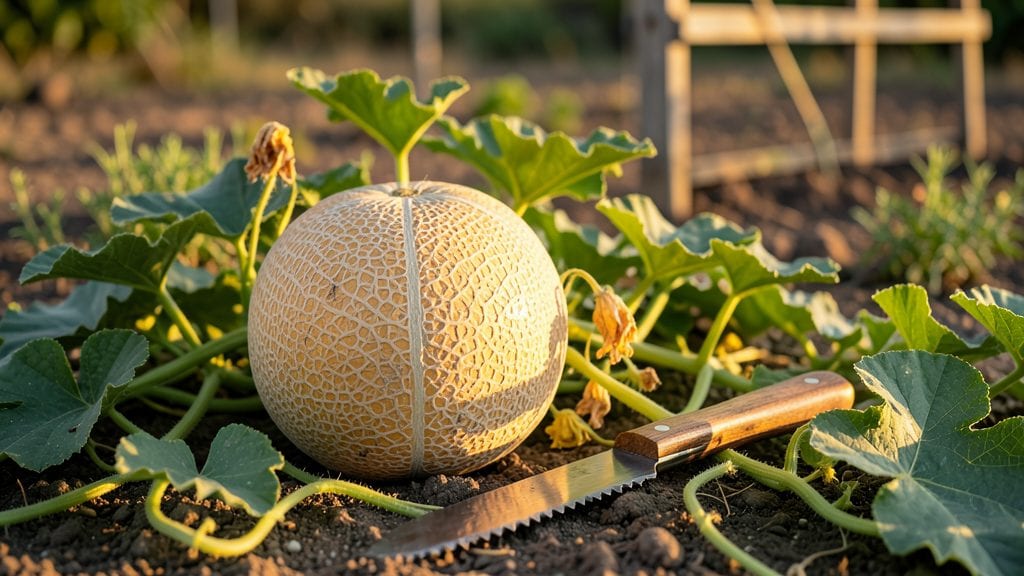
Harvesting cantaloupe from your garden at the right time means the difference between a sweet, juicy slice and one that’s tough or bland.
There’s nothing worse than biting into a 🍈 that’s still hard or bland—yet picking it too early is a common gardener’s mistake. Timing your harvest perfectly ensures fruit that rivals store-bought (or beats it!).
You’ll know it’s ready when the rind turns from white to cream or yellow, the stem slips easily from the vine, and the blossom end shows a tan or beige spot. These three key signs are your green thumb’s shortcut to peak flavor.
Below, I’ll break down exactly how to spot these cues, plus the best weather conditions and regional timing tips to avoid missing your window between July and September.


3 Visual signs your cantaloupe is ripe for harvesting
Picking cantaloupe at the right moment transforms your garden into a sweetness factory. The difference between a mealy, underripe fruit and a bursting, honey-sweet melon often comes down to three key visual cues.
Ignore these, and you might end up with cantaloupe that’s still hard as a rock or disappointingly bland. Let’s break down the exact signs to watch for—no guesswork required.
First, pay close attention to the stem attachment. When cantaloupe reaches peak ripeness, the stem should detach easily with a gentle twist. This happens because the fruit’s sugars trigger natural enzymes that weaken the stem’s grip.
If it resists, your melon still needs time. Pro tip: Twist at the base where the stem meets the fruit, not the vine itself—this avoids damaging the plant.
Next, examine the rind color near the blossom end (the side that faced the vine). A ripe cantaloupe will show a cream or yellowish hue here, often with a net-like pattern that deepens in color.
Avoid picking if the rind remains white or greenish—this is a dead giveaway for unripe fruit. The transition from white to yellow is your green light to harvest.
Finally, give your cantaloupe the thump test. Hold the fruit in one hand and the other hand’s thumb against the blossom end. Give it a firm but gentle thump with your knuckle.
A ripe cantaloupe will feel slightly soft with a hollow sound, almost like knocking on a drum. If it sounds dull or feels rock-hard, it’s not ready yet. This test works because ripe fruit loses some internal firmness as sugars develop.
🚨 comparison-table 🚨
| Sign | Unripe Cantaloupe | Ripe Cantaloupe |
|---|---|---|
| Stem Attachment | Tight, resists twisting 🔒 | Slips easily with gentle twist 🔄 |
| Rind Color (Blossom End) | White or greenish 🟢 | Cream/yellow with net pattern 🟡 |
| Thump Test | Dull sound, firm feel ⚖️ | Hollow sound, slightly soft 🤏 |
| Aroma | Neutral or faint 👃 | Sweet, musky near stem 🌺 |
| Weight | Light for size ⚖️ | Feels heavy for its size ✅ |
Don’t overlook the scent test, either. A ripe cantaloupe emits a sweet, musky aroma near the stem—almost like a mix of honey and ripe fruit. If your melon smells bland or neutral, it’s not ready.
This scent is your body’s way of telling you the sugars are fully developed. In my garden, I often find the sweetest cantaloupes are the ones that smell like summer before they even ripen fully.
Timing matters too. Cantaloupes typically ripen between 75 to 90 days after planting, but heat waves or cooler nights can shift this window. If your melons aren’t showing these signs by mid-to-late summer, check for pests or nutrient deficiencies, which can stall ripening.
A quick soil test ensures your plants have enough phosphorus and potassium—key nutrients for sweet fruit development.
Once you’ve confirmed all three signs—slippery stem, cream-colored rind, and sweet aroma—use a sharp knife or pruners to cut the stem, leaving a 1-inch stub attached to the fruit. This prevents the melon from splitting open too soon.
Store ripe cantaloupes at room temperature until fully ripe, then refrigerate to extend shelf life. The best part? A perfectly timed harvest means your cantaloupe will be so sweet it’ll make your neighbors jealous.
Pro move: Harvest in the morning when temperatures are cooler. This preserves the fruit’s flavor and texture longer. And if you’re growing multiple cantaloupes, prioritize the ones showing the most color change and scent—they’re likely the ripest and sweetest.
🌱 Remember, cantaloupes won’t ripen further once picked, so waiting for all three signs is worth the patience. Trust the process, and your garden will reward you with melons that taste like a sun-drenched vacation in every bite.
How to test cantaloupe ripeness beyond the basics: the science of sweetness
While checking for a cream-colored rind and sweet vine aroma are classic signs, true cantaloupe sweetness depends on growing conditions you control. Temperature swings, soil nutrients, and even vine health directly impact sugar development. Understanding these hidden factors lets you predict ripeness before the fruit even changes color.
Think of cantaloupe sweetness like a science experiment: the right conditions create the perfect chemical reaction. Low soil potassium? Your fruit stays bland. Erratic temperatures? Sugar development stalls. By tracking these variables, you can score your cantaloupe's sweetness potential before harvest day arrives.
Here’s my rating-bar system for evaluating sweetness potential based on growing conditions. Score each factor, then add them up for a total that predicts how juicy and sweet your cantaloupe will be.
Let’s break down why each factor matters. Soil temperature between 75-85°F is critical—this range triggers enzymes that convert starches to sugars. If your soil runs cooler, try black plastic mulch or plant in a south-facing bed to warm it faster.
I’ve seen cantaloupes ripen 2 weeks earlier with this simple trick!
Watering consistency affects sweetness more than you’d think. Drought stress forces the plant to prioritize survival over sugar production, while overwatering dilutes soil nutrients. Aim for 1-2 inches per week, letting the top inch of soil dry between waterings.
A drip irrigation system keeps moisture even without wetting the leaves.
Vine health is the unsung hero of sweet cantaloupe. Pests like cucumber beetles or diseases such as powdery mildew sap energy meant for fruit development. I lost an entire crop last year to mildew—until I started using neem oil sprays preventatively. Healthy vines = sweeter fruit, guaranteed.
Temperature swings are the sweetness saboteur. Cantaloupes need consistent warmth (70-90°F) to develop sugars properly. If your mornings dip below 60°F, consider row covers or choose heat-tolerant varieties like ‘Athena’ or ‘Hale’s Best.’ These hold up better in hotter climates while still packing flavor.
Finally, don’t overlook soil potassium. This nutrient is directly linked to sugar production. Test your soil—ideal levels are 100-200 ppm. If yours is low, amend with greensand or wood ash. I added potassium-rich compost to my beds last season, and the difference in sweetness was night-and-day.