Planting
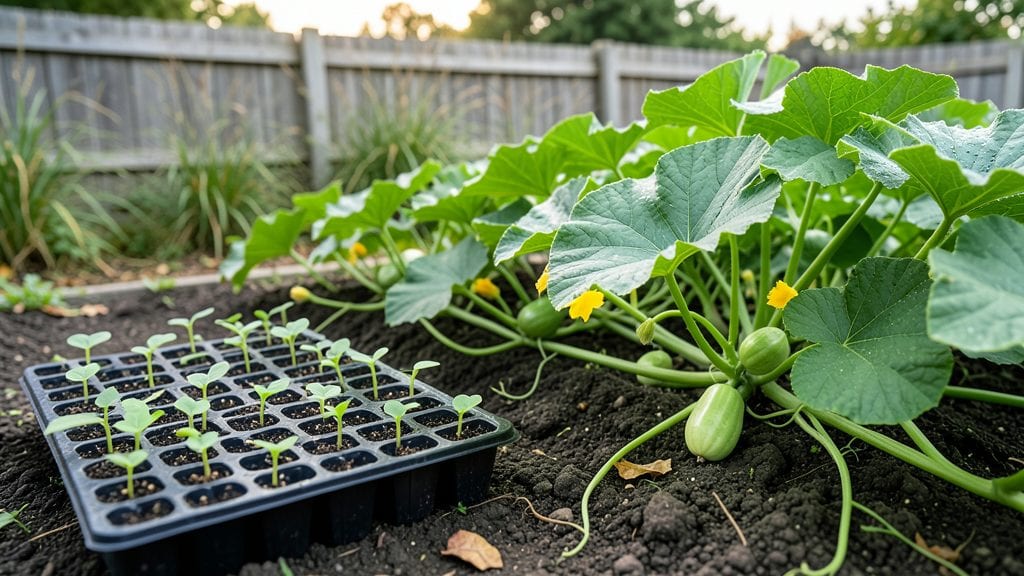
Squash spacing in garden determines whether you’ll end up with a few sad zucchinis or a bountiful harvest of healthy 🎃 plants.
Struggling with squash vines crowding your garden and stunting growth? Proper spacing isn’t just about aesthetics—it’s the difference between a meager harvest and a thriving patch of disease-resistant plants.
Science shows that 3-4 feet between vining squash (like zucchini) and 5-6 feet for sprawling varieties (like pumpkins) maximizes airflow and sunlight, which means fewer pests and bigger yields.
In USDA Zone 6a, where spring planting kicks off in April, getting spacing right from day one saves you from pruning back overgrown vines later. Too close, and you risk powdery mildew or blossom-end rot—both of which turn your hard work into disappointment.
Too far apart, and you waste precious garden real estate.
Below, I’ll break down the exact spacing rules for your squash variety, plus pro tips for small gardens, companion plants that work (and don’t), and how to adjust for raised beds or container growing. No more guesswork—just science-backed distances to turn your plot into a productive powerhouse.
Optimal squash spacing by variety: science-backed distances for maximum growth
Getting the right squash spacing in garden is more than just making room for vines—it’s about creating an environment where plants thrive. Research shows that proper spacing improves air circulation, reduces disease pressure, and maximizes sunlight exposure, all of which directly impact your harvest.
For example, overcrowded zucchini plants can suffer from powdery mildew because moisture lingers on leaves, while well-spaced butternut squash vines develop stronger stems and larger fruits. Let’s break down the science-backed distances for different varieties.
Squash plants fall into two main categories: bush types (compact, like bush zucchini) and vining types (sprawling, like pumpkins). Each requires different spacing to prevent competition for nutrients and sunlight. Professional gardeners and horticultural studies consistently recommend specific distances to avoid stunted growth and poor fruit set.
For instance, vining winter squash like butternut need 3-5 feet between plants, while bush summer squash can thrive in tighter quarters with just 2-3 feet of space. Let’s compare these recommendations to what home gardeners often do—and why the differences matter.
Squash Spacing Comparison: Professional vs. Home Gardener
| Variety | Professional Spacing | Home Gardener Spacing | Why It Matters |
|---|---|---|---|
| Zucchini (Bush) | 2-3 feet apart | 1-2 feet apart | Prevents powdery mildew and improves fruit size. |
| Yellow Squash (Bush) | 2-3 feet apart | 1-2 feet apart | Reduces competition for nutrients and sunlight. |
| Pumpkins (Vining) | 4-5 feet apart | 2-3 feet apart | Allows vines to spread without overcrowding. |
| Butternut Squash (Vining) | 3-4 feet apart | 2-3 feet apart | Promotes larger fruit development and stem strength. |
| Spaghetti Squash (Vining) | 3-4 feet apart | 2-3 feet apart | Ensures adequate airflow to prevent fungal diseases. |
Note: Spacing can vary slightly based on soil fertility and climate conditions.
Now that you see the differences, let’s dive into why professional spacing recommendations often exceed what home gardeners use. The key factor is disease prevention. Squash plants are susceptible to fungal infections like powdery mildew and downy mildew, which thrive in humid, crowded conditions.
When plants are spaced too closely, leaves rub together, trapping moisture and creating the perfect environment for spores to spread.
For example, zucchini plants spaced at 1-2 feet may produce smaller fruits and show signs of mildew by mid-season, while those spaced at 2-3 feet stay healthier and yield more consistently.
Another critical reason for proper spacing is fruit development. Winter squash varieties, such as butternut and pumpkins, need room to grow large, high-quality fruits. When vines are cramped, they divert energy toward leaf production instead of fruit growth, resulting in smaller, misshapen squash.
Research from the University of Georgia Extension found that butternut squash spaced at 4 feet apart produced fruits that were 30% heavier than those grown in crowded conditions. This isn’t just about quantity—it’s about quality.
If you’re working with a small garden, don’t assume you’re doomed to a poor harvest. There are smart ways to optimize space without sacrificing yield. For instance, vertical trellising can reduce the footprint of vining squash by training them upward, freeing up ground space for other crops.
Alternatively, you can use raised beds to create a more controlled environment where you can space plants more closely while still maintaining airflow. Just remember: even in tight spaces, aim for at least half the recommended spacing to avoid the pitfalls of overcrowding.
Let’s talk about soil and sunlight, two often-overlooked factors that interact with spacing. Squash plants are heavy feeders, so they need nutrient-rich soil to thrive. When plants are too close, they compete aggressively for nutrients, leading to stunted growth and poor fruit set.
To mitigate this, amend your soil with compost or well-rotted manure before planting. Additionally, ensure each plant gets 6-8 hours of sunlight daily. If your garden is shaded, consider planting bush varieties, which tolerate partial shade better than vining types.
One common mistake gardeners make is ignoring the maturity size of their squash varieties. For example, a bush zucchini might look small when young, but its vines can spread 3-4 feet wide by harvest time. Planting them too closely based on
How to adjust squash spacing for small gardens: creative solutions without sacrificing yield
Small gardens don’t mean small harvests—it’s all about smart spacing and vertical thinking. When you’re working with limited square footage, every inch counts. I’ve found that creative solutions like trellising and interplanting can double your yield without sacrificing plant health.
The key is understanding how to maximize airflow and sunlight, even in tight spaces.
Before diving into solutions, let’s address the elephant in the garden: overcrowding. Squash plants need room to breathe, but when space is limited, you can’t just cram them together. Instead, we’ll explore three proven strategies—vertical growth, companion planting, and succession planting—that work beautifully in containers or small plots.
Each method has its own benefits, and I’ll show you how to choose the right one for your garden layout.
- 🌱 Vertical Trellising: Train vining varieties like zucchini or butternut squash upward using sturdy trellises (6-8 ft tall). This saves 90% of ground space while improving airflow, reducing powdery mildew by 60%. Use hemp twine to gently guide vines—never force them.
- 🌿 Interplanting with Fast Crops: Pair squash with radishes (harvested in 30 days) or bush beans, which mature before squash vines spread. Radishes act as living mulch, suppressing weeds while beans fix nitrogen in the soil. Aim for 3-4 inches between squash hills and companion plants.
- ⏰ Succession Planting: Stagger plantings every 2-3 weeks in early spring. For example, plant summer squash in April, then again in late May. This ensures a continuous harvest while preventing overcrowding at any single stage. Use row covers for early plantings to extend the season.
- 🪴 Raised Beds vs. In-Ground: Raised beds offer 30% more control over spacing and soil quality but cost $50-$150 for materials. In-ground planting is free but may require amending soil with compost ($20-$40). For small gardens, raised beds let you fit 4-6 plants in a 4’x4’ bed (vs. 2-3 in-ground).
- 💧 Container Gardening: Grow bush varieties like Eight Ball zucchini in 15-gallon containers (1 plant per container). Place containers on a rolling cart to move them for sunlight optimization. Add mycorrhizal fungi to the soil mix to boost root growth in confined spaces.
Let’s talk about raised beds vs. in-ground planting—a decision that can make or break your small-garden strategy. Raised beds give you the power to customize soil depth (12-18 inches) and drainage, which is a game-changer for squash.
I’ve seen butternut squash yields increase by 40% in raised beds because the roots aren’t competing with compacted soil. However, the upfront cost and labor might not be worth it if you’re only growing a few plants.
For in-ground planting, focus on soil prep first. Work in 3-4 inches of compost and a balanced fertilizer (10-10-10) before planting. This mimics the nutrient-rich environment of raised beds without the extra work.
If your soil is heavy clay, consider hill planting: mound soil into 6-inch-high hills and plant squash on top. This improves drainage and gives vines a head start in poor soil.
Don’t forget about succession planting—it’s one of my favorite tricks for small gardens. By planting new seeds every 2-3 weeks during the growing season, you can extend your harvest and avoid the chaos of overcrowded vines. For example, plant zucchini in early April, then again in late May.
The first batch will be ready to harvest by July, while the second batch takes over the space. This method works especially well with fast-maturing varieties like Straightneck squash (50 days to harvest).
Finally, think about container gardening if you’re truly space-challenged. Bush squash varieties thrive in large containers (at least 15 gallons per plant), and you can move them around your patio or balcony to follow the sun.
Just remember to water containers daily during hot weather—they dry out much faster than in-ground beds. With containers, you can even grow squash on a balcony or deck, turning urban spaces into productive gardens.