
Landscaping
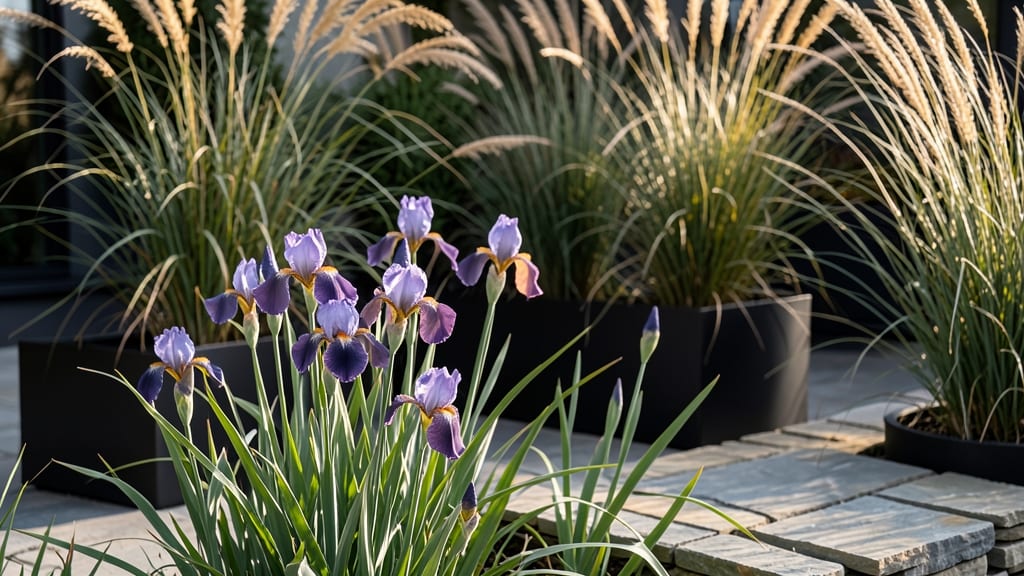
Iris gardens burst with vibrant colors while supporting bees, butterflies, and hummingbirds. These 10 bold combinations create pollinator-friendly displays that thrive all summer with minimal maintenance—perfect for both beginner and experienced gardeners.
Classic Blue Iris with Lavender Spires
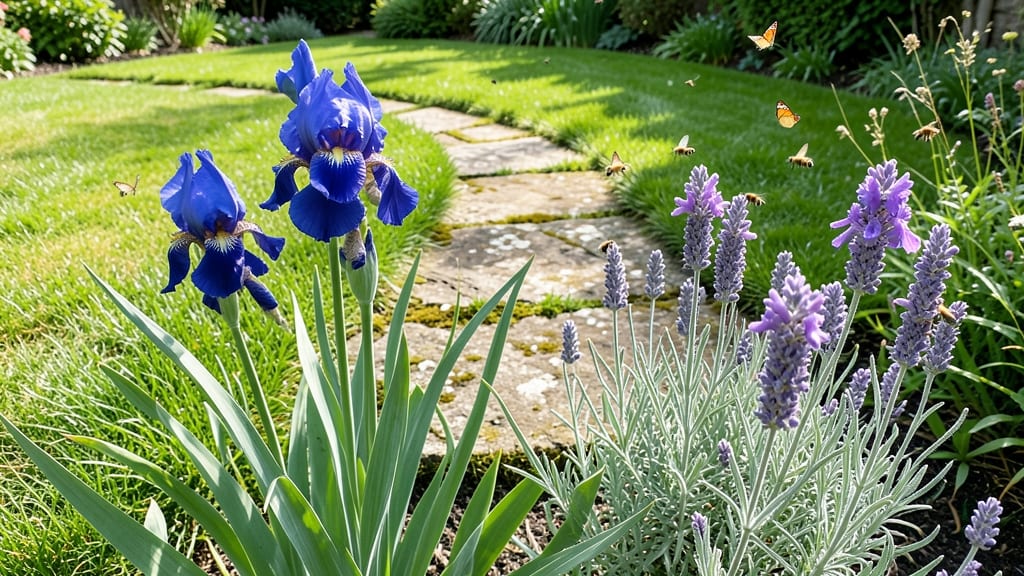
Cottage gardens crave charm, and nothing delivers it like the classic blue iris paired with fragrant lavender spires. This duo isn’t just pretty—it’s a pollinator powerhouse, with bees buzzing around the vertical lines of irises while lavender’s sweet scent lures butterflies from a distance.
Plant blue bearded iris in well-draining soil with 6 hours of sun, spacing them 12–18 inches apart. Tuck lavender (like ‘Munstead’ or ‘Grosso’) nearby—their silvery foliage contrasts beautifully while thriving in the same drought-tolerant conditions. Divide iris clumps every 3–4 years to keep blooms vigorous, and trim lavender back in spring to encourage bushier growth.
This pairing is ideal for gardeners who love low-maintenance beauty with high impact. The combination works in borders, containers, or even as a fragrant hedge—perfect for small spaces or cottage-style retreats. 🌿
Sunny Yellow Irises with Black-Eyed Susans
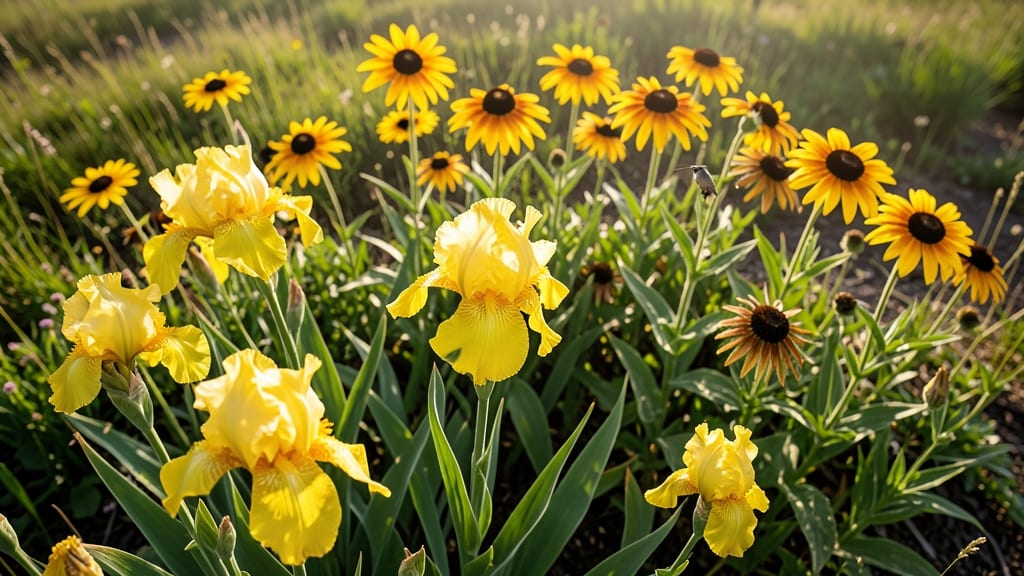
Want a garden that pops with color and keeps hummingbirds buzzing all summer? Sunny yellow irises paired with black-eyed Susans deliver a high-impact, low-maintenance show that thrives in full sun.
Plant yellow bearded irises in early spring for bold, early-summer blooms that attract hummingbirds with their nectar-rich flowers. Pair them with black-eyed Susans, which bloom later in summer and provide long-lasting color while supporting pollinators. This combo works beautifully in sunny borders or wildflower meadows, with minimal care once established.
Gardeners in hot, dry climates will love this duo—they both tolerate drought conditions once rooted. The golden contrast of yellow irises against the deep brown centers of Susans creates a striking visual that lasts from June through September. 🌻
Purple Iris and White Dahlias Combo
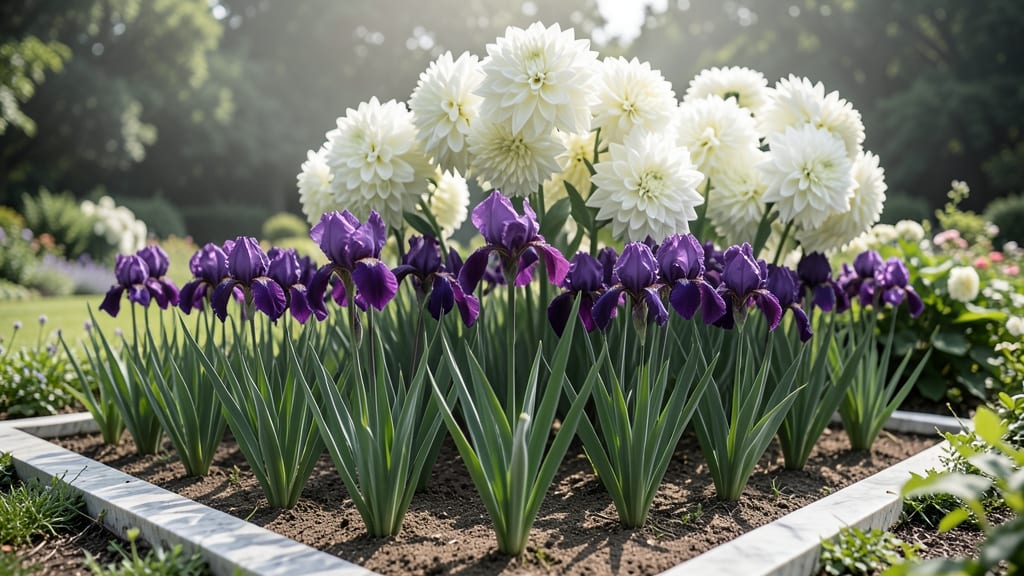
Transform your formal garden into a regal showcase with this timeless pairing of purple irises and white dahlias. The deep violet hues of irises create a dramatic backdrop, while the voluminous white dahlias add architectural height and delicate texture—perfect for creating a structured yet romantic look.
Plant purple bearded irises in clusters along borders or pathways, spacing them 12-18 inches apart. Dahlias, with their towering blooms, should be positioned slightly behind the irises to frame them beautifully. Both thrive in full sun to partial shade, making this combo versatile for various garden spots. Dahlias' late-season blooms (August through frost) ensure your garden stays stunning well into autumn.
This elegant pairing is ideal for gardeners who love high-impact, low-maintenance designs—perfect for weddings, formal gardens, or any space where you want to make a lasting impression. 🌷
Rainbow Iris Border with Coneflowers
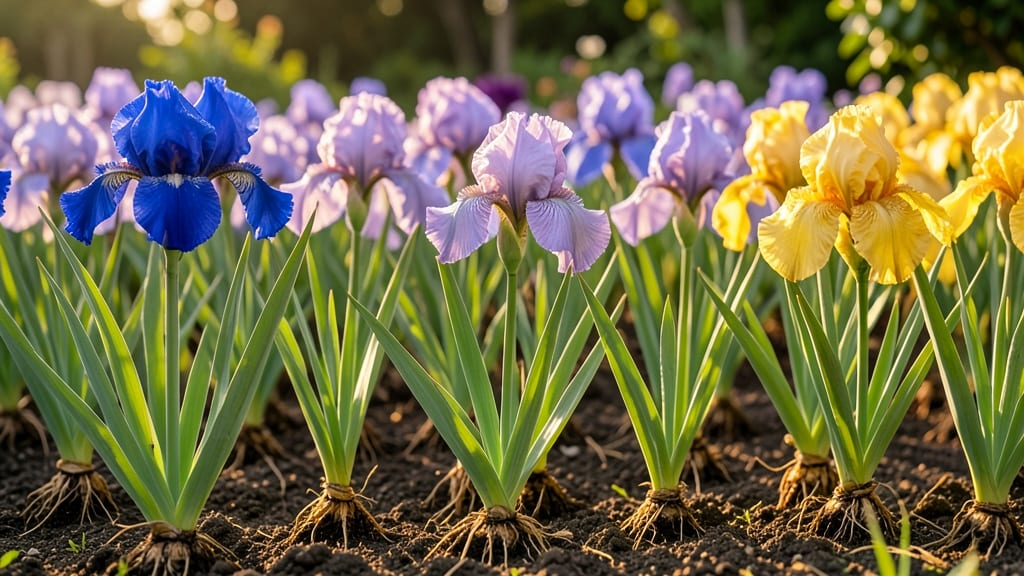
Skip the predictable blue-and-purple iris borders—this rainbow iris border turns your garden into a living palette with three or more iris colors (try 'Blue Flag,' 'Wisteria Flower,' and 'Cadence' for drama). The key is planting 12-18 iris rhizomes per 4-foot section in staggered rows, creating a gradient effect that catches sunlight at different angles.
Pair these with pink-purple coneflowers (Echinacea purpurea) for a modern twist—coneflowers' vertical blooms add structure while their drought-resistant roots reduce watering needs. Plant coneflowers in clusters behind the irises to let their spiky blooms peek through the iris foliage. This combo thrives in full sun to partial shade and blooms from early summer through fall.
Perfect for urban gardeners or modern landscapes, this design requires zero pruning after the first season—just divide iris clumps every 3-4 years. The result? A pollinator magnet that keeps bees and butterflies visiting all summer. ✨
Iris and Russian Sage Pairing
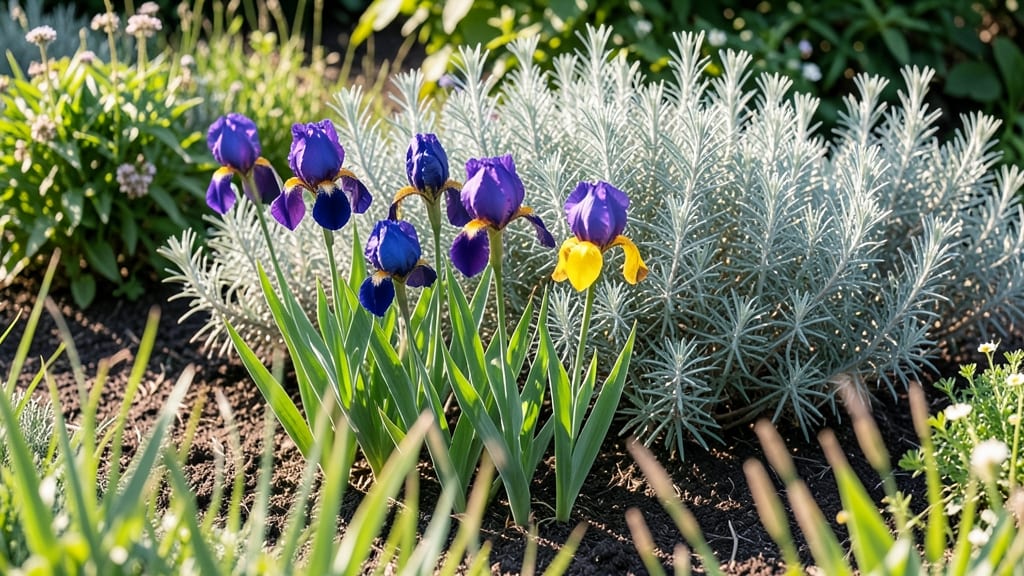
If you're dreaming of a low-water garden that thrives in arid climates, this drought-tolerant duo delivers effortless beauty. The striking contrast between irises' bold blooms and Russian sage's silvery foliage creates a textural masterpiece that requires almost no extra care once established.
Plant Russian sage (Perovskia atriplicifolia) behind bearded irises to create height and movement, with the sage's aromatic foliage repelling pests naturally. Both plants adore full sun and well-draining soil—ideal for xeric landscapes or water-wise gardens. Space irises 12-18 inches apart and Russian sage 2-3 feet apart for a balanced look that blooms from midsummer through fall.
This pairing is especially magical for gardeners in USDA zones 5-9 who want to reduce water usage without sacrificing beauty. The silvery-blue hues attract bees and butterflies while creating a serene, modern aesthetic perfect for contemporary landscapes. 🌻
White Iris with Coral Bells
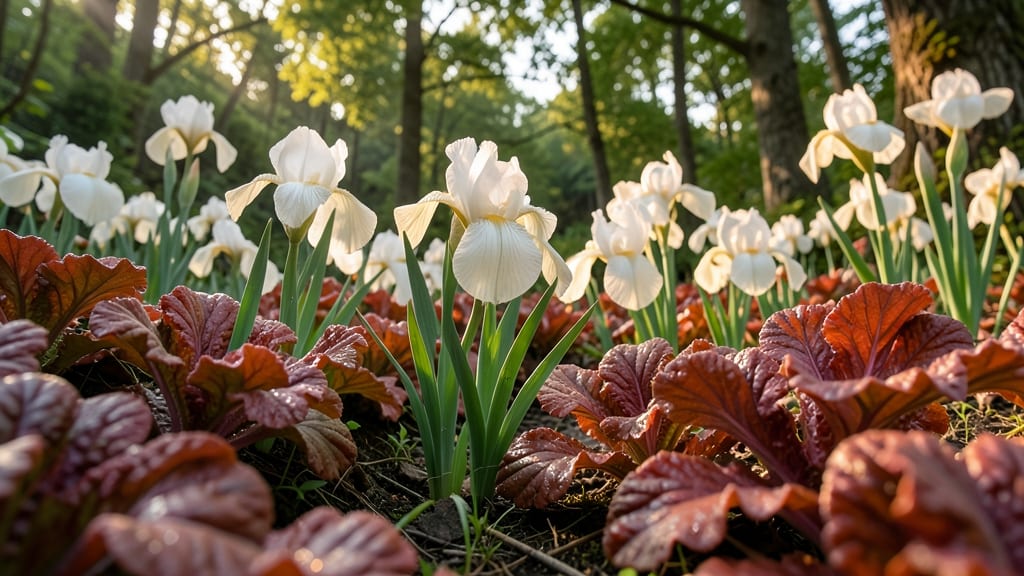
Create a serene woodland retreat with white irises and coral bells (Heuchera)—their contrasting textures and colors make this one of the most visually calming yet striking pairings. The silky white petals of irises stand out against the deep coral-red foliage of coral bells, creating a soft yet dramatic effect perfect for shaded garden corners.
Both plants thrive in partial shade, making them ideal for understory planting or woodland gardens where sunlight is limited. Plant white irises in clusters to create a clean, airy backdrop, then tuck coral bells at their base for year-round color—even after the irises fade. This combo also attracts hummingbirds, as the irises' nectar-rich blooms and coral bells' delicate flowers provide a dual pollinator feast.
Urban gardeners with small spaces or gardeners seeking low-maintenance shade solutions will love this pairing. The combination works beautifully in containers or along shady pathways, adding texture and color without demanding full sun. 💚
Bearded Iris with Peony Thickets
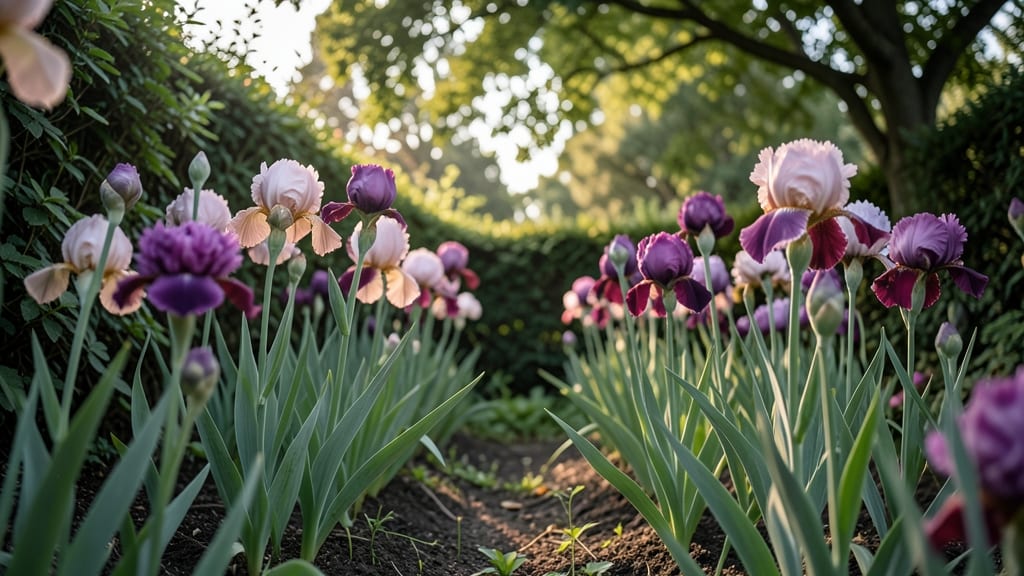
Transform your shady garden into a dreamy retreat with bearded iris and peony thickets—a pairing that feels like stepping into an old-world garden. The soft, velvety petals of peonies create lush, cloud-like blooms that contrast beautifully with irises' elegant, upright stems, while both plants thrive in partial to full shade where other bloomers might struggle.
Plant bearded iris rhizomes in early fall or spring, spacing them 12-24 inches apart, and tuck peony roots 2-3 inches deep nearby for a natural, layered look. Both plants are deer-resistant and low-maintenance once established, making them perfect for gardeners who want beauty without the fuss. Mulch lightly to retain moisture and protect roots during winter.
This combination is ideal for gardeners craving a romantic, cottage-style aesthetic with minimal upkeep—ideal for woodland edges, foundation plantings, or as a statement border. The fragrant blooms will have you dreaming of lazy summer afternoons in the garden. ✨
Iris and Catmint for Pollinator Havens
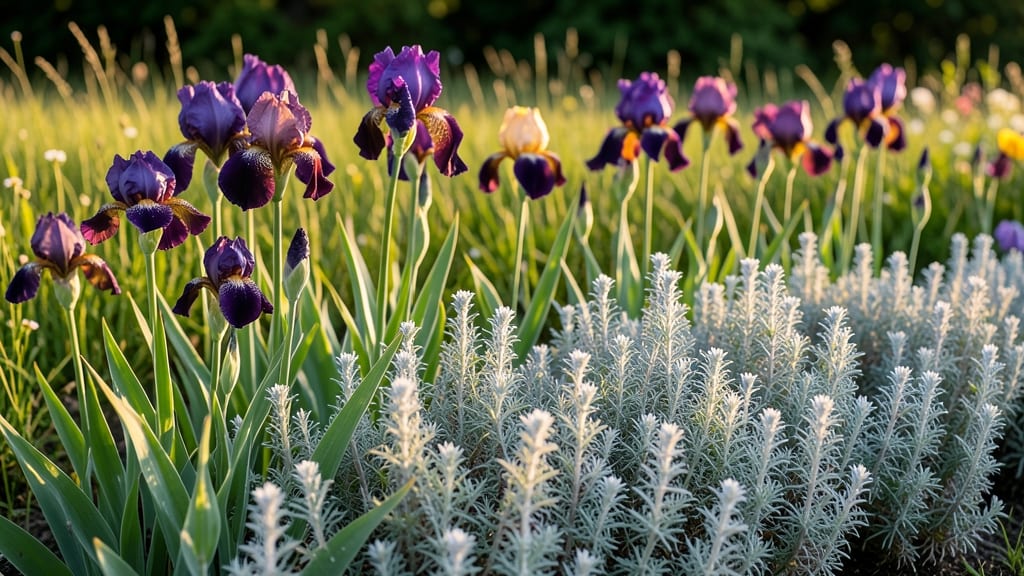
Want a pollinator powerhouse that keeps blooming from early summer to fall? Pair bearded irises with catmint—their contrasting textures and colors create a dynamic, low-maintenance display that butterflies and bees can't resist.
Catmint (like Nepeta varieties) blooms for 8-10 weeks, providing nectar when many perennials have faded. Its silver-gray foliage contrasts beautifully with irises' upright stems, while its minty scent naturally deters pests like aphids and rabbits. Plant catmint in clumps behind irises for a cascading effect, or intersperse them for a wildflower meadow look.
This combo is perfect for butterfly gardens and urban pollinator plots—it thrives in full sun and well-drained soil, making it ideal for beginners or busy gardeners. The long bloom time ensures your garden stays vibrant and buzzing all season. 🌟
Black Iris with Red Hot Poker
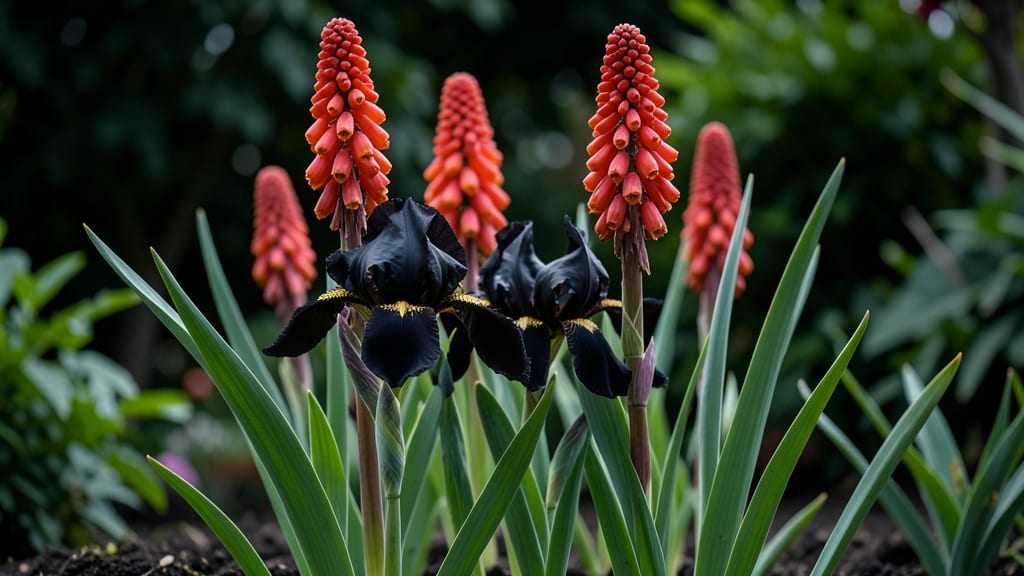
Want to make a statement in your garden without overwhelming your space? Pair black irises with red hot poker (Kniphofia) for a bold, high-contrast duo that demands attention. The deep, velvety blooms of black irises create a dramatic backdrop that makes the fiery red-orange spikes of red hot poker pop against any background.
Both plants thrive in full sun and well-draining soil, making them perfect for sunny borders or mixed perennial beds. Plant red hot poker in clusters behind your irises to create a layered effect—its vertical spikes will draw the eye upward while the irises anchor the scene with their striking color. This combo also attracts hummingbirds, as both plants produce nectar-rich blooms that keep these birds visiting all summer.
This pairing is ideal for gardeners who love dramatic visuals with minimal fuss—once established, both plants are drought-tolerant and require little maintenance. Perfect for modern landscapes or bold cottage gardens! ✨
Iris and Ornamental Grasses Mix

Transform your modern garden into a year-round masterpiece with a striking iris and ornamental grass combination. This dynamic duo delivers textural contrast that keeps your landscape visually engaging from spring's vibrant blooms to winter's architectural beauty.
Plant bearded irises in clusters for bold spring color, then intersperse them with upright ornamental grasses like Miscanthus or Pennisetum for movement and winter interest. Both thrive in full sun and well-drained soil, making this pairing drought-tolerant once established. The grasses' feathery plumes sway in the breeze, creating a living sculpture that complements irises' upright blooms.
This low-maintenance duo is perfect for urban gardeners or eco-conscious landscapers. The grasses suppress weeds naturally while the irises provide early-season nectar for pollinators. 🌻