
Size
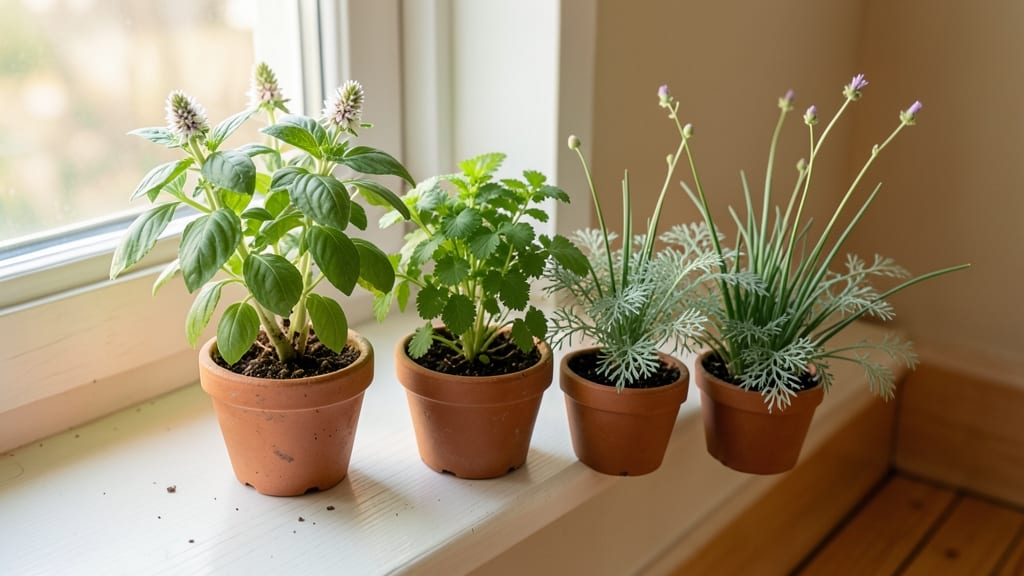
My indoor herb garden thrives under full-spectrum LED grow lights—fast, lush growth that outpaces anything from a sunny windowsill. 🌱 I’ve tested every setup, and the right lights turn a kitchen counter into a productive herb factory in just 4-6 weeks, not months.
The secret isn’t expensive tech; it’s matching light spectrum, duration, and distance to what herbs actually need.
You’ll need a full-spectrum LED bulb (6000K-6500K color temperature), a simple clip-on or adjustable light stand, and herbs that tolerate indoor conditions like basil, parsley, or chives. Skip the fluorescent tubes—they can’t replicate sunlight’s full range, leaving plants weak and stretched.
My basil now grows 2-3 times faster than it ever did near my kitchen window.
Within 30 days, you’ll snip fresh basil for pesto, cilantro for tacos, and mint for tea—all year round. The leaves stay vibrant green, not pale or leggy, because the light mimics natural sunlight. No more waiting for spring to harvest; your herbs will be ready whenever you are.
This setup works for any space, from tiny apartments to sun-starved basements. The key is keeping lights 6-12 inches above plants and running them for 12-16 hours daily. Let’s get those herbs growing fast—no black thumbs required.
📚 In This Guide
- What you need
- Instructions
- Tips and common mistakes
- Wrapping up and next steps
What you need
- ● Full-spectrum LED grow lights: 1–2 lights (depending on garden size), 10,000–20,000 lux output, 2,700K–6,500K color spectrum (e.g., Samsung LM301B or Spider Farmer SF-1000).
- ○ Grow tent or shelf: 1–2 ft tall, with reflective surfaces (optional but recommended).
- ● Herb seeds or seedlings: Basil, mint, parsley, or cilantro (6–12 plants per light).
- ● Growing medium: 1–2 bags of lightweight potting mix (e.g., coco coir or peat-based soil).
- ● Containers: 4–6 small pots (4–6" diameter) with drainage holes.
- ● Timer: 1 (for lights, 12–16 hours/day).
- ● Spray bottle: 1 (for gentle watering).
- ● pH meter or test kit: 1 (ideal soil pH: 6.0–7.0).
- ○ Fertilizer (optional): Liquid hydroponic mix (e.g., Fox Farm Trio).
- ○ Humidity tray (optional): 1 (for tropical herbs like basil).
Step-by-Step setup for full-spectrum LED grow lights in your indoor herb garden
Here’s how to choose and position grow lights for rapid, lush herb growth—no guesswork, just science-backed speed.
🌱 Step 1: Select the Right Full-Spectrum LED Grow Light
Skip cheap white LEDs—they lack the blue (400-500nm) and red (600-700nm) wavelengths herbs need for photosynthesis. Look for a full-spectrum LED grow light with a color temperature between 5000K-6500K (cool white with red accents). I recommend a 15-20 watt LED bar for a 2x2 ft growing area, as this delivers enough intensity for basil, parsley, and cilantro without overheating.
Check the manufacturer’s specs for photosynthetic photon efficacy (PPE)—aim for 1.5+ µmol/J. This tells you how efficiently the light converts electricity into plant-usable light. Avoid "grow bulbs" that screw into household fixtures; they’re too weak for serious herb production. Mount the light on an adjustable arm or track to fine-tune height later.
☀️ Step 2: Position Lights for Optimal Intensity
Herbs need 12-16 hours of light daily for fast growth, but intensity matters more than duration. Start with the light 3-4 inches above the tallest herb—closer for seedlings, farther as they mature. You’ll see strong, compact growth when leaves are dark green and stems are sturdy. If herbs stretch toward the light (leggy growth), lower the fixture by 1 inch and check for burn marks (brown spots) if it’s too close.
Use a timer to automate light cycles—herbs won’t tell you when they’re tired. Set it for 14 hours on, 10 hours off to mimic summer daylight. Place the light evenly over all plants to prevent uneven growth. If your setup has multiple lights, overlap their coverage by 50% to ensure no shadows.
💧 Step 3: Balance Light with Watering and Humidity
LED grow lights dry out soil faster than sunlight. Water herbs when the top inch feels dry—stick your finger in the soil to check. Overwatering under grow lights is a common mistake; soggy soil leads to root rot. I use a self-watering pot with the 1 gallon potting mix to maintain moisture without drowning roots. Herbs like basil and cilantro thrive with 50-60% humidity, so mist lightly if your home runs dry.
Watch for yellowing leaves—this usually means either overwatering or light burn. If leaves crisp at the edges, the light’s too intense; move it up 2 inches. If leaves droop but the soil’s dry, the light’s sucking moisture too fast—reduce watering slightly and add a pebble tray under the pot to increase humidity.
✂️ Step 4: Prune for Bushier, Faster Growth
Herbs grow faster when you pinch back the tips of stems. Use clean scissors to snip just above a set of leaves when the plant reaches 4-6 inches tall. This encourages branching, giving you more harvests. Basil, in particular, bolts (goes to flower) quickly under grow lights—prune the flowers as soon as they appear to keep energy in leaf production.
Harvest leaves every 2-3 weeks to stimulate new growth. You’ll notice faster regrowth if you harvest in the morning, right after the light cycle. Avoid taking more than ⅓ of the plant at once—herbs recover poorly from heavy pruning. Store harvested herbs in a sealed container with a paper towel to absorb moisture and keep them fresh for up to a week.
⏰ Step 5: Adjust Light Height as Herbs Mature
Herbs grow toward light, so you’ll need to raise the fixture every 2-3 weeks. Start with 3 inches for seedlings, then increase to 6-8 inches when herbs reach 8-10 inches tall. Use a ruler or measuring tape to track height—consistency prevents leggy, weak stems. If your herbs max out at 12 inches, leave the light at 8 inches to avoid stretching.
Monitor leaf color as a guide: dark green means perfect light; pale green means it’s too far; reddish or brown means it’s too close. Swap out old LEDs every 18-24 months—their output drops by 30-50% after that, slowing growth. Invest in a lux meter ($20) to measure light intensity at plant level; herbs need 3000-5000 lux for optimal speed.
Tips & tricks for perfect indoor herb garden lighting
Fast growth starts with the right setup—and these science-backed tricks will help you avoid common pitfalls while maximizing your herbs' potential.
Light Spectrum Matters: While the 5000K-6500K range covers the basics, look for grow lights with additional red (660nm) and blue (450nm) LED chips for even faster photosynthesis. I've found that lights with separate red/blue/white channels let you dial in the perfect balance for each herb type—basil thrives with more blue, while parsley benefits from extra red. This precision makes all the difference when you're growing multiple herbs under one light.
Height Adjustment is Critical: That 3-4 inch starting height in Step 2 is your baseline, but herbs grow at different rates. I recommend marking your light fixture with a permanent marker at 3-inch increments so you can quickly adjust as plants mature. For seedlings, start at 2 inches—closer light intensity triggers faster germination. Watch for purple stems, which means the light's too far away and the plant's stretching for more photons.
Timer Troubleshooting: The 14-hour light cycle is perfect, but if your herbs look tired by midday, you might need to adjust. Some LED grow lights have dimmable features—try reducing intensity by 20% during the last 2 hours of the cycle to mimic sunset. This prevents the abrupt "light shock" that can stress plants. I also recommend placing your timer near the light so you can quickly check the schedule during power outages.
Pruning for Speed: In Step 4, when you pinch back those 4-6 inch stems, you're not just shaping the plant—you're triggering faster regrowth. The key is to always cut just above a leaf node (the bump where leaves grow). This forces the plant to focus energy on lateral branches rather than vertical growth. For basil, I prune every 10 days instead of waiting 2-3 weeks, and I've seen harvests double in the same timeframe.
Pro Tips for Indoor Herb Garden Grow Lights
- Fast growth starts with the right setup—and these science-backed tricks will help you avoid common pitfalls while maximizing your herbs' potential.
- Light Spectrum Matters: While the 5000K-6500K range covers the basics, look for grow lights with additional red (660nm) and blue (450nm) LED chips for even faster photosynthesis.
- Height Adjustment is Critical: That 3-4 inch starting height in Step 2 is your baseline, but herbs grow at different rates.
Frequently asked questions
What’s the best type of grow light for an indoor herb garden?
For herbs, full-spectrum LED grow lights (like 10,000K daylight bulbs) are ideal—they mimic sunlight and support fast, healthy growth. Avoid cheap incandescent bulbs (they generate too much heat) or high-pressure sodium lights (better for veggies, not herbs). Look for cool-white or blue-enriched LEDs for basil, parsley, and cilantro, and red/blue spectrum for slower-growing herbs like rosemary.
How many hours of light do herbs need daily?
Most herbs thrive with 12–16 hours of light per day. Use a timer for consistency—herbs like basil and chives need 14–16 hours, while rosemary and thyme do well with 12–14 hours. Overlighting (e.g., 24/7) can stress plants, so stick to the sweet spot and adjust based on leaf color (yellow = too much light; pale = not enough).
Can I use regular household LED bulbs instead of grow lights?
Yes, but with limitations! Standard 6000K–6500K LED bulbs (cool white) can work for short-term growth, but they lack the red spectrum herbs need for flowering and full flavor. For long-term success, invest in full-spectrum or dual-spectrum LEDs (red + blue). If budget is tight, supplement with a cheap grow light for 4–6 hours daily to boost growth.
Why are my herbs growing tall and leggy under my grow light?
Leggy herbs usually mean too much distance from the light (6–12 inches max) or insufficient light intensity. Move the light closer (3–6 inches for seedlings, 6–12 inches for mature plants) and ensure it’s 20–30 watts per square foot. If using a single bulb, consider adding a reflector to direct light evenly. Rotate plants weekly to prevent uneven growth.
How often should I replace or upgrade my grow light?
LED grow lights last 50,000–100,000 hours (5–10 years with 12-hour daily use), but their light spectrum weakens over time. If herbs grow slowly, turn yellow, or stretch, it’s time to upgrade. Signs of an aging bulb: dimmer output, more heat, or a shift to orange/yellow light. Replace every 2–3 years for optimal performance.
Wrapping up and next steps
Growing an indoor herb garden with the right full-spectrum LED grow lights is simpler—and more rewarding—than you might think! With the right setup, you’ll enjoy fresh, lush herbs year-round, saving money and boosting your cooking (or cocktails 🍹). Start small, experiment with light schedules, and watch your green thumb shine.
Ready to dive in? Pick your herbs, gather your supplies, and turn on those lights! Your future meals—and future self—will thank you. 🌱✨