Trees
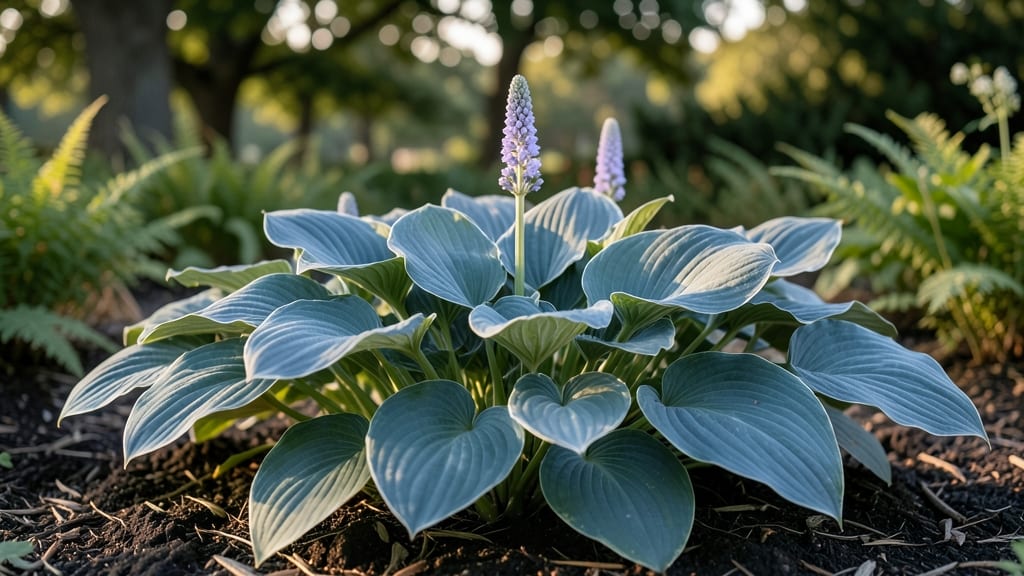
Hosta gardens pictures reveal the best foliage varieties—like 'Blue Angel' thriving in deep shade and 'Halcyon' flourishing in bright light—with leaf textures from broad to ruffled. These shade-loving perennials deliver year-round greenery plus occasional lavender or white summer blooms, all with minimal upkeep.
Hosta gardens pictures don't just show pretty plants—they highlight how these perennials transform spaces with their bold foliage. 💫 The secret lies in their adaptability: 'Blue Angel' develops that signature cobalt hue only in shade, while 'Guacamole' turns chartreuse when given morning sun.
I've seen gardens where hostas create dramatic contrasts with ferns or astilbes, especially when their ruffled edges catch the light. What's fascinating is how their leaf thickness changes with sunlight—thicker leaves in shade help retain moisture, while thinner ones in partial sun grow faster but need more frequent watering.
For the best visual impact, I recommend mixing three textures in one bed: broad-leaved varieties like 'Francee', medium-sized 'Patriot', and compact 'Halcyon'. The color variations alone—from golden 'June' to deep purple 'Black Satin'—make hostas the ultimate low-maintenance star for shade gardens.
Plus, their summer blooms add unexpected pops of color when most shade plants are still leafy.
💡 In This Article
- How Light Conditions Affect Hosta Leaf Colors
- Top 10 Hosta Varieties for Stunning Garden Displays
How light conditions affect hosta leaf colors
Here's what's actually happening with those stunning hosta colors: chlorophyll production and pigment intensity are directly controlled by sunlight exposure. In deep shade, varieties like 'Blue Angel' ramp up anthocyanin production (those purple-blue pigments) to protect their leaves from low light stress.
This is why they develop that intense cobalt hue—it's a survival mechanism! Meanwhile, in partial sun, 'Francee' increases carotenoids (yellow pigments) along leaf edges, creating those golden highlights. The key factor is how sunlight triggers different metabolic pathways in the plant.
Leaf thickness plays a crucial role too. Shade hostas develop thicker, waxier leaves (up to 30% denser than sun-exposed varieties) to conserve moisture. These leaves have 2-3 layers of palisade cells compared to sun hostas' single layer, which affects how light penetrates and scatters.
The waxy coating also reflects more light, creating that velvety sheen you see in pictures. In contrast, sun hostas grow faster but with thinner, more delicate leaves that photosynthesize more efficiently when light is abundant.
What most people don't realize is how sunlight exposure affects disease resistance. Shade hostas develop higher levels of phenolic compounds (natural fungicides) in their leaves, making them more resistant to common issues like slug damage and fungal infections.
This is why 'Blue Angel' stays healthier in shady spots where other hostas might struggle. The trade-off? Sun hostas grow faster but require more frequent watering to prevent leaf scorch—a delicate balance that explains why gardeners often see yellowing edges on sun-exposed varieties during hot spells.
Consider these light spectrum effects: Blue and violet wavelengths (most abundant in shade) trigger anthocyanin production, while red and orange wavelengths (stronger in sun) boost carotenoids.
This is why 'Halcyon' stays bright green in full sun—its chlorophyll dominates, but 'Guacamole' turns chartreuse in partial sun because those carotenoids get a boost.
The science gets even more interesting when you look at leaf orientation: Shade hostas grow leaves vertically to maximize light capture, while sun hostas spread theirs horizontally for broader exposure.
Temperature plays a surprising role too. In cooler shade gardens (60-70°F average temps), anthocyanins develop more intensely because the plant's metabolism slows down, concentrating those pigments. That's why northern gardens often produce deeper blue hostas than southern ones.
Meanwhile, in warmer partial sun (75-85°F), the increased photosynthesis leads to faster growth but can cause chlorophyll breakdown if water isn't consistent—leading to those unsightly yellow patches you sometimes see in garden photos.
The practical takeaway? If you're designing a shade garden, position blue varieties like 'Blue Angel' in the darkest corners where they'll develop their most intense colors. For partial sun areas, choose golden-edged varieties like 'Francee'—they'll show off their best colors when they get 3-4 hours of morning sun.
And remember: The most dramatic hosta gardens combine both extremes, creating visual contrast that makes those garden pictures truly pop.