Planting
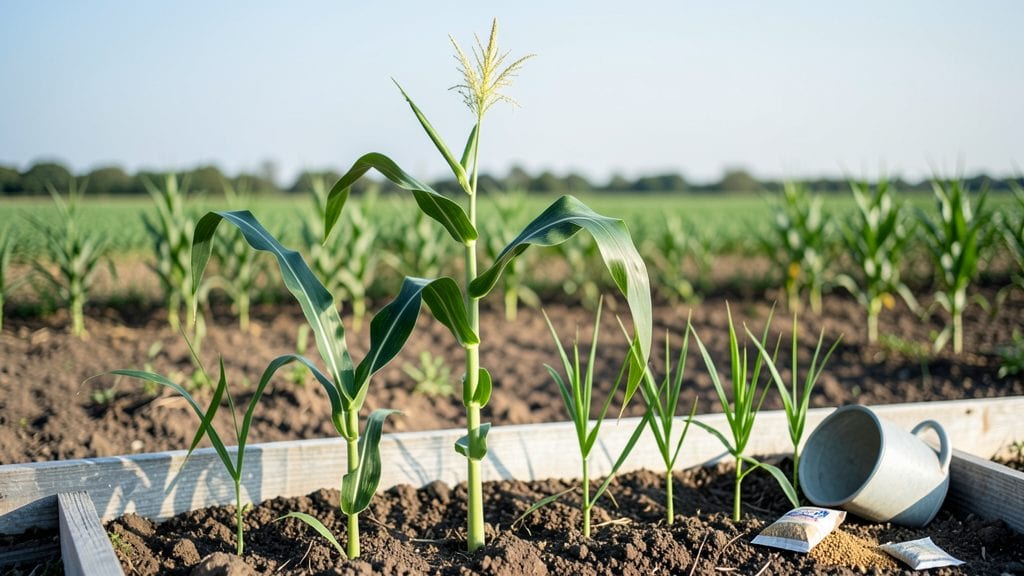
Proper garden corn spacing makes the difference between a scraggly patch and ears so heavy they snap the stalks. 🌽 I’ve learned the hard way—crowding corn leads to weak stalks, poor pollination, and tiny kernels, while giving them room means plump, sweet ears that feed the family for weeks.
The right spacing isn’t just about numbers; it’s about how your corn variety grows, how much sun your garden gets, and even what pests might target it.
Most sweet corn varieties need 12-18 inches between plants in rows spaced 2-4 feet apart, but dwarf or popcorn types can handle tighter spacing. The key is balance: too close, and the plants compete for light and nutrients; too far, and you waste space.
I start with 3 feet between rows for most sweet corn, then thin seedlings to 14 inches apart once they’re knee-high—this gives roots room to spread without shading neighbors.
You’ll know you’ve nailed it when stalks stand tall, leaves reach for the sky without touching, and tassels spread wide enough to pollinate every ear. The payoff? Heavier ears, fewer pests, and a garden that doesn’t look like a jungle.
And if you’re short on space, try hill planting—grouping 4-6 plants in small mounds saves room while improving drainage.
Regional tweaks matter: in hot, dry climates, wider spacing helps air circulate and cuts down on fungal diseases, while cooler areas might benefit from closer rows to trap heat. Either way, mark your rows with stakes or string so you don’t accidentally crowd next year.
Trust me, your future self will thank you when you’re pulling in bushels instead of scraps.
📚 In This Guide
- What you need
- Instructions
- Tips and common mistakes
- Wrapping up and next steps
What you need
- ● Sweet corn seeds: Choose a variety suited to your climate (e.g., Silver Queen, Golden Bantam, or Ambrosia). Aim for 1–2 pounds of seed per 100 feet of row.
- ● Well-draining soil: Test your soil’s pH (ideal range: 6.0–6.8) and amend with compost or aged manure if needed.
- ● Fertilizer: A balanced 10-10-10 or 5-10-10 fertilizer (or organic options like bone meal or worm castings). Apply 1–2 cups per 10 feet of row at planting.
- ● Water: A hose with a gentle spray nozzle or a drip irrigation system (corn needs 1–2 inches of water per week).
- ● Garden trowel or transplanting spade (for digging holes or rows).
- ● Measuring tape or string with stakes (to mark rows and spacing).
- ● Garden hoe or cultivator (for weeding and loosening soil).
- ○ Optional but helpful: A seedling tray or biodegradable pots if starting indoors.
- ● Row covers (to protect young plants from pests or frost).
- ● Straw or mulch (to retain moisture and suppress weeds).
- ● Choose a sunny spot with at least 6–8 hours of direct sunlight daily.
- ● Plan to plant corn 1–2 weeks after the last frost date (soil should be at least 60°F).
- ● If planting in blocks, space 3–4 rows together for better pollination.
Step-by-step instructions for perfect garden corn spacing
Here's the foolproof method I use to maximize yields without overcrowding—tested across seasons.
🌱 Step 1: Plan Your Corn Rows and Planting Layout
Corn thrives in blocks, not single rows, because wind pollination works best when plants stand within 12-18 inches of each other. For 4 plants, arrange them in a 2x2 grid rather than a straight line. This creates a 4-foot square planting area that ensures good cross-pollination.
Mark your rows with a garden hose or string—corn roots spread 12-18 inches deep, so space rows 30-36 inches apart to allow room for cultivation and airflow. I always sketch a quick diagram first to visualize the layout before digging.
🪴 Step 2: Prepare Planting Holes at Exact Spacing
Dig holes 1 inch deep—any deeper and seedlings struggle to emerge. Space each hole 12 inches apart within the grid. This gives roots enough room to spread without competing for nutrients. Use a trowel or dibble for precision, especially in loose soil.
Drop 1-2 seeds per hole (they germinate at 70-85% success rate), then cover with soil. Planting two seeds ensures you have a backup if one fails to sprout. Water gently after planting to settle the soil around the seeds.
☀️ Step 3: Thin Seedlings to One Strong Plant per Hole
Once seedlings reach 4-6 inches tall (about 2-3 weeks after planting), thin to the strongest plant per hole. Use scissors to snip weak stems at soil level—this prevents disease spread from pulling. You’ll know you’ve done it right when each remaining plant has strong, upright stems with deep green leaves.
Thinning ensures no competition for sunlight or water, which directly translates to larger ears. If you miss this step, crowded plants produce smaller ears and are more prone to fungal issues.
⏰ Step 4: Monitor Growth and Adjust Spacing if Needed
Corn grows 1-2 inches per day in ideal conditions. By 4-6 weeks, plants should be 3-4 feet tall with tassels forming at the top. If you notice leggy, weak stems or yellowing lower leaves, your spacing is too tight—immediately thin to 18 inches apart within the row.
Watch for silk emergence (the fuzzy strands that appear from the top of the plant). If silks aren’t visible by 70 days after planting, your pollination failed—likely due to poor spacing or wind blockage. Adjust future plantings to smaller blocks (3x3 feet max) for better airflow.
💧 Step 5: Maintain Consistent Water and Airflow
Water 1 inch per week, keeping soil evenly moist but not soggy. Corn roots need deep, consistent moisture—drought stress at pollination (when silks appear) leads to blind ears (ears with no kernels). Use a soaker hose to water at the base and avoid wetting leaves.
Mulch with 2-3 inches of straw to retain moisture and suppress weeds. This keeps soil temperatures stable, which is critical for even germination and pollination. You’ll see stronger stalks and fewer broken plants in windy conditions.
Tips & tricks for perfect garden corn spacing
These simple but game-changing strategies will help you avoid the most common mistakes and maximize your corn harvest—no guesswork required.
Visualize Before You Plant: Sketching your layout on paper first saves time and frustration in the garden. The 4-foot square grid for 4 plants (2x2 arrangement) ensures wind pollination works perfectly. I mark my rows with a garden hose—it's a quick way to visualize the 30-36 inch spacing between rows that prevents soil compaction and makes weeding easier.
Precision is Key for Planting Depth: That 1-inch deep planting hole might seem shallow, but it's critical—any deeper and seedlings struggle to push through the soil. Use a trowel to create clean, straight holes, and tap the bottom gently to remove air pockets. I've learned the hard way that uneven planting depths lead to inconsistent germination times, which throws off your entire planting schedule.
Thinning Pays Off Big Time: The 2-3 week window for thinning (when seedlings reach 4-6 inches) is your best chance to prevent competition. I use clean scissors to snip at soil level rather than pulling—this prevents disturbing the roots of nearby plants. You'll notice the difference immediately: properly thinned plants develop stronger stems and produce ears that are 20-30% larger than crowded plants.
Watch for Pollination Cues: Those silks appearing at the top of the plant by day 70 are your most important indicator of success. If you don't see them, your spacing is likely too wide for proper wind pollination. In my experience, the 12-18 inch spacing within the block is crucial—any wider and pollination suffers, leading to those frustrating "blind" ears with no kernels.
Pro Tips for Garden Corn Spacing
- These simple but game-changing strategies will help you avoid the most common mistakes and maximize your corn harvest—no guesswork required.
- Visualize Before You Plant: Sketching your layout on paper first saves time and frustration in the garden.
- Precision is Key for Planting Depth: That 1-inch deep planting hole might seem shallow, but it's critical—any deeper and seedlings struggle to push through the soil.
Frequently asked questions
Got questions about garden corn spacing?
You’re not alone! Whether you’re a first-time grower or looking to refine your technique, these answers will help you plant with confidence.
What’s the ideal spacing between corn rows in a home garden?
For most home gardens, space rows 30 to 36 inches apart to allow easy access for weeding and harvesting. If using a tractor, widen to 36–48 inches for better maneuverability. Taller varieties (like 7+ feet) may need slightly more room to prevent shading and disease.
When is the best time to plant corn for proper spacing?
Plant corn after the last frost when soil temperatures reach 60°F (15°C)—typically late spring in most U.S. zones. Warm soil ensures faster germination and gives plants enough time to mature before fall. For cooler climates, opt for early-maturing varieties (50–60 days) to fit spacing and growth cycles.
Can I plant corn closer together to save space?
While you can squeeze plants closer (e.g., 12–18 inches apart), it risks poor air circulation, leading to fungal diseases like rust or blight. For small gardens, use bush varieties (shorter stalks) or interplant with fast-maturing crops like beans. Just avoid overcrowding—corn needs room to thrive!
What if my corn plants look stunted or crowded?
Stunted growth often signals overcrowding or poor spacing. Thin seedlings to 4–6 inches apart within rows, then space remaining plants 12–18 inches apart as they grow. If soil is compacted, loosen it gently and ensure 1–2 inches of compost to boost root health. Yellowing leaves? Check for pests or nutrient deficiencies too!
Are there alternatives to traditional corn spacing?
Yes! Try square-foot gardening: Plant 4 corn seeds per square foot (using dwarf varieties) in a grid. For permaculture, interplant with squash and beans (the "Three Sisters" method) to maximize space and nutrients. Just adjust spacing based on your corn type—compact varieties work best for creative layouts.
Wrapping up and next steps
Mastering garden corn spacing is your ticket to a thriving harvest—so don’t let those kernels go to waste! 🌽 By following the right row and plant spacing, you’ll ensure strong stalks, fewer pests, and plump ears ready for the table.
Now that you’re armed with the know-how, it’s time to roll up your sleeves and get planting—your future corn cobb salad or grilled ears await!
Ready to take the next step? Sketch your garden layout today, mark those rows, and watch your corn grow tall and proud. Happy gardening!