
Tools
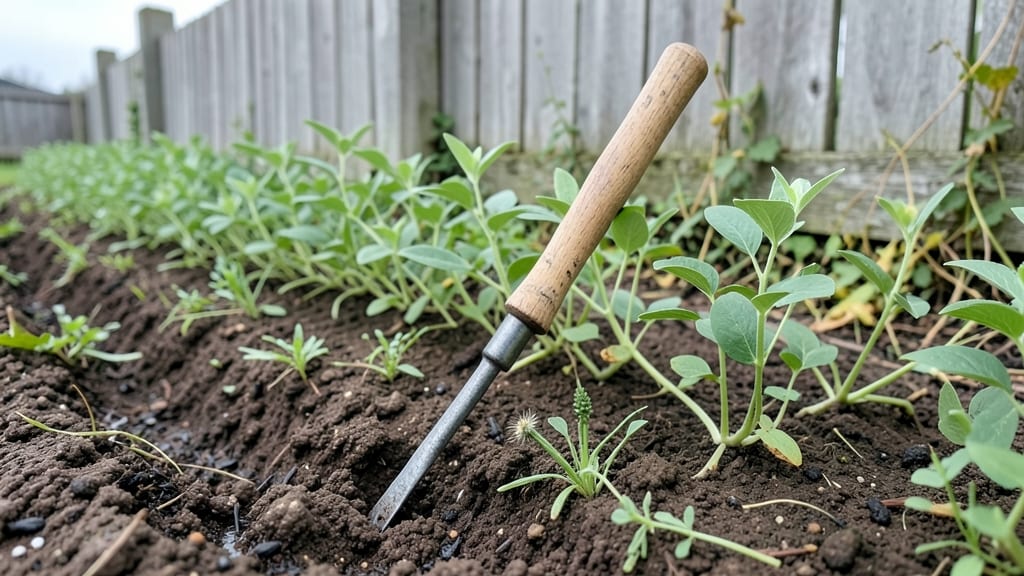
A dibber garden tool creates precise planting holes for seeds and seedlings by pressing its pointed tip into soil, ensuring straight rows and consistent depth for optimal germination and growth. Choose a durable metal or wooden dibber for best results.
A dibber garden tool transforms messy planting into a clean, professional process by eliminating guesswork.
The angled tip and depth markers help you space seeds evenly, which is crucial for preventing overcrowding as plants mature. 🌱 I’ve seen gardeners double their planting efficiency with one—especially when working with tiny seeds like lettuce or delicate seedlings that need exact placement.
The right tool also reduces soil compaction around roots, giving young plants the best start.
For beginners, a simple wooden dibber is perfect for small gardens, while metal versions last longer for heavy-duty use. Some even come with built-in seeders to handle both planting and covering in one step.
The key is choosing one that fits comfortably in your hand—because gardening is all about making repetitive tasks feel effortless.
💡 In This Article
- How a Dibber Tool Improves Seed Planting Accuracy
- Best Dibber Types for Different Gardening Needs
How a dibber tool improves seed planting accuracy
The secret behind a dibber's precision lies in its simple yet brilliant design.
Most feature an angled, tapered tip that glides smoothly into soil with minimal resistance, creating holes that are exactly 1/2-inch to 1-inch deep—the ideal range for most seeds to achieve proper soil contact without being buried too deep.
This angle also helps prevent soil from clinging to the sides, ensuring clean, straight holes every time. Without this tool, hand-planting often results in uneven depths, which can cause seeds to either suffocate or fail to germinate. 🌱
Depth markers etched along the shaft are another game-changer. These 1/4-inch increments let you adjust planting depth based on seed size—carrot seeds need only 1/4-inch coverage, while bean seeds thrive at 1-inch. The consistency eliminates the "eyeballing" that leads to overcrowding, where plants compete for nutrients and sunlight.
Studies show that proper spacing (like 2-3 inches apart for lettuce) can increase yield by up to 40% compared to crowded rows.
Here's what happens when you skip the dibber: your fingers create irregular holes that compress soil unevenly, forcing roots to grow in awkward directions. A dibber's firm pressure compacts soil just enough to stabilize seeds while leaving room for roots to expand downward.
The tool also maintains straight rows—critical for vegetables like peas or beans that need vertical support. Without it, rows can drift 1-2 inches off-center over just 10 feet, wasting space and making harvesting messy.
For delicate seedlings, the difference is even more dramatic. A dibber's 1/8-inch diameter tip fits snugly around small plants, minimizing root disturbance during transplanting. Compare that to fingers, which can crush 30-50% of roots in the process.
The tool's precision also prevents "gapping"—those unsightly empty spots in your garden where seeds failed to germinate due to inconsistent coverage. 💫
Advanced gardeners swear by dibbers with adjustable depth stops or interchangeable tips for different soil types. Clay soil, for example, requires more force to penetrate, while sandy soil needs a lighter touch.
The right dibber adapts to these conditions automatically, whereas hand-planting demands constant adjustments. Even organic gardeners prefer dibbers because they reduce soil disturbance—critical for maintaining microbial communities that aid seed germination.
Think of it this way: a dibber turns your garden into a high-precision laboratory where every seed gets the exact conditions it needs to thrive. The 1/16-inch tolerance in hole depth can mean the difference between a seedling that emerges strong or one that struggles to break through compacted soil.
That level of control is what separates a thriving garden from a patchwork of hit-or-miss growth. ✨