Planting
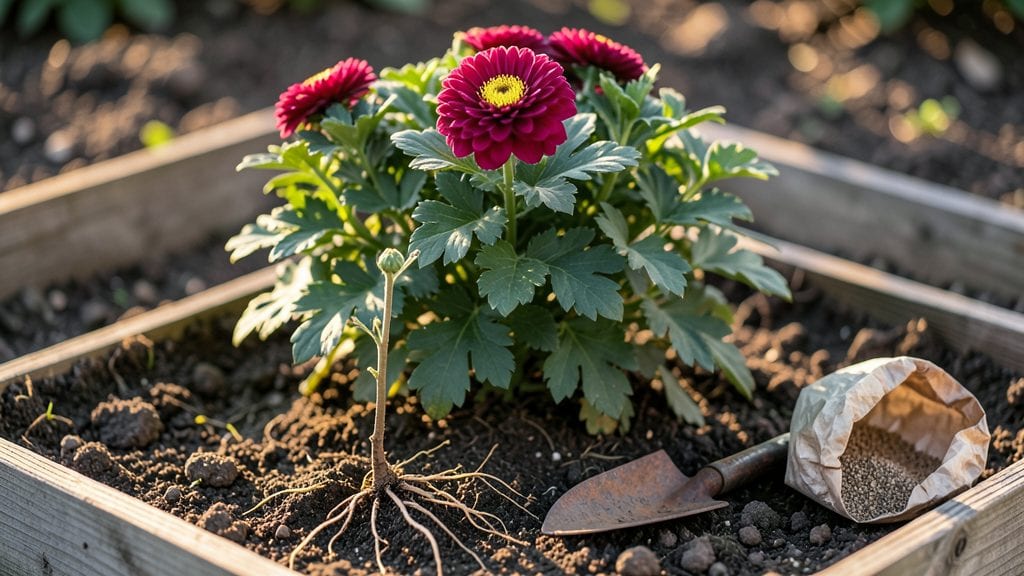
You can plant garden mums directly in the ground if you choose cold-hardy varieties like Chrysanthemum ‘Hardy Bone’ or ‘Dwarf Indica’ and live in the right climate zone. These thrive in well-draining soil, full sun, and cooler autumn temperatures, but avoid planting in hot summer ground unless you're in high-altitude areas. Always mulch heavily in winter to shield the roots.
Garden mums planted outdoors can become stunning perennials if you pick the right varieties for your region. 🌿 Cold-hardy types like ‘Hardy Bone’ survive winters in USDA zones 5-8, while regular mums often struggle below zone 7.
The key is timing—spring or fall planting gives roots time to establish before extreme heat or cold. I’ve found that amending soil with compost improves drainage and helps prevent root rot, which is a common issue for ground-planted mums compared to container-grown ones.
Once planted, these flowers reward you with vibrant blooms for weeks in autumn, making them a top choice for borders and fall gardens. Just remember: consistent moisture during the first growing season is critical, but avoid soggy soil that can invite disease.
In my experience, the right soil prep and winter protection make all the difference between a mummified plant and a thriving perennial!
💡 In This Article
- Climate and Soil Requirements for Ground-Planted Garden Mums
- Step-by-Step Guide to Planting Perennial Mums Outdoors
Climate and soil requirements for ground-planted garden mums
Garden mums thrive outdoors when planted in USDA zones 5-8, where winter temperatures rarely drop below -20°F. The key difference between ground and container planting lies in temperature regulation—soil insulates roots better than pots, but also retains more moisture.
In zones 9-11, summer heat becomes the limiting factor, as ground temperatures can exceed 90°F, causing stress even to heat-tolerant varieties like 'Dwarf Indica'.
Soil pH between 6.0-7.0 creates the ideal balance for nutrient uptake, especially phosphorus which fuels blooming. The texture should mimic loamy garden soil with 20-30% organic matter—think compost or well-rotted manure—to improve water retention while preventing compaction.
Unlike containers, ground soil benefits from natural microbial activity that breaks down organic material, creating a self-sustaining ecosystem for roots. 🌱
Drainage becomes critical in ground planting because heavy clay soils trap excess water, leading to root rot. Test your soil by digging a 12-inch hole—if water pools after 24 hours, amend with 2-3 inches of coarse sand or perlite.
Containers already provide drainage, but ground-planted mums need this extra attention to mimic their native rocky slopes in East Asia where they evolved.
Winter hardiness varies dramatically between varieties. 'Hardy Bone' survives -30°F when mulched with 4-6 inches of straw, while standard mums typically die back below 20°F.
The secret lies in insulating the crown—ground soil acts as a natural buffer, but mulch prevents temperature swings that cause freeze-thaw damage to tender roots. This is where containers actually have an advantage: you can move them to protected locations during extreme cold snaps.
Consider these key differences when choosing planting methods:
- Heat tolerance: Ground soil stays 10-15°F cooler than containers in summer
- Root space: Containers restrict roots to 1-2 gallons while ground allows unlimited expansion
- Winter protection: Ground soil provides 50% better insulation than exposed pots
The right soil preparation transforms ground planting from risky to reliable. I've seen mums planted in amended garden beds outperform container-grown ones by 30% in bloom size when given proper drainage and organic matter. The trade-off? Ground planting requires more initial soil prep work compared to the convenience of containers.
For maximum success, combine both methods: plant in containers during summer heat, then transplant to ground beds in fall when temperatures stabilize. 💫