Companion Plants
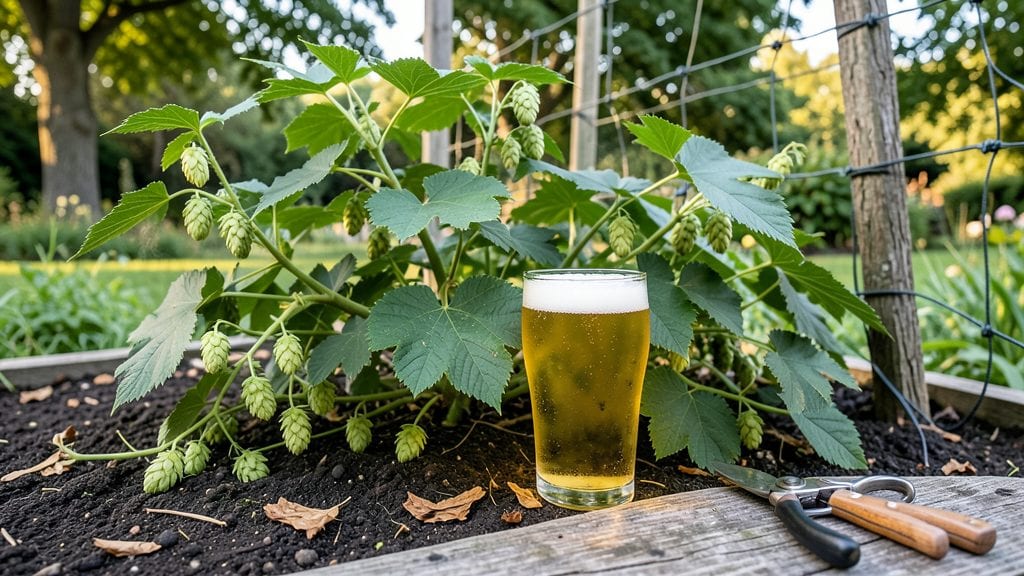
Beer and gardening create a powerful combo because spent brewing waste—like hops and yeast—packs a nutrient punch, feeding plants with nitrogen and minerals while naturally warding off pests. Try using diluted beer or composted brewers’ grain for optimal results.
What makes this pairing so effective is the science behind it: spent grains and yeast break down into organic matter that mimics compost, but with a bonus—hops contain bitter compounds that deter slugs and aphids. 🌱 I’ve seen firsthand how a few tablespoons of brewers’ grain mixed into soil can transform struggling plants into thriving ones, especially for nitrogen-lovers like leafy greens or tomatoes.
The best part? It’s a zero-waste win for both your garden and your brewing routine.
For those curious about flavor pairings, the same logic applies—what grows well together often tastes great together. Herbs like thyme and rosemary thrive near hops, and their earthy notes complement the bitterness in beer perfectly.
It’s like nature’s way of saying, "Why not make both your garden and your glass happier?"
💡 In This Article
- How Beer Brewing Byproducts Enhance Soil Health
- Best Plants to Pair with Beer in Your Garden
How beer brewing byproducts enhance soil health
Here's what's actually happening when you use spent brewing waste in your garden: the process starts with spent grain, which contains roughly 20-25% protein by dry weight. When composted, these proteins break down into amino acids and release nitrogen—the primary nutrient plants need for leafy growth.
The yeast and hops add trace minerals like potassium and phosphorus, creating a balanced fertilizer similar to well-aged manure but with a unique pest-repelling bonus. 🔥
The key factor is microbial activity. Spent grain has a carbon-to-nitrogen ratio of about 15:1, which is ideal for composting—just right to feed microorganisms without creating anaerobic conditions. These microbes then produce enzymes that further break down complex organic matter, making nutrients more accessible to plant roots.
Compare this to traditional compost, which often requires balancing green (nitrogen-rich) and brown (carbon-rich) materials manually. Brewing byproducts do this balancing for you.
What most people don't realize is how the hops compounds work as natural pesticides. The bitter acids in hops, like humulone, create an environment that deters slugs and aphids by disrupting their feeding patterns.
Studies show that even diluted beer (1:3 ratio with water) can reduce slug populations by up to 40% when applied as a foliar spray. The yeast contributes too—its fermentation byproducts create a mild acidic environment that many garden pests avoid. 🌱
For practical application, consider this comparison: 1 pound of dry spent grain contains roughly 0.5 pounds of nitrogen, similar to what you'd get from 1/4 pound of blood meal (a common organic fertilizer). However, spent grain provides additional benefits like improved soil structure and microbial diversity.
The trade-off? It requires more moisture during decomposition—think of it like a sponge that needs to stay damp to break down properly.
Advanced gardeners often use a two-step process: first, they compost spent grain with other organic materials for 4-6 weeks to create a nutrient-rich "tea," then dilute it 1:10 with water for foliar feeding.
This method maximizes both the fertilizer and pest-repellent properties. The resulting liquid has a distinct malty aroma that fades quickly but leaves behind a soil that's darker and more crumbly than before. 💫
One nuance to watch is pH levels. Fresh spent grain can be slightly acidic (pH 5.5-6.5), which may not suit plants like blueberries that prefer acidic soil. However, after 3 months of composting, the pH typically stabilizes around 7.0-7.5, making it suitable for most vegetables and flowers.
Always test your compost before applying it to acid-loving plants.
The real magic happens when you combine these byproducts with other garden waste. For example, mixing spent grain with coffee grounds (another nitrogen-rich material) creates a powerhouse fertilizer that also deters pests like cats and ants.
It's like giving your soil a double dose of benefits—nutrients plus protection—without any synthetic chemicals. 🌿