Pests
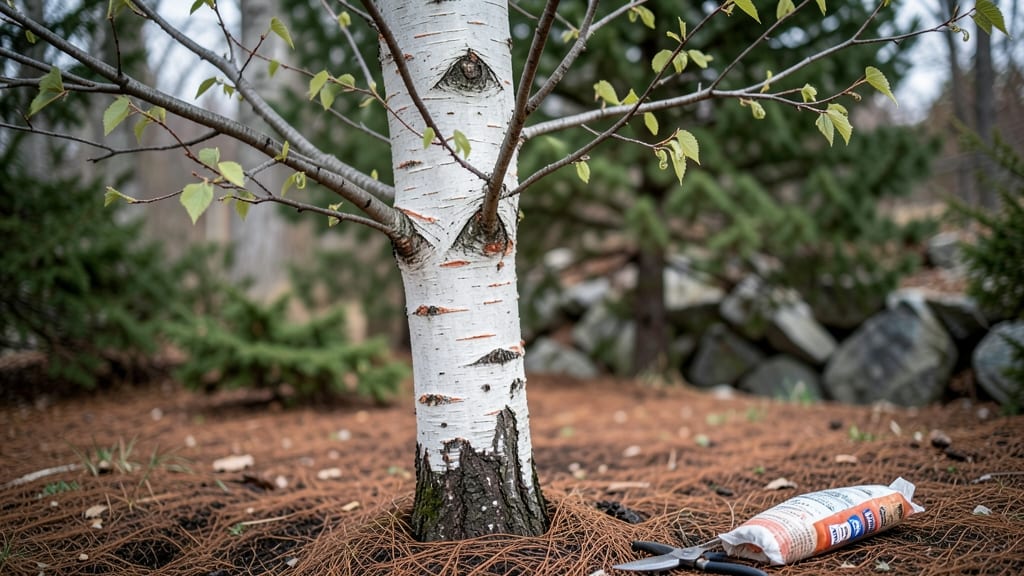
Dealing with bark in garden beds requires clearing debris with a rake, cutting mulch into soil with a sharp hoe, and composting or repurposing it. Burning should be avoided to protect soil nutrients, and natural decomposition methods work best instead.
When bark mulch breaks down in garden beds, it creates a perfect environment for pests and fungal growth if left unattended. 🔥 The cellulose in wood bark decomposes quickly when exposed to moisture and oxygen, which is why proper layering matters—thick layers can suffocate soil and attract termites.
I always recommend breaking up old mulch into smaller pieces before composting, as this speeds up decomposition and prevents clumping.
Instead of tossing out bark waste, consider repurposing it in creative ways. For example, mixing it with nitrogen-rich materials like grass clippings creates nutrient-dense compost, while larger chunks can be used as pathway fillers or donated to local nurseries for erosion control.
The key is to act quickly—once bark starts breaking down, it loses its protective qualities and can even harm plants if left to rot in place.
💡 In This Article
- Why Bark Mulch Breaks Down in Gardens
- Best Ways to Repurpose Garden Bark Waste
Why bark mulch breaks down in gardens
Bark mulch decomposes primarily through microbial activity targeting its cellulose structure. When exposed to moisture and oxygen, fungi and bacteria break down the lignin and hemicellulose in wood bark, transforming it into humus over time.
This process accelerates in warm, humid conditions where microbial populations thrive—think of it like a microscopic composting party where microbes feast on the bark's organic compounds.
The speed of decomposition depends heavily on particle size. Fine bark chips (under ¼-inch) decompose in 6-12 months, while larger chunks (over 1-inch) may take 2-3 years or longer.
The surface area exposed to microbes and moisture determines how quickly these compounds break down—smaller pieces offer more contact points for decomposition agents. For example, cedar bark breaks down faster than oak due to its lower lignin content, which microbes find easier to digest.
Improper layering creates anaerobic conditions that slow decomposition and attract pests. When bark layers exceed 3-4 inches, they block oxygen and moisture penetration, creating a smothering effect. This environment becomes ideal for termites and fungus gnats, which thrive in damp, oxygen-deprived wood.
The key is maintaining a 2-3 inch layer that allows air circulation while still suppressing weeds—think of it as a breathable blanket for your soil rather than a suffocating tarp.
Moisture plays a dual role in bark decomposition. While adequate moisture (about 40-60% soil moisture) speeds up microbial activity, excessive water creates waterlogged conditions that slow decomposition and promote rot. Bark mulch should be kept moist but not soggy—imagine a damp sponge rather than a dripping one.
In dry climates, you might need to water bark mulch occasionally to maintain microbial activity, while in rainy regions, proper drainage becomes critical to prevent anaerobic pockets.
Seasonal temperature fluctuations also impact decomposition rates. During summer months, when soil temperatures reach 75-85°F, microbial activity peaks, accelerating breakdown. In winter, when temperatures drop below 40°F, decomposition nearly halts as microbial populations become dormant.
This seasonal rhythm explains why bark mulch lasts longer in cooler climates and breaks down more quickly in hot, humid regions like the southeastern U.S.
One surprising factor is the bark's source tree. Pine bark, for instance, contains more volatile organic compounds that repel some pests but also attract others like bark beetles. Hardwoods like oak or maple decompose more uniformly, making them better choices for long-term mulching.
The tree species determines not just decomposition speed but also which microbes and pests will interact with your mulch—choosing the right type can mean the difference between a thriving garden bed and one plagued with pests.