Flowers
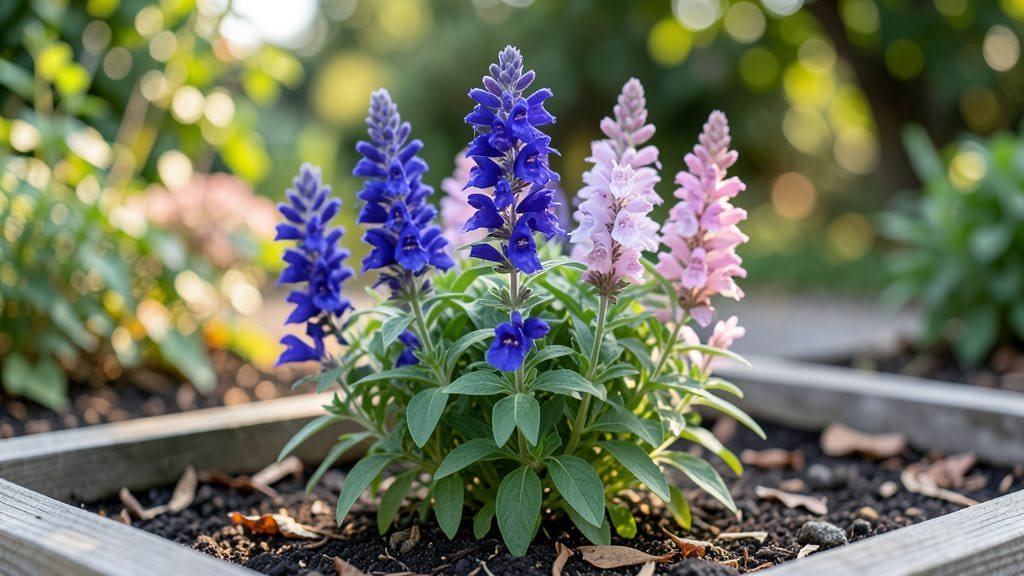
Angelonia in garden designs adds shockingly lush vertical interest that keeps blooming from summer through frost. I first fell for its snapshooting purple-blue spikes after my drought-stricken border needed a rescue plant—it thrived where nothing else would.
The secret lies in its heat-loving nature and self-cleaning blooms, which means less deadheading and more color without the fuss.
This plant plays well with others, whether you tuck it into cottage-style gardens alongside lavender and salvia or create modern contrasts with silver foliage like dusty miller. Its 3-4 foot height makes it perfect for back-of-border drama or as a container star in hanging baskets where its cascading habit shines.
Pair it with sun-loving annuals like zinnias or pollinator magnets like bee balm for a buzzing, blooming spectacle.
You’ll end up with neighbor-jealousy levels of vertical color that lasts—no wilting, no fading, just bold spikes of blooms from July until hard frost. The best part? It handles dry spells like a champ, so you’ll spend less time watering and more time admiring.
Let’s talk placement and pairings that make angelonia the star of any garden layout.
Works in full sun only, so choose a spot that gets at least 6+ hours of direct light—it won’t tolerate shade. For container growing, opt for 5-gallon pots with drainage holes and a well-draining mix to keep roots happy.
The key to long-lasting blooms? Deadhead spent flowers every couple of weeks to encourage more spikes—though it does a decent job of self-cleaning too.
Common Culprits Behind Angelonia Struggles
Angelonia, with its vibrant blooms and drought-resistant charm, can sometimes seem finicky—even though it’s a hardy plant. If your Angelonia isn’t thriving, the issue likely stems from one (or more) of these key factors.
Understanding the root causes helps you fix problems before they worsen. Let’s break down the science behind why your plant might be underperforming.
Angelonia loves warmth but has limits. While it’s drought-tolerant, extreme heat—especially when combined with dry conditions—can stress the plant. Here’s why:
- Heat shock: Temperatures consistently above 90°F (32°C) can cause Angelonia to wilt or drop buds before they open. The plant’s stomata (tiny pores on leaves) close to conserve water, but this also restricts photosynthesis, leading to weak growth.
- Root zone overheating: Mulch that’s too thick or dark-colored (like black plastic) can bake the soil, preventing roots from absorbing moisture efficiently. Roots need to stay between 60–75°F (15–24°C) for optimal function.
- Sunburn: Intense afternoon sun (especially in desert climates) can scorch leaves, turning them yellow or crispy. This is more common in Angelonia varieties with lighter foliage.
Actionable fix: Provide afternoon shade during peak summer months (use shade cloth or plant near taller perennials). Water deeply in the early morning to reduce evaporation, and use 3–4 inches of light-colored mulch (like straw or pine bark) to insulate roots.
Angelonia’s drought tolerance is real—but that doesn’t mean it’s indifferent to water. Improper irrigation is the #1 reason for poor performance. Here’s the science:
- Drought stress: While Angelonia can survive brief dry spells, prolonged drought causes roots to shrink and leaves to curl. The plant prioritizes survival over flowering, so buds abort.
- Overwatering: Soggy soil leads to root rot (caused by Pythium or Phytophthora fungi), which suffocates roots by blocking oxygen. Yellowing leaves and a mushy stem are telltale signs.
- Inconsistent moisture: Fluctuating soil moisture (e.g., heavy watering followed by drought) stresses the plant, making it susceptible to bacterial wilt or powdery mildew.
Actionable fix:
- Water when the top 1–2 inches of soil are dry (stick your finger in—if it’s dry, it’s time).
- Avoid wetting foliage to prevent fungal diseases.
- Use drip irrigation or soaker hoses for deep, even watering.
Angelonia isn’t picky about soil, but poor drainage or nutrient deficiencies can stunt its growth. Here’s what’s really happening:
- Compacted or clay soil: Water pools around roots, leading to suffocation and rot. Angelonia prefers well-draining soil with a pH of 6.0–7.0. If your soil is heavy, roots struggle to access oxygen and nutrients.
- Nitrogen overload: Too much nitrogen (from fresh manure or over-fertilizing) promotes leafy growth at the expense of flowers. The plant diverts energy to foliage instead of blooms.
- Micronutrient deficiencies: Lack of phosphorus (for roots) or magnesium (for chlorophyll) causes yellowing leaves or weak stems. Angelonia also needs calcium to prevent blossom-end rot in buds.
Actionable fix:
- Amend heavy soil with compost or perlite to improve drainage.
- Use a balanced, slow-release fertilizer (e.g., 10-10-10) at planting and mid-season. Avoid high-nitrogen formulas.
- Test soil pH—add lime if it’s too acidic (<6.0) or sulfur if it’s too alkaline (>7.5).
While Angelonia is relatively pest-resistant, aphids, spider mites, and fungal pathogens can still take a toll. Here’s how they sabotage your plant:
- Aphids and spider mites: These sap-sucking pests weaken the plant by extracting nutrients, causing stunted growth, curled leaves, and sticky honeydew (which attracts sooty mold).
- Powdery mildew: A fungal disease thrives in humid, shaded conditions, coating leaves with a white, powdery film. It blocks sunlight, reducing photosynthesis and flower production.
- Root-knot nematodes: Microscopic worms burrow into roots, causing galls (lumpy growths) that disrupt water and nutrient uptake. Infested plants wilt even when soil is moist.
Actionable fix:
- Spray leaves with neem oil or insecticidal soap weekly if pests appear.
- Improve airflow by pruning crowded foliage and avoiding overhead watering.
- Rotate crops annually to prevent nematode buildup—don’t plant Angelonia in the same spot every year.
Pro Tip: 💡 Most Angelonia issues start with water or soil problems. If your plant is struggling, check these two first—90% of fixes begin here!
Quick Fixes for Angelonia Struggles
Revitalizing your angelonia doesn’t have to be a guessing game. Whether your plants are wilting, struggling to bloom, or battling pests, these practical solutions will get them back on track—fast! Below, we’ve mapped common issues to easy fixes, plus prevention tips to keep your angelonia thriving all season.
Cause: Angelonia hates soggy roots—too much water or compacted soil suffocates the roots, leading to yellowing or mushy leaves.
Fix It: ✅ 🔥 Drainage First: If your pot or garden bed doesn’t have drainage holes, repot immediately into a container with drainage or amend the soil with perlite/sand (20% mix). ✅ 🍳 Adjust Watering: Let the top 1–2 inches of soil dry out between waterings. Stick your finger in—if it’s damp, wait! ✅ 👨🍳 Prune the Damage: Snip off yellow leaves at the base to redirect energy to healthy growth.
💡 Prevention Tip: Use well-draining soil mixes (like cactus/succulent blends) and avoid heavy clay soils. Mulch lightly to retain just enough moisture without smothering roots.
Cause: Angelonia needs full sun (6+ hours/day) and balanced fertilizer to bloom. Shady spots or weak soil = sad stems.
Fix It: ✅ ☀️ Move to Sun: If indoors, place near a south-facing window or supplement with a grow light (12+ hours/day). ✅ 🥗 Fertilize Right: Feed every 2–3 weeks with a balanced liquid fertilizer (10-10-10 or 20-20-20, diluted to half-strength). For extra blooms, switch to a low-nitrogen, high-phosphorus formula (like 5-10-5) mid-season. ✅ ⏰ Deadhead Regularly: Snip spent blooms above a set of leaves to encourage new flowers.
🌡️ Prevention Tip: Pinch back young plants to encourage bushier growth (and more flowers!). Avoid over-fertilizing with nitrogen—it promotes leaves over blooms.
Cause: Spider mites, aphids, or whiteflies love angelonia’s tender leaves, especially in dry or dusty conditions.
Fix It: ✅ 🔪 Blast Off Pests: Spray plants with a strong stream of water to knock off mites/aphids. Repeat every 2–3 days for 2 weeks. ✅ 🌿 Neem Oil Rescue: Mix 1 tsp neem oil + 1 tsp mild soap + 1 quart water, spray evenly (including undersides of leaves). Reapply weekly until pests vanish. ✅ 🐞 Introduce Beneficial Bugs: Ladybugs and lacewings devour aphids—buy them online or attract them with dill or fennel nearby.
✨ Prevention Tip: Dust leaves monthly with a damp cloth to deter mites. Drought-stressed plants attract pests—keep soil consistently moist (but not soggy!).
Cause: Too little light or overcrowding makes stems stretch weak and prone to snapping.
Fix It: ✅ 🌿 Thin Out Plants: If growing in a bed, space angelonia 12–18 inches apart to improve airflow. ✅ 🌞 Boost Light: Move plants to a sunnier spot or prune nearby tall plants blocking sunlight. ✅ 🔪 Prune for Shape: Trim back 1/3 of the leggy stems to encourage compact, bushier growth.
🎯 Prevention Tip: Rotate pots occasionally so all sides get even light. Use support stakes for tall varieties to prevent flopping.
Pro Tip: Angelonia is drought-tolerant once established—underwatering is less risky than overwatering! Let the soil dry completely between deep waterings in hot climates.
Need a Quick Checklist? ✔ Yellow leaves? → Drainage + watering fix ✔ No blooms? → Sun + fertilizer boost ✔ Pests? → Water blast + neem oil ✔ Leggy stems? → Prune + more light
Frequently asked questions about Angelonia in gardens
What’s the best way to use angelonia in container gardens?
Angelonia thrives in 5-gallon containers with drainage holes, making it perfect for patios or balconies. Pair it with trailing plants like sweet potato vine or calibrachoa for a cascading effect. Use a well-draining mix (cactus blend + compost) and place in full sun for maximum blooms.
Can angelonia grow in partial shade?
While it prefers 6+ hours of direct sunlight, angelonia can tolerate 3–4 hours of morning sun with afternoon shade in hot climates. In partial shade, expect fewer blooms and leggier stems. If indoors, supplement with a grow light for best results.
How do I keep angelonia blooming all season?
Deadhead spent flowers every 2 weeks to encourage new spikes. Use a balanced fertilizer (10-10-10) every 3–4 weeks and switch to low-nitrogen, high-phosphorus (5-10-5) mid-season. Prune back 1/3 of leggy stems in spring to promote bushier growth.
What plants pair well with angelonia for pollinators?
Angelonia attracts bees and butterflies—pair it with bee balm, zinnias, or lavender for a buzzing garden. For contrast, try silver foliage plants like dusty miller or purple verbena. Avoid heavy feeders like tomatoes nearby, as they compete for nutrients.
Why are my angelonia leaves turning yellow?
Yellow leaves usually mean overwatering or poor drainage. Let soil dry 1–2 inches deep between waterings and repot if the container lacks drainage holes. If yellowing starts at the bottom, it’s likely root rot—trim affected leaves and improve airflow.