
Companion Plants
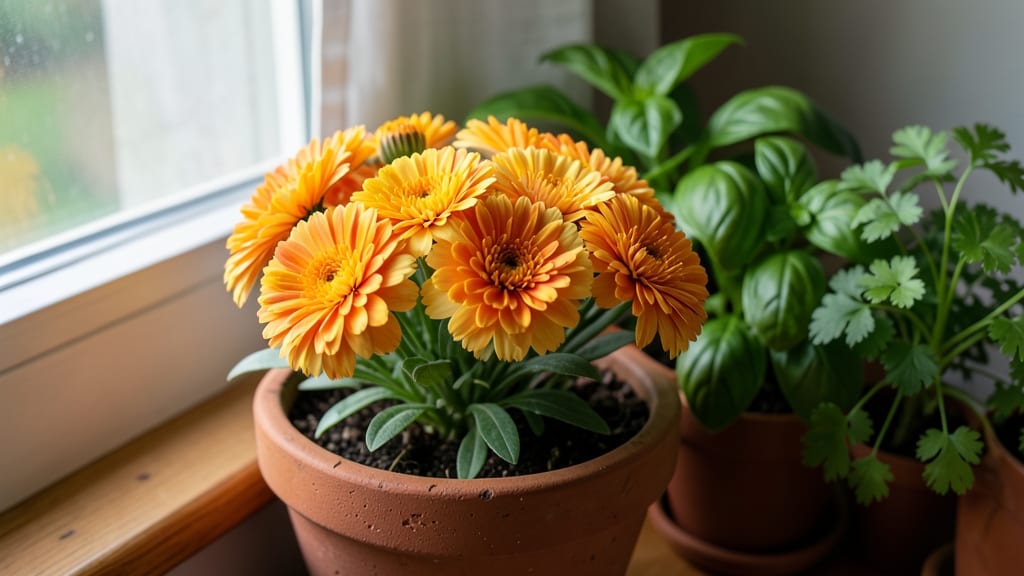
Transform your windowsill into a thriving herb garden with these 10 low-maintenance window companions. These plants not only complement your culinary herbs but also enhance growth, deter pests, and create a lush indoor ecosystem with minimal sunlight requirements.
Sweet Basil Companion Plant
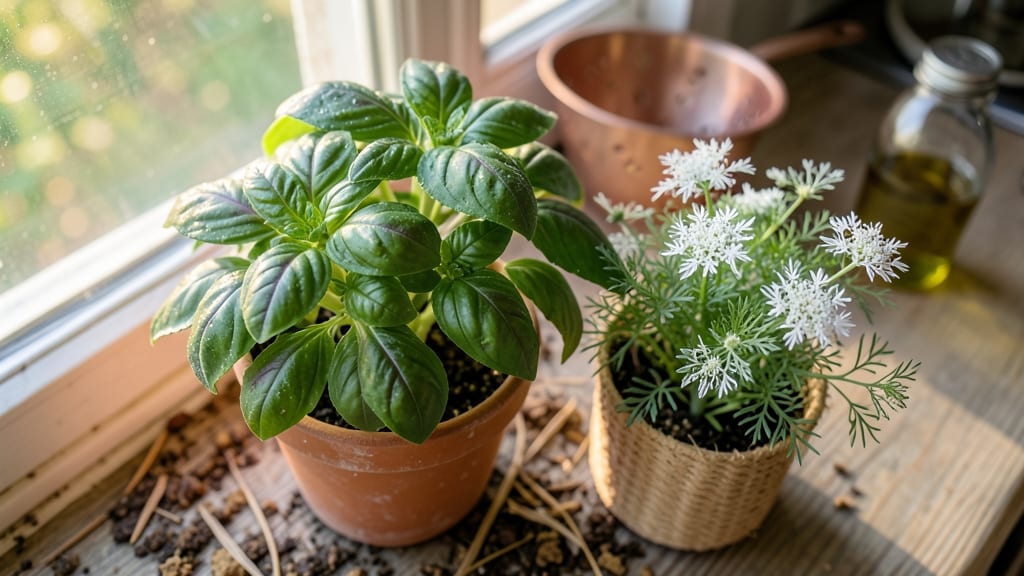
If you love fresh sweet basil but struggle with pests or weak flavor, you’re about to discover a game-changer for your windowsill garden. Pairing basil with the right companion plant doesn’t just boost its taste—it transforms your tiny kitchen garden into a mosquito-repelling powerhouse while keeping your herbs thriving.
Plant basil alongside marigolds or borage to create a natural pest barrier. Marigolds’ strong scent confuses mosquitoes, while borage’s flowers attract pollinators that deter harmful insects. Both thrive in 4+ hours of sunlight daily, making them perfect for sunny windowsills. Plus, their presence enhances basil’s flavor and growth, giving you more harvests with less effort.
This dynamic duo is ideal for urban gardeners or anyone with limited space—just ensure pots have drainage and rotate them weekly for even sun exposure. Your herbs will taste better, pests will stay away, and you’ll enjoy a fragrant, functional garden. 🌻
Chives for Pest Control
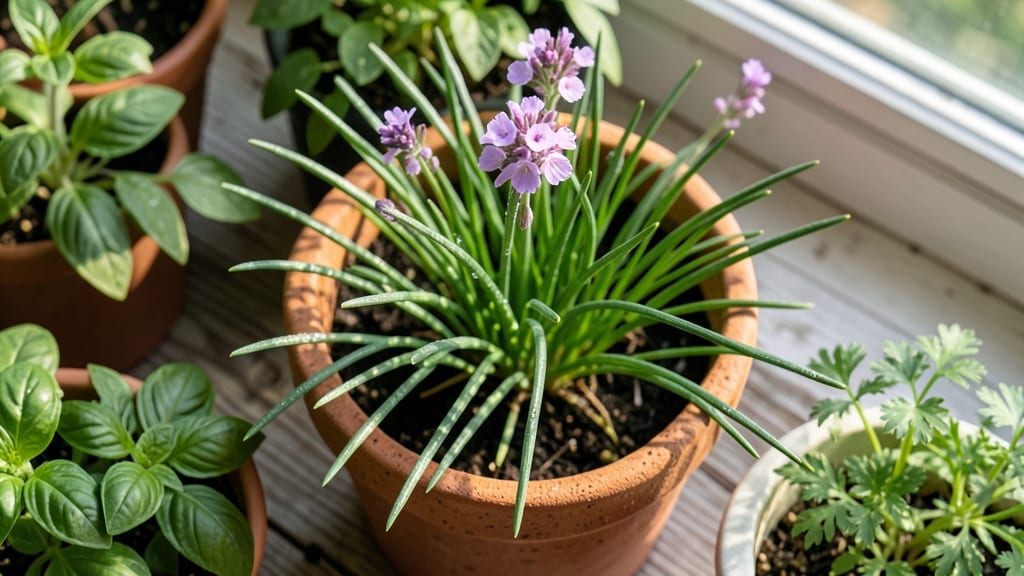
If you’re tired of battling garden pests without harsh chemicals, chives are your secret weapon. This hardy herb naturally deters aphids and carrot flies while adding delicate purple blooms that attract pollinators—making it a dual-purpose powerhouse for your window garden.
Grow chives in well-draining soil with 4-6 hours of sunlight daily, and they’ll thrive in pots as small as 6 inches wide. Snip leaves as needed for a mild onion flavor in dishes, and let the flowers go to seed to support local bees. Their clumping habit keeps them tidy, perfect for beginners.
This low-maintenance plant is ideal for urban gardeners or anyone new to companion planting—it’s easy to grow, pest-resistant, and adds beauty to your windowsill. 🌷
Lemon Balm for Aromatic Growth
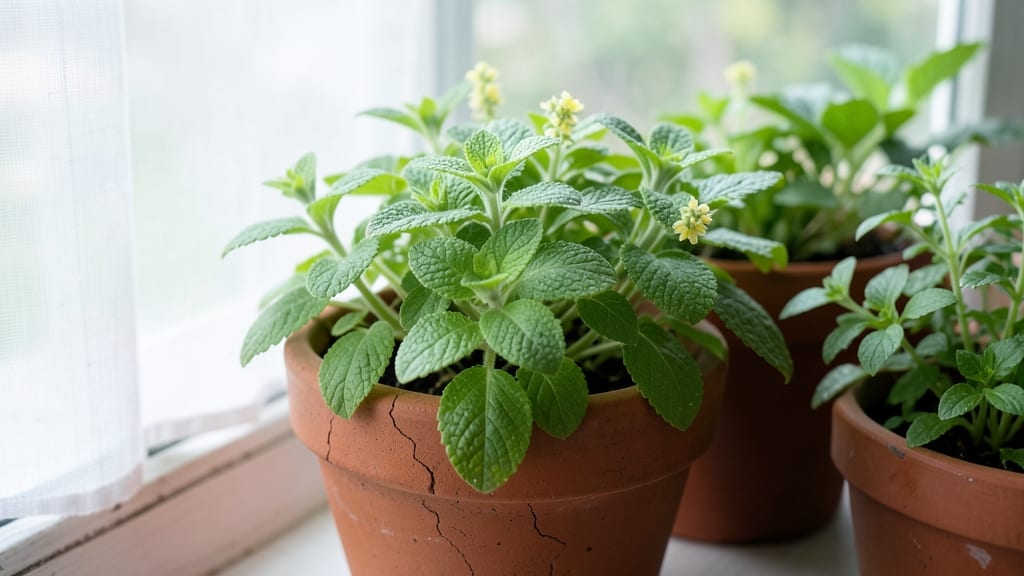
If your window garden lacks sunlight but you crave a fragrant, pest-repelling herb, lemon balm is your perfect match. This hardy perennial thrives in partial shade, making it ideal for north-facing windows or dimly lit spaces where basil or chives might struggle.
Planting lemon balm near your herbs amplifies their natural scents while its strong citrus aroma naturally deters whiteflies and other pests. It’s also incredibly low-maintenance—water when the soil feels dry and pinch back stems to encourage bushier growth. The bonus? Its leaves make a refreshing tea!
Urban gardeners and those with limited sunlight will love how lemon balm breathes life into shaded windowsills, creating a fragrant, functional corner that doubles as a pest-free herb garden. 🌿
Marigolds for Pest Deterrence
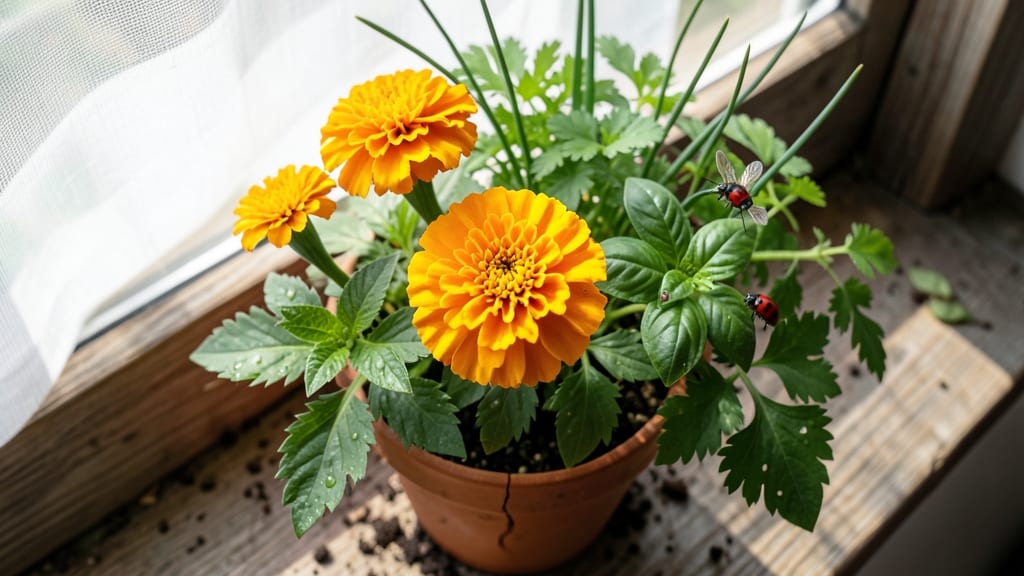
If your herb garden is under siege by pests but you want to avoid harsh chemicals, marigolds are your secret weapon. These cheerful bloomers don’t just add color—they naturally repel nematodes and aphids while luring in ladybugs and hoverflies, the good guys that devour garden pests.
Plant French marigolds (orange) or African marigolds (golden) near your herbs for maximum protection. They thrive in full sun (6+ hours daily) and prefer well-draining soil—perfect for sunny windowsills or balcony containers. Deadhead spent blooms to encourage more flowers, and you’ll enjoy pest-free herbs all season long.
This makes marigolds especially valuable for urban gardeners or anyone with limited space who wants chemical-free pest control. Their dual role as both protector and pollinator makes them a must-have for any window herb garden. 🌻
Mint for Growth Stimulation
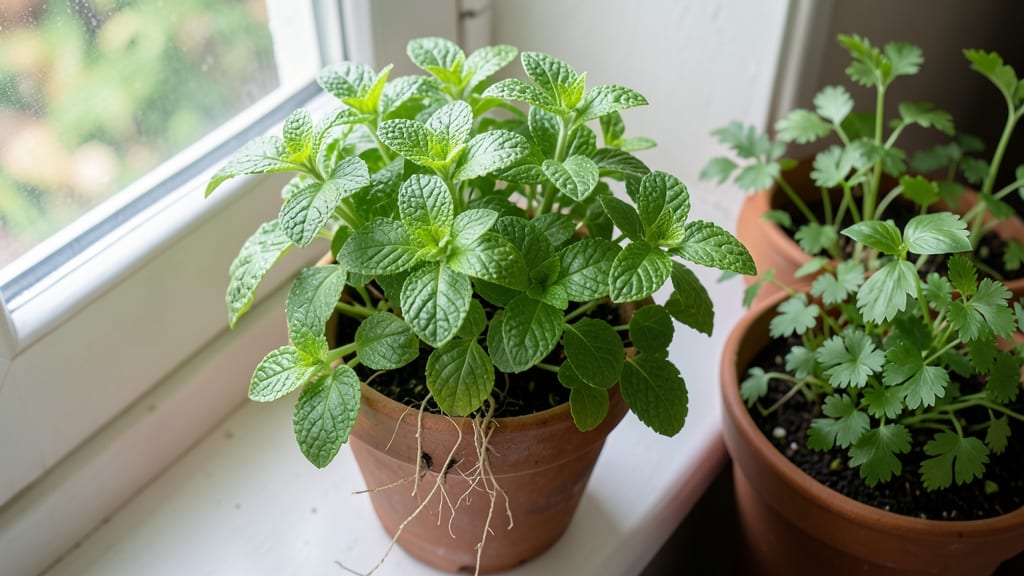
Want to supercharge your herb garden without extra space? Mint is the secret weapon you’ve been missing—its aggressive root system releases growth-stimulating compounds that help neighboring herbs thrive faster. This makes it perfect for small pots or window gardens where every inch counts.
Plant mint in its own container (it spreads aggressively!) near slower-growing herbs like basil or parsley. Its rapid root system releases natural growth hormones that accelerate leaf production in nearby plants. For best results, give it 4-6 hours of sunlight daily and keep the soil consistently moist. Urban gardeners will love how it fits perfectly in tiny spaces while delivering big results.
This hardy herb also deters pests like ants and spiders, making it a dual-purpose powerhouse. Just remember: containment is key—its roots can overtake delicate herbs if left unchecked. 💚
Parsley as a Nutrient Booster
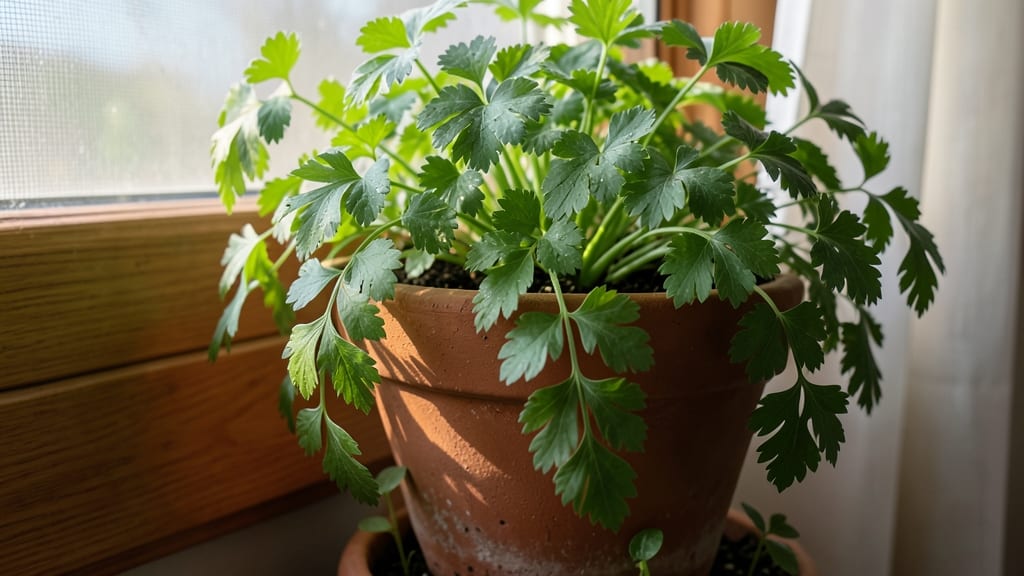
Looking for a window garden plant that doubles as a soil superfood for your herbs? Parsley isn’t just a garnish—it’s a nutrient powerhouse that enriches the soil around it, giving nearby herbs a growth boost without any extra work from you.
This hardy biennial thrives in partial shade, making it perfect for north-facing windows or spaces with indirect light. When planted alongside herbs like basil or chives, parsley’s decomposing leaves release vitamin K, calcium, and magnesium into the soil, creating a natural fertilizer. Plus, its deep roots help aerate compacted soil in small pots.
Urban gardeners and herb lovers will appreciate how parsley’s low-maintenance nature—combined with its soil-enhancing benefits—makes it a must-have for any window garden. 🌿
Thyme for Soil Health
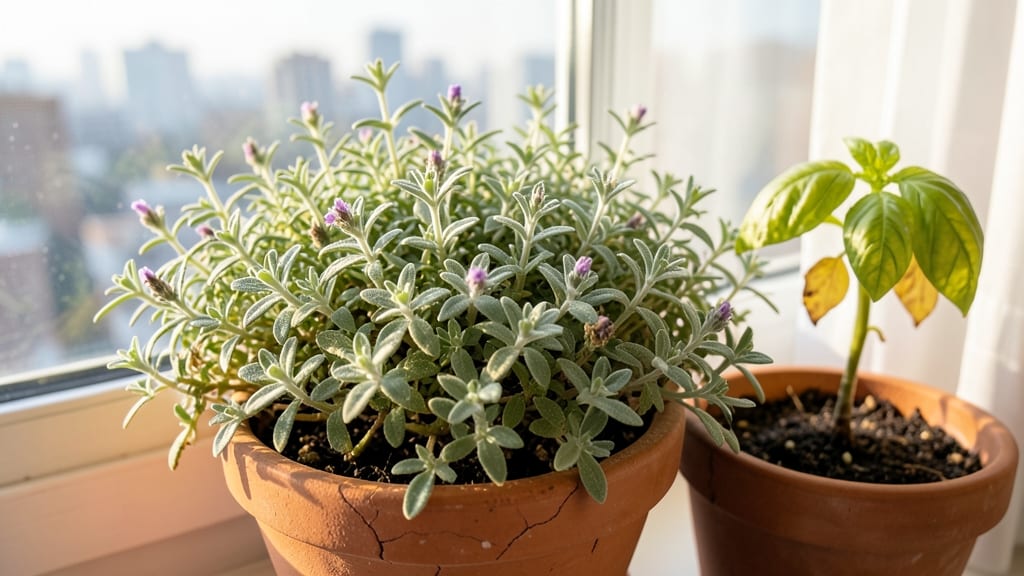
If soggy soil and root rot are ruining your window garden, thyme is the unsung hero you need. This hardy perennial acts as a natural fungicide, suppressing harmful pathogens that cause rot in delicate herbs like basil or parsley—without chemicals.
Thyme thrives in drought-resistant conditions, making it perfect for busy gardeners who forget to water. Its compact, woody stems fit neatly into tiny pots, and it only needs 4-6 hours of sunlight daily. Plus, its earthy aroma deters pests while keeping your herbs healthy.
For urban gardeners with limited space or time, thyme is a must-have—it’s low-maintenance, versatile, and keeps your window garden thriving. 🌿
Nasturtium for Companion Benefits
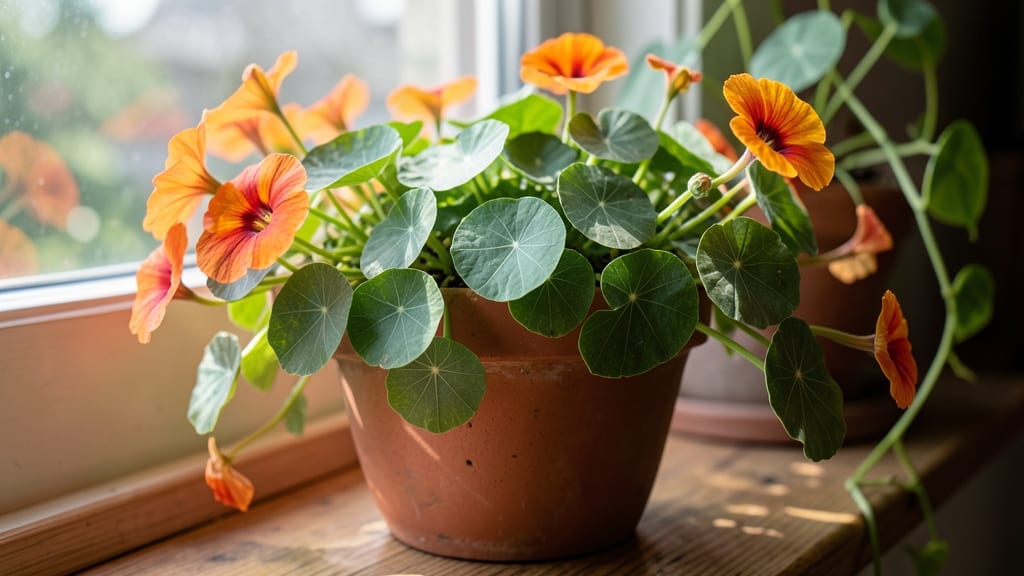
Looking for a plant that does double duty as both a pest trap and a culinary gem? Nasturtiums are your answer—these cheerful bloomers lure away squash bugs and aphids while adding a peppery kick to salads and garnishes.
What makes them perfect for window gardens? They thrive in partial shade, making them ideal for north-facing windows or spots with indirect light. Their trailing vines also cascade beautifully over pot edges, adding vibrant color to any herb collection. Plus, their edible leaves and flowers are packed with vitamin C!
Urban gardeners and herb enthusiasts will love nasturtiums for their low-maintenance care and dual-purpose benefits—just pinch off spent blooms to encourage more flowers. 🌻
Dill for Herb Growth
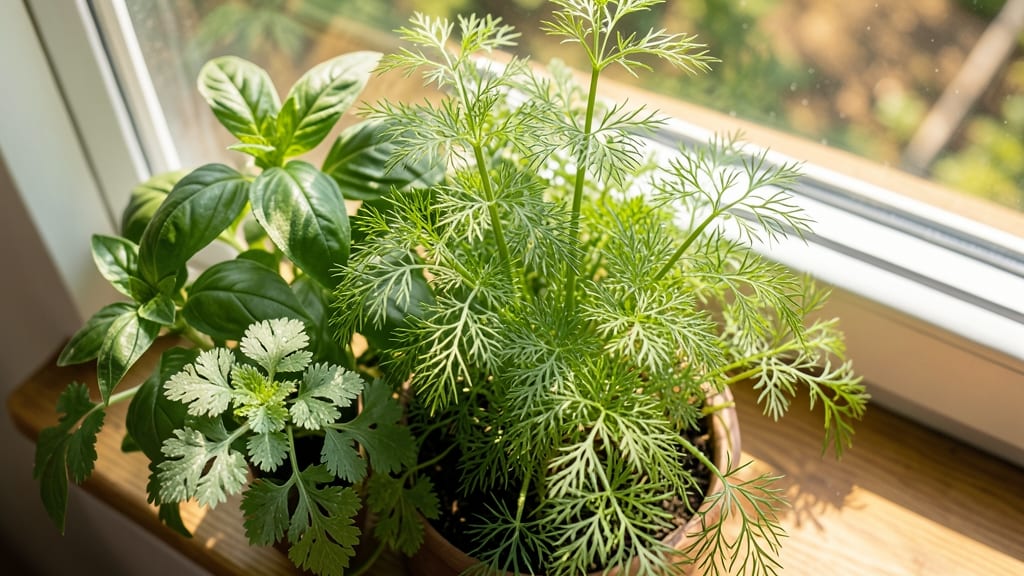
Looking to supercharge your window herb garden without pesticides? Dill is your secret weapon—it lures beneficial wasps that hunt garden pests while subtly boosting the growth of basil and parsley nearby. This feathery-leaved annual thrives in sunny spots, making it perfect for south-facing windowsills where other herbs might struggle.
Plant dill alongside your herbs in 6+ hours of direct sunlight daily, and watch it attract tiny wasps that prey on aphids and spider mites. Its tall, airy stems also create natural shade for delicate herbs below. Plus, you’ll get fresh dill for soups and pickles—double the harvest, double the benefits!
Urban gardeners with limited space will love dill’s versatility—it grows well in pots and even self-seeds for next year’s crop. Just be prepared for its height; place it at the back of your windowsill setup. 🌻
Calendula for Medicinal Support

Looking for a window garden plant that’s both beautiful and beneficial? Calendula delivers with its antifungal properties that shield herb roots from rot while adding vibrant color to your space.
This cheerful flower thrives in indirect light, making it perfect for east- or north-facing windowsills. Its edible golden-orange petals can be used fresh in teas, salads, or as a natural dye—just pinch off blooms to encourage more growth. The plant’s natural resistance to pests also makes it a quiet guardian for nearby herbs.
Urban gardeners and herbalists will love calendula’s dual role as a medicinal ally and decorative centerpiece. It’s the ideal low-maintenance addition for small spaces craving both beauty and function. ✨