
Fertilization
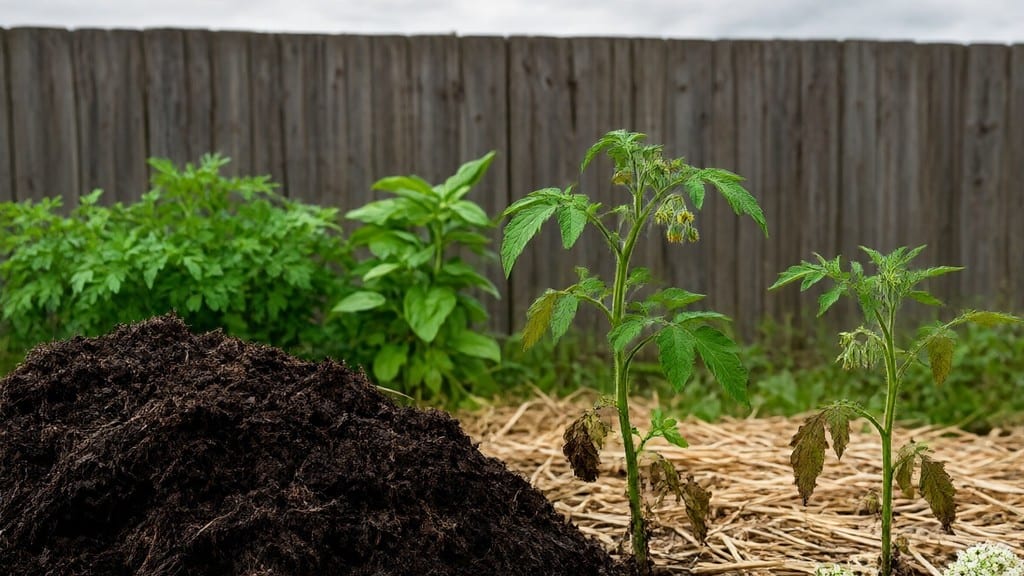
Peat moss might seem like a neutral soil amendment, but its slow decomposition means it locks up nutrients instead of releasing them for plants to use. 🌱 Over time, this can leave your garden soil feeling hungry, forcing you to rely on more synthetic fertilizers.
The real kicker? Peat harvesting destroys fragile ecosystems, releasing stored carbon that worsens climate change—something we definitely don’t need in our gardens.
For vegetable gardens, I’ve found that switching to coconut coir or well-aged compost gives plants the nutrients they crave while supporting soil life. These alternatives break down faster, improve water retention, and won’t leave your garden (or the planet) worse off in the long run.
💡 In This Article
- Environmental Impact of Peat Moss Harvesting
- Best Peat-Free Soil Amendments for Vegetable Gardens
Environmental impact of peat moss harvesting
Peat moss harvesting destroys peatlands, which cover only about 3% of Earth's land surface but store twice as much carbon as all the world's forests combined. These ecosystems take 1,000+ years to form through the slow accumulation of partially decayed plant matter in waterlogged conditions.
When harvested, the exposed peat oxidizes rapidly, releasing 400 million tons of CO₂ annually—equivalent to the emissions of 70 million cars.
The process also eliminates critical habitats for rare species like the Northern bog violet and bog turtle. Peatlands naturally filter water, removing pollutants, but their destruction increases runoff of agricultural chemicals into rivers.
The acidic, waterlogged conditions created by harvesting prevent natural regeneration, turning once-thriving wetlands into barren landscapes that resemble deserts. 🌍
For gardeners, this means peat moss doesn't just affect your soil—it contributes to climate change and biodiversity loss. The slow decomposition rate (1% annually) means it ties up nutrients rather than releasing them, forcing plants to compete with microbes for limited resources.
Over time, this creates a dependency on synthetic fertilizers, further degrading soil health.
What most people don't realize is that peat moss's acidity (pH 3.5-4.5) suppresses beneficial microbes and earthworms, which are essential for breaking down organic matter.
A single cubic yard of peat removed from a bog releases 200-300 pounds of CO₂—enough to power a 60-watt bulb for 100 days. This carbon footprint is invisible in a bag of soil but has real-world consequences for both ecosystems and garden productivity.
Consider this: A 100-square-foot garden using 5 cubic yards of peat moss (a typical recommendation) would require harvesting enough peat to destroy 0.02 acres of bog.
While this might seem small, scaled globally, it adds up to 20,000 square miles of peatland lost annually—an area larger than the state of New Jersey. The slow regeneration rate means these ecosystems won't recover in our lifetime.
Here's the kicker: Peat moss's water-holding capacity comes at a cost. While it retains 5-10 times its weight in water, the process of drying and compressing peat for commercial use releases even more stored carbon.
For every ton of peat harvested, about 1.5 tons of CO₂ are emitted—making it one of the most carbon-intensive soil amendments available. 💨